
Table of Contents
- Outline
- Why most altcoins are built on hope — and why that matters
- How to evaluate altcoins in 2026
- 1) Chainlink — the oracle and settlement layer selling the picks and shovels
- 2) Ondo — tokenized stocks and ETFs done in a regulatory-friendly way
- 3) Morphо — turning tokenized assets into productive capital
- 4) Hyperliquid — on-chain derivatives built for revenue and durability
- 5) NIA Protocol — AI-first layer one focused on scalable AI on-chain
- 6) Internet Computer Protocol (ICP) — sovereign cloud and national-level adoption
- Honorable mentions
- How to use this framework in practice
- Managing risk and timeframe
- How traders and active allocators can benefit
- Practical next steps
- Are these picks financial advice?
- Final thoughts
Outline
- Why most altcoins are built on hope — a different way to evaluate projects
- How to think like an investor in 2026 — build, not hype
- The five altcoins worth attention — deep dives on Chainlink, Ondo, Hyperliquid, NIA Protocol, Internet Computer Protocol
- Why Morpho matters — a practical utility play in DeFi
- Honorable mentions — other projects worth tracking
- Risks, timeframe, and practical next steps
- FAQ
Why most altcoins are built on hope — and why that matters
Right now a large portion of the altcoin universe survives on narratives and speculation rather than real-world traction. Projects rise on hype cycles, marketing, and buzzwords; they fall when the next story arrives. That is the reality of a market that still rewards storytelling more than product-market fit.
But not all projects are equal. A small group of altcoins have shifted focus away from short-term price moves and toward building infrastructure, partnerships, and revenue streams that can survive cycles. These are the projects you can model like companies — Amazon in the dot-com era is an excellent historical analogue. Amazon survived a brutal crash because the team kept building; they treated an 80% drawdown as an opportunity to focus on fundamentals. The lesson applies to digital assets: pick projects that are building useful technology, signing institution-level partnerships, generating revenue, or being integrated into existing financial systems.
“We have our heads down working to build a heavier and heavier company.” — Jeff Bezos
That mindset—focus on long-term product and company-strength rather than short-term price movement—is the framework used to pick the coins below.
How to evaluate altcoins in 2026
Choose projects that show at least two of the following:
- Institutional partnerships. Working with banks, payment networks, or regulators is a tangible sign of adoption.
- Real-world product integration. Tokenization, CBDC research, enterprise cloud use cases—these all map to durable demand.
- Revenue, buybacks, or cashflow mechanics. Projects that generate and recycle revenue have a defensive advantage.
- Founder and team credibility. Advisors embedded in government panels or industry consortiums matter.
- Technical moat and track record. Uptime, throughput, and tested real-world deployments are key.
Short version: treat altcoins like early-stage companies with a product, go-to-market, and an addressable market rather than lottery tickets. The five projects below demonstrate multiple checklist items above.
1) Chainlink — the oracle and settlement layer selling the picks and shovels
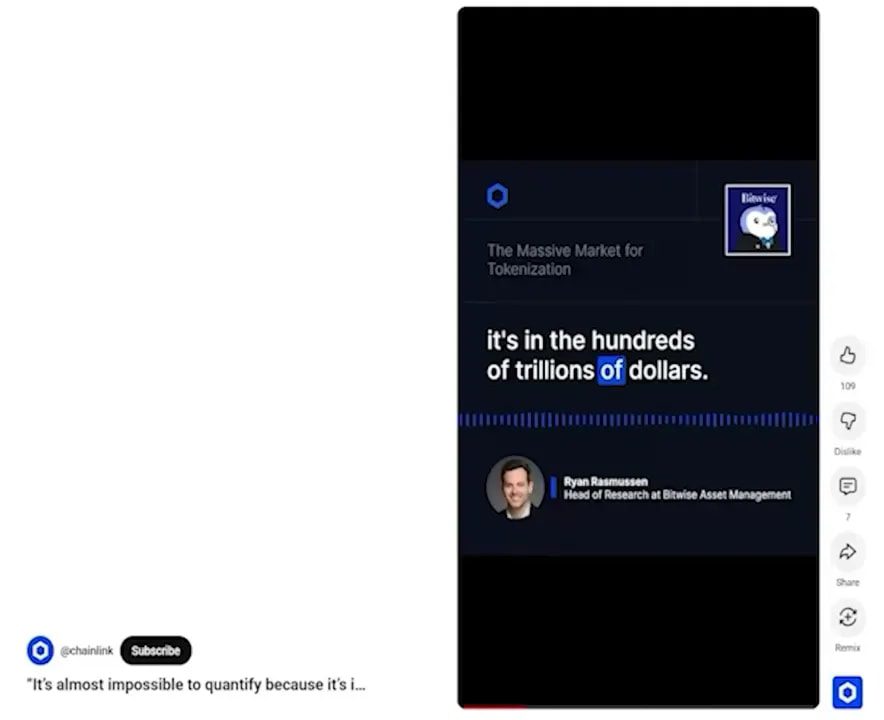
Chainlink has evolved into one of the most institutionally integrated crypto projects. It started as an oracle network and now sits at the intersection of tokenization, cross-border settlement, and programmable money. The head of research at a notable asset manager described Chainlink’s addressable market as “in the hundreds of trillions of dollars.” That’s not an exaggeration when you consider the scope: data feeds for financial contracts, reliable cross-chain messaging, and the middleware needed for tokenized securities and CBDCs.
Why Chainlink stands out:
- Institutional integrations. Chainlink has publicly collaborated with Visa, Fidelity, ANZ, Robinhood, and more. That’s not marketing smoke — these are operational pilots and integrations aimed at atomic settlement and cross-border flows.
- Government and regulator touchpoints. Key Chainlink personnel have been appointed to advisory roles and taskforces. That creates a credibility loop: the project helps regulators and gets credibility in return.
- Tokenomics that buy back supply. Chainlink launched a reserve model where the project uses revenue to acquire and lock LINK tokens. That kind of revenue-to-buyback mechanism creates asymmetry you rarely see in crypto.
- Real use cases: atomic settlement and tokenized securities. Chainlink is actively working on frameworks with clearing houses and custodians (DTCC, Clearstream, Euroclear) to enable compliant digital asset securities across existing financial plumbing.
What this practically means: if tokenization of traditional assets or CBDC rails scale, Chainlink is positioned as a middleware provider selling the “picks and shovels.” That gives the project recurring revenue opportunities and real enterprise demand—traits that separate it from the 95% of altcoins built on aspiration alone.
Trading and risk note: LINK remains a market asset and will move with macro sentiment, but its institutional footprint makes it less binary than many speculative tokens. If you trade token events or settlement infrastructure developments, consider signals that flag Chainlink partnership announcements and on-chain reserve moves. A targeted approach with professional cryptocurrency signals can help time entries and manage risk when institutional integrations cause volatility.
2) Ondo — tokenized stocks and ETFs done in a regulatory-friendly way
Tokenized real-world assets (RWAs) are one of the least speculative narratives because they map directly to a pre-existing market: stocks, bonds, ETFs, and funds. Ondo has focused on the tokenization rails—creating tokens that precisely represent traditional assets but live on-chain.
Why Ondo is notable:
- Regulatory approvals and distribution. Ondo’s tokenized stocks and ETFs are among the first approved under the EU tokenization framework and are available through popular wallets and large exchanges.
- Low friction access to tokenized assets. They’ve made tokenized products available on consumer interfaces like MetaMask and on major exchange trial platforms. Lower price impact on atomic purchases makes these products usable rather than theoretical.
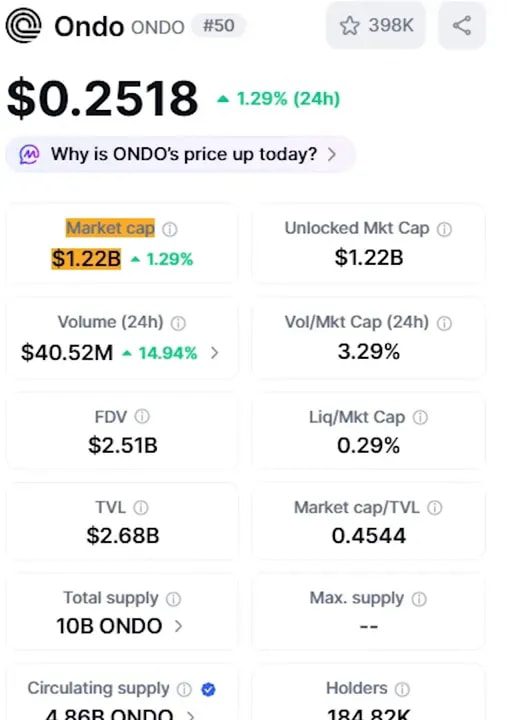
- Product-market traction. Ondo manages billions in tokenized products; the market cap of the token is smaller than the value of assets their platform hosts, which is a sign of product traction that hasn’t yet been fully priced in.
- Partnerships with custodians and RWA infrastructure. Ondo collaborates with RWA specialists and tokenization engineers to integrate compliance, custody, and settlement.
Ondo solves a practical problem: tokenized instruments without utility are just digital receipts. Ondo’s edge is distribution, regulatory alignment, and integration with liquidity venues that minimize slippage.
Where Morpho fits: Ondo’s products become more powerful when tokenized stocks can be used as collateral inside DeFi. Morpho is a lending/credit layer that enables tokenized assets to be productive—meaning those tokenized Nvidia shares or ETFs can be borrowed against, lent, or used in structured DeFi products. That unlocks the full utility of tokenization, turning simple ownership into on-chain leverage and yield opportunities.
For traders and longer-term allocators, the combination of Ondo distribution and Morpho composability creates actionable trade setups. If you trade tokenized asset flows, having clear market signals for TVL changes, product launches, and exchange listing moves can materially improve standing decisions. Integrating high-quality cryptocurrency signals for tokenized asset events can help alert you to fast-moving liquidity and arbitrage windows.
3) Morphо — turning tokenized assets into productive capital
Morpho is short, sharp, and deserves a focused mention: it converts assets into usable capital inside DeFi. Instead of buying a tokenized Nvidia share and just holding it, Morpho lets that token become collateral or liquidity inside lending markets.
Key reasons to watch Morpho:
- Capital efficiency. Morpho’s architecture increases capital utilization on lending markets, enabling lower spreads and higher throughput for borrowers and lenders.
- Product readiness. Morpho has built vaults and fixed-rate markets to support real borrowing demand once tokenized assets are widely available.
- Growing deposits and market share. During a market-wide downturn, Morpho’s deposit vaults reached major capital thresholds—evidence of resilient product-market fit.
Morpho acts as the plumbing that makes tokenized assets useful inside DeFi. If tokenized stocks and ETFs grow, Morpho is one of the natural recipients of liquidity because it enables productive use of those assets.
4) Hyperliquid — on-chain derivatives built for revenue and durability
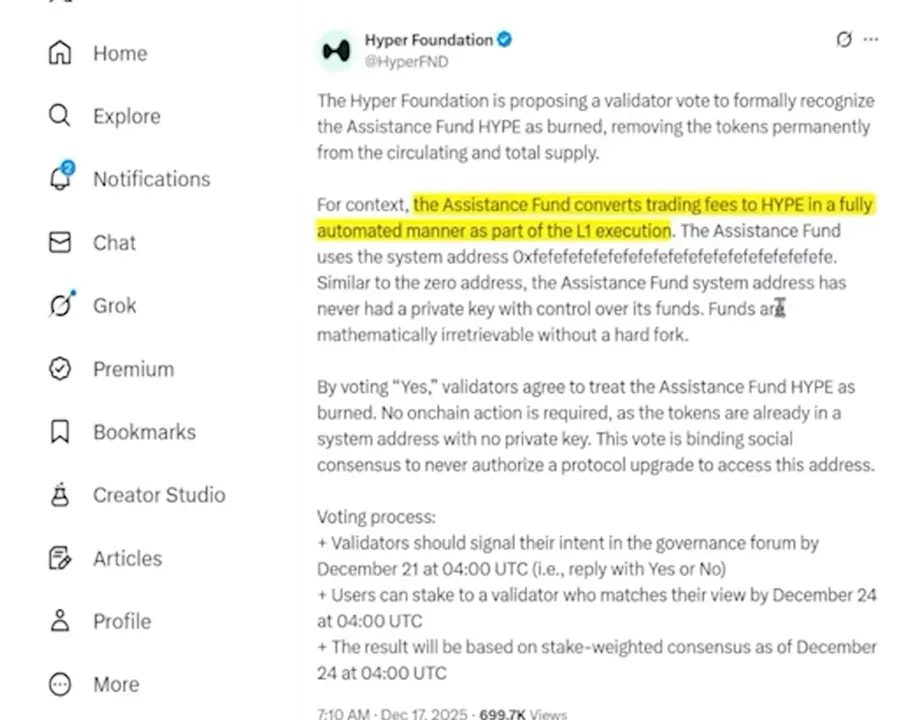
On-chain trading—derivatives, futures, and prediction markets—can be more than nominal experiments. Hyperliquid is an example of a project that generates substantial revenue while also reinvesting a portion of that revenue into token burns and buybacks. That mix of revenue generation and tokenomics discipline creates an attractive risk-return profile.
Why Hyperliquid is significant:
- Proven revenue model. Hyperliquid reports hundreds of millions in annual revenue, with material transaction volume and a sizable user base. Revenue-minded projects are rarer than they should be in crypto.
- Recycling revenue into token scarcity. They have burned and repurchased material amounts of their native token from revenue—a mechanism that aligns company performance with tokenholder value.
- Operational resilience. Hyperliquid reported zero downtime during major industry stress events that wrecked other venues. Resiliency under pressure is essential for a venue that offers leveraged products.
- Product pivot to prediction/outcome markets. Outcome markets are a natural extension for on-chain trading, and they can attract new liquidity and user classes.
- Open token issuance for projects. Anyone can create a new token without listing fees, which lowers friction for new assets to trade on-chain.
If you believe derivatives and trading will shift on-chain—driven by transparency, composability, and better custody integrations—Hyperliquid is an emerging leader. Its revenue profile and token burn mechanics make it attractive to investors who prefer projects with business-like cash flows over perpetual speculative narratives.
For active traders, Hyperliquid’s volume spikes and new market listings create setup opportunities. Using disciplined cryptocurrency signals tuned for on-chain derivatives can help capture short-term moves while keeping a risk-managed framework.
5) NIA Protocol — AI-first layer one focused on scalable AI on-chain
NIA Protocol is an example of a layer one built specifically to host AI workloads. Unlike general-purpose layer ones that retrofit AI tools, NIA starts with AI-native primitives: high throughput, low latency, sharding, and confidential GPU marketplaces. Those technical choices matter if the goal is to run models at scale on-chain or to provide compliant enterprise AI services.
What makes NIA compelling:
- AI-focused architecture. NIA supports confidential GPU marketplaces and trusted execution environments to allow enterprises to run private model inference or training without leaking data.
- Performance metrics. The protocol reports fast block times, 1.2 second finality, and tested high throughput—characteristics important for AI inference and agent-based workflows.
- Developer and product ecosystem. NIA has shipped frequent feature updates and built tools such as IronClaw (a local or server-based AI agent) and a super app that allows cross-chain, AI-powered swaps.
- Institutional interest. Grayscale’s S-1 filing for a NIA trust suggests there’s institutional eyes on the opportunity—meaning potential future inflows if a product becomes widely adopted.
Put simply, if AI workloads move closer to the blockchain—driven by provenance, on-chain monetization of models, or privacy-preserving inference—NIA is positioned for that niche. Not all AI-in-crypto stories will survive, but a layer one purpose-built for AI has a nontrivial chance to capture enterprise and developer demand.
6) Internet Computer Protocol (ICP) — sovereign cloud and national-level adoption
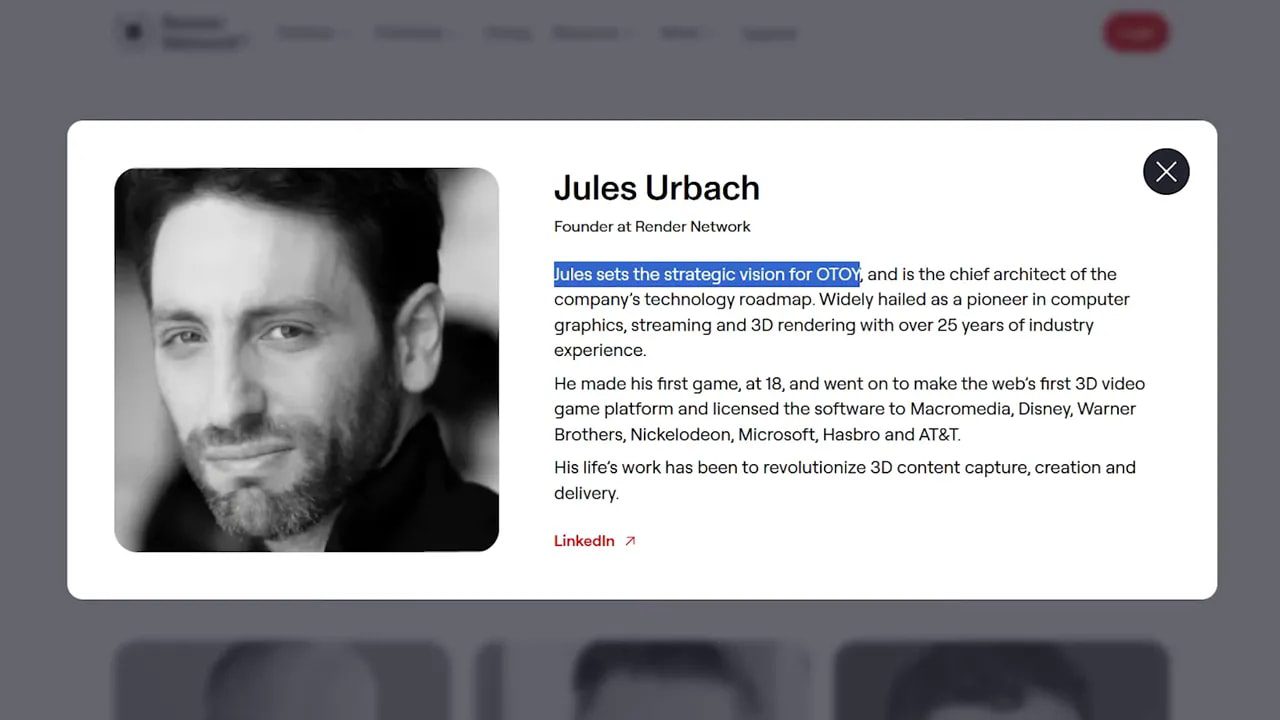
ICP is a different kind of layer one: it aims to replace or sit on top of traditional cloud infrastructure and has real-world adoption at the nation or government level. That is a rare and significant position because sovereign infrastructure contracts are high friction to win but offer durability and scale once secured.
Why ICP matters:
- Sovereign cloud and subnets. ICP supports subnets, which are comparable to private clouds; a subnet tailored to a jurisdiction like Switzerland provides a high-privacy, sovereign compute environment attractive to governments and enterprises.
- Government partnerships. ICP has progressed from proofs-of-concept to practical claims of collaboration with national governments to host generative AI, secure communications, and sovereign cloud resources.
- Clear roadmap toward product-market fit. ICP’s recent white paper and governance pushes focus on sustainability, inflation reduction, and mechanisms to drive real network usage.
- Developer tooling for large models. Running gigabytes or terabytes of AI models on a public/composable network is a different engineering challenge—ICP claims to have primitives for that workload and for hosting persistent AI services.
ICP’s early history included messy token distribution issues, but the current narrative is about productization: making the protocol useful and compatible with existing cloud providers via “cloud engines.” This pragmatic approach—integrate with Amazon or Google as hosting layers rather than trying to displace them immediately—can accelerate adoption and reduce friction for enterprises experimenting with decentralized cloud offerings.
Honorable mentions
These projects didn’t make the main five but should remain on the radar because they combine strong teams, select enterprise traction, or interesting technical approaches.
- Hedera (HBAR): Enterprise-focused layer one with centralized governance model and a roster of corporate partners. Adoption is enterprise-heavy rather than retail-native.
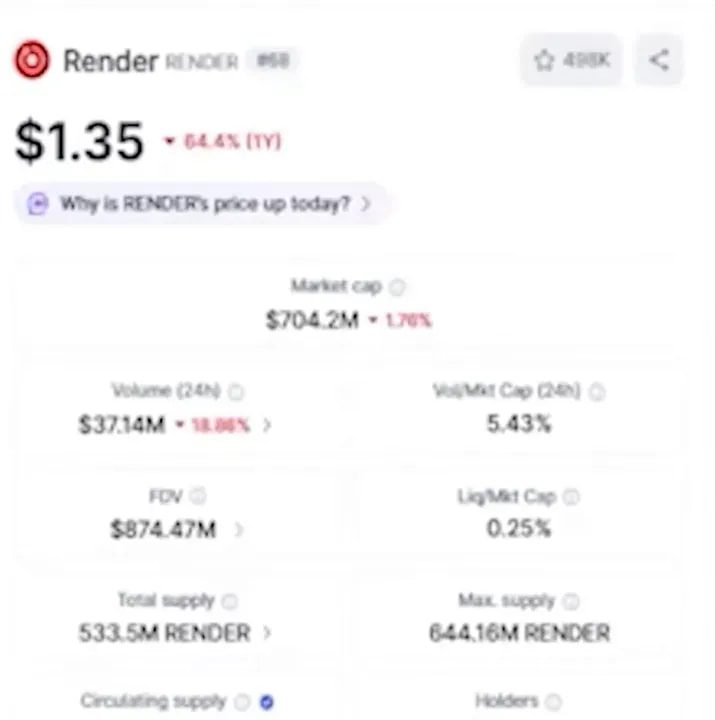
- Render: GPU compute marketplace for AI and rendering workloads. Backed by a real-world company that already operates GPU infrastructure—real product and commercial traction.
- Betensa: A play on decentralized AI with focus on subnets and developer infrastructure. Early but interesting for decentralized model hosting.
- Aerodrome Finance: A DEX with revenue and product integrations that tie into major exchanges. Practical revenue and protocol earnings make it more durable than purely speculative DEX experiments.
How to use this framework in practice
Use the checklist below when deciding whether to allocate to a project for long-term holding or trading:
- Partnership weight: Are there bank-level or government-level integrations? If so, how real are the pilots? (MOU vs. production)
- Revenue mechanics: Does the protocol generate revenue, and what fraction is recycled to token holders via buybacks, burns, or treasury deployments?
- Technical traction: Uptime, throughput, tested deployments under stress, and the ability to scale for enterprise workloads.
- Regulatory fit: Is the product designed to be compliant where necessary (tokenized securities, custody, KYC/AML)?
- Ecosystem composability: Can other protocols build on top of it, and do those integrations create winner-takes-more dynamics?
Projects that satisfy multiple boxes are more likely to compound value across cycles. That doesn’t mean they won’t dump during a macro bear market, but it does mean they have the tools to recover and grow.
Managing risk and timeframe
These projects are not risk-free. Institutional partnerships can take years to convert into stable revenue. Regulatory clarity can change rapidly. Even projects with real products will face competition and execution risk.
Time horizon matters. If you are thinking in 6–18 months, expect volatility tied to macro and crypto cycles. If you are thinking in multiple years, prioritize durability: teams that continue to ship, iterate, and embed with enterprises will be the winners.
Position sizing is crucial. Treat these as early-stage equity: allocate capital you can live without for the timeframe required and use risk management—staggered buys, limit orders, and portfolio-level diversification across verticals (oracles, tokenization, DeFi primitives, AI infrastructure, and on-chain trading).
How traders and active allocators can benefit
Active traders can find opportunities in the intersection between tokenized asset flows and derivatives venues, or in news-driven moves from institutional partnerships. For example:
- Announcements that a major bank is piloting an atomic settlement flow can spike Chainlink usage and on-chain oracle activity.
- New tokenized ETF approvals or exchange integrations can accelerate Ondo TVL and unlock arbitrage opportunities between tokenized asset pricing and traditional markets.
- Revenue reports and burn events from trading platforms like Hyperliquid create predictable supply shocks.
If you trade these themes seriously, consider using a professional service that monitors protocol-level metrics, regulatory filings, exchange flows, and partnership pipelines. A well-built cryptocurrency signals product can surface meaningful events—TVL changes, major treasury moves, partnership press releases, or large token unlocks—so you can act with discipline rather than emotion.
Practical next steps
- Rank projects across the checklist above for your own portfolio. Weight those that satisfy multiple criteria more heavily.
- Follow treasury and reserve mechanics: buybacks, burns, and controlled supply reductions are important.
- Track integrations and pilots. A signed MOU is one thing; a multi-month production pilot with measurable settlement volumes is another.
- Keep separate pools for long-term holds and shorter-term trades. Don’t let speculative FOMO mix with strategic allocations.
- Use signals and alerts for critical events if you trade or plan to scale into positions. Signals should be used to help manage entries, exits, and risk rather than dictate all decisions.
Are these picks financial advice?
No. These write-ups explain how certain projects demonstrate institutional integration, product traction, and revenue mechanics. They are educational, not financial advice. Always consult licensed professionals and do your own research before making investment decisions.
Why focus on tokenization and RWA (real-world assets)?
Tokenization maps on-chain infrastructure to an enormous existing market. Stocks, bonds, ETFs, and funds represent trillions in tradable assets. If tokenization is done right—compliant, liquid, and composable—on-chain exposure can become a new venue for traditional capital, not just speculative crypto capital.
How do institutional partnerships change token risk?
Partnerships themselves do not remove volatility. They do, however, increase the probability of sustained protocol usage, recurring fees, and real revenue, which can make tokens less binary. Institutional pilots and integration commitments are leading indicators of product-market fit rather than firm guarantees.
What are the biggest risks to these projects?
Execution risk, regulatory shifts, and competition from entrenched incumbents. Token supply and market sentiment still matter. Projects tied to regulation-heavy verticals (tokenized securities, CBDCs) will be subject to compliance constraints that can slow adoption.
How should I allocate if I want exposure to these themes?
Consider a diversified approach: allocate across verticals (oracles, tokenization, DeFi primitives, AI infrastructure, on-chain trading) and size positions relative to conviction and risk tolerance. Use staggered buys and consider setting aside a cash reserve for opportunistic additions during drawdowns.
Final thoughts
Most altcoins today are bets on narratives. That’s fine for a subset of strategies. But the most resilient, cycle-resistant projects are those focused on building useful systems: embedding into payment rails, tokenizing real assets, providing revenue-generating infrastructure, and hosting enterprise workloads like AI models.
Chainlink, Ondo (with Morpho as a critical enabler), Hyperliquid, NIA Protocol, and Internet Computer Protocol illustrate different ways to win in a market moving from pure speculation to adoption-driven value. Each has risks, but each also demonstrates durable characteristics—a commercial product, institutional attention, or measurable revenue—that separate it from the speculative majority.
If you are trading these themes or planning longer-term allocations, consider tools that surface actionable protocol and market events. High-quality cryptocurrency signals can reduce reaction time to material developments and improve trade execution when institutional news or on-chain flows cause price action.
Markets are messy and cycles repeat. The difference between a promising project and a lasting one is not speed of price appreciation; it is the ability to keep building through market cycles, sign real partnerships, and translate usage into sustainable value.