

Table of Contents
- Why the debate never dies
- A practical test: rules versus art
- Stop hunting and liquidity: how the big money actually enters
- Do hedge funds use support and resistance?
- Stop losses: tight is not always better
- Practical rules you can use tomorrow
- FAQ
Why the debate never dies
Technical analysis splits traders into two tribes. One side treats trend lines, head and shoulders, and support and resistance like sacred tools. The other side calls it unscientific and dismisses it as noise. The reality sits somewhere in the middle: some hedge funds and institutional traders use technical analysis selectively, while others ignore it because their edge comes from scale, information, or long time horizons.
A practical test: rules versus art
One recurring theme from professional traders is that technical analysis must be explicit and testable to be reliable. Charts are easy to read into; a pattern that looks like a head and shoulders today can look like a cup and handle five years from now. What separates a reproducible system from fuzzy interpretation is a clear set of rules that anyone can follow.
“If you can’t write it down as a set of rules that even a guy that doesn’t speak English and sits in Mongolia can replicate, then it’s not useful.”
That idea drives the simplest rule of professional trading: if you want to rely on technical signals, backtest them and convert visual patterns into precise, repeatable rules. Backtesting forces you to define entries, exits, and position sizing in advance so subjective bias cannot creep in.
Stop hunting and liquidity: how the big money actually enters
Large institutions face a basic problem: there is often not enough liquidity to buy or sell huge blocks at a single price. To execute, they break orders into pieces, use algos, or move price to zones where liquidity exists. That can look like “stop hunting” from the retail perspective, but it’s often just the mechanics of creating fills at scale.
“The stop needs to be where the stop needs to be.”
Two practical implications:
- Stops crowd obvious levels. If many retail traders place stops at the same obvious swing low, price will often visit that area simply because liquidity exists there.
- Entry quality matters more than tight stops. A sloppy entry with a tiny stop invites being run over by normal market noise. Use volatility measures like average true range to size stops instead of arbitrary tightness.
Smaller and less liquid markets amplify these dynamics. Crypto markets, for example, can experience sharp liquidity grabs because the order book is thinner on many chains. Services such as crypto spot trading signals can help by highlighting where liquidity is clustering across blockchains and by flagging likely institutional entry zones—information that pairs well with technical confluence to time entries more safely.
Do hedge funds use support and resistance?
It depends on the fund’s size and role. The largest multi-billion dollar funds rarely base investment decisions on classic technical markers because their edges come from macro research, proprietary data, or long-term structural views. Executing those large orders, however, requires awareness of where liquidity pools exist.
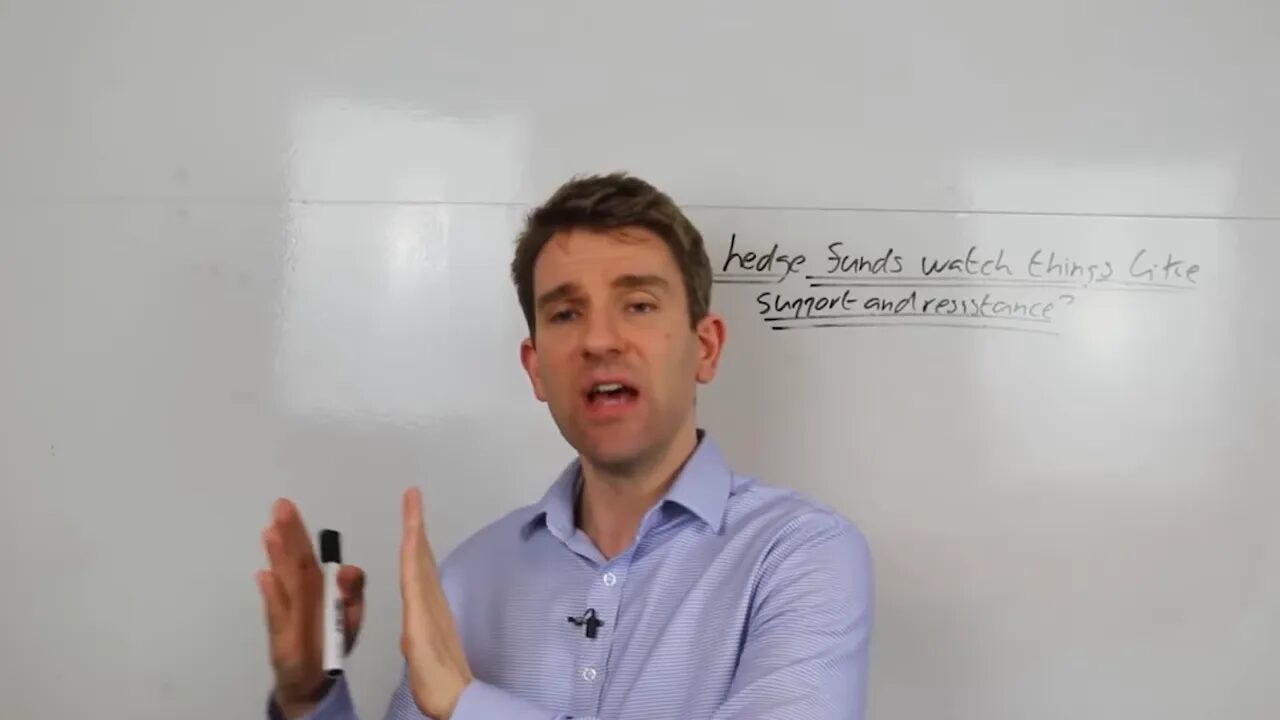
Smaller funds and execution traders who handle tens of millions rather than billions do sometimes use support and resistance to improve execution timing. They might:
- Delay a buy until price dips toward support to improve their average entry
- Scale into positions around confluence zones (Fibonacci, trendlines, horizontal levels)
- Use technicals to judge where to slice an order manually versus letting an algo run
So support and resistance are not the heart of the investment thesis for most funds, but they are a practical tool for execution and timing when moving meaningful but non-giant amounts of capital.
Stop losses: tight is not always better
Many seasoned portfolio managers take a contrarian stance on tight stop losses, arguing that tight stops are the primary reason retail traders fail. Markets often move opposite before they move in the intended direction. A stop that is too tight will eject you before the real move begins.
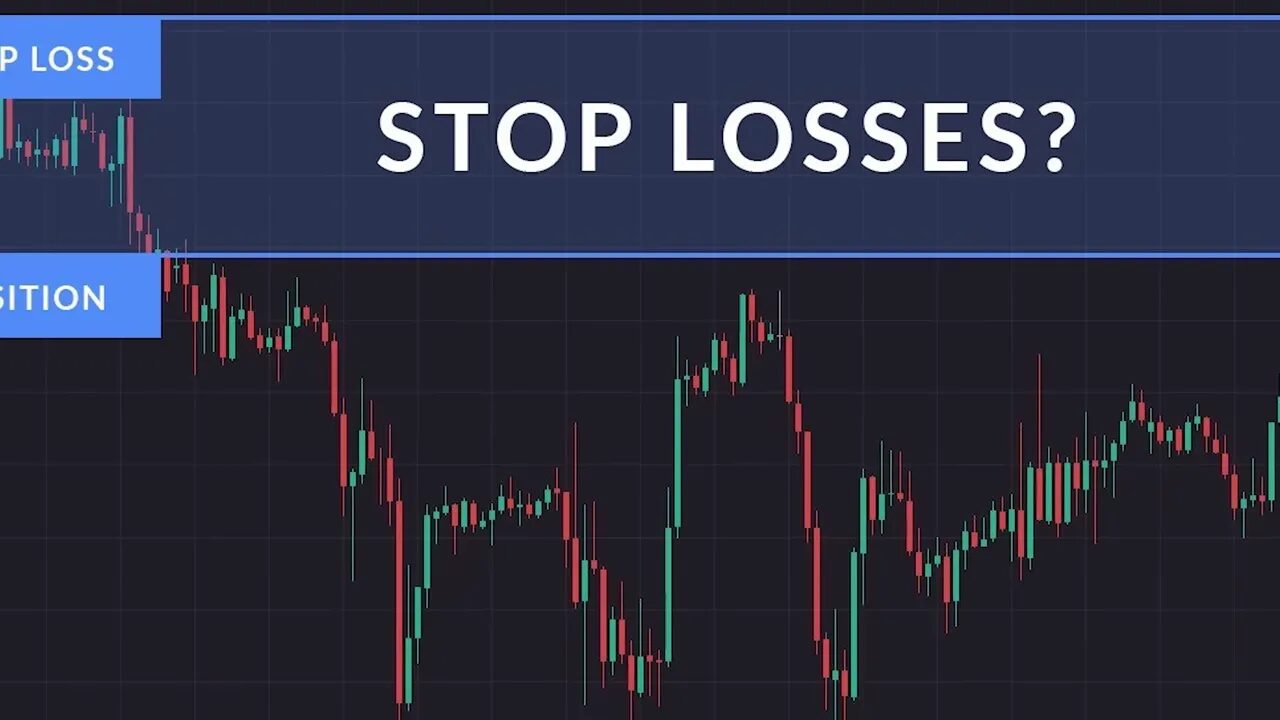
“If you are confident about a trade, don’t have tight stop losses.”
Context matters. Wide stops are sensible for long term or confident directional trades where you can tolerate interim volatility. Tight stops can make sense when:
- You don’t have high conviction and want a cheap test of the idea
- You hold positions over macro events (weekend risk, major political headlines) and need defined downside protection
- Position size is large relative to your account and risk control is mandatory
One practical technique is to size position using a stop based on volatility. Many traders use a multiple of ATR—commonly 2 to 2.5 times—for stop placement so stops adjust to current market noise instead of arbitrary distances.
Practical rules you can use tomorrow
Blend institutional wisdom with a reproducible approach. Below are actionable rules that work across markets and timeframes.
- Define your edge. Explicit entry and exit rules let you backtest and measure performance.
- Size stops to market volatility. Use ATR multiples rather than fixed pips or dollars.
- Avoid obvious stop clusters as your entry. Either enter with patience or place entries where liquidity will be available for larger players.
- Look for confluence. Combine horizontal levels, trendlines, Fibonacci, and volume to increase the probability of a clean entry.
- Use execution-aware tactics. If trading larger sizes, consider algos or slicing orders to avoid moving the market.
- Adjust for the market. Crypto, emerging markets, and small-cap stocks each have different liquidity profiles—adapt stop sizing and execution accordingly.
Example checklist before entering a trade
- Have I converted the setup into a written rule? (Entry, stop, target, timeframe)
- Is the stop sized with current volatility (ATR) rather than emotion?
- Am I entering near liquidity instead of into an obvious stop cluster?
- Does price show confluence of technical levels or volume?
- Is my position size appropriate for this stop distance?
FAQ
Do hedge funds use technical analysis to make investment decisions?
Some do and some do not. Large hedge funds typically rely on fundamental research, macro views, or proprietary data for their core decisions, while smaller funds and execution traders may use technical analysis for timing and execution. The common thread is that useful technical methods are explicit and testable.
Is stop hunting real and should retail traders worry about it?
Stop hunting is a byproduct of liquidity dynamics. Institutional players often need to move price to access liquidity. Retail traders should be aware that obvious stops attract order flow; avoid placing stops at predictable cluster points and size them to market noise.
Should I use tight stop losses?
Not automatically. Tight stops help limit loss on low-conviction trades but can kill otherwise correct directional bets. Use volatility-adjusted stops and enter only when you have a clear reason to be in the trade.
How should I use support and resistance if I’m trading with limited capital?
Use support and resistance for execution and risk positioning. Waiting for pullbacks to confluence levels can improve entries. Combine these levels with other signals like trend and volume to avoid getting caught in false breakouts.
Do these lessons apply to crypto trading?
Yes, but with caveats. Crypto markets often have thinner liquidity and higher volatility, which makes stop placement and execution more delicate. Tools that highlight cross-chain liquidity and institutional activity can be valuable. For traders seeking trade ideas, crypto spot trading signals can identify likely entry zones and liquidity clusters across blockchains while you combine those signals with technical confluence for timing.