
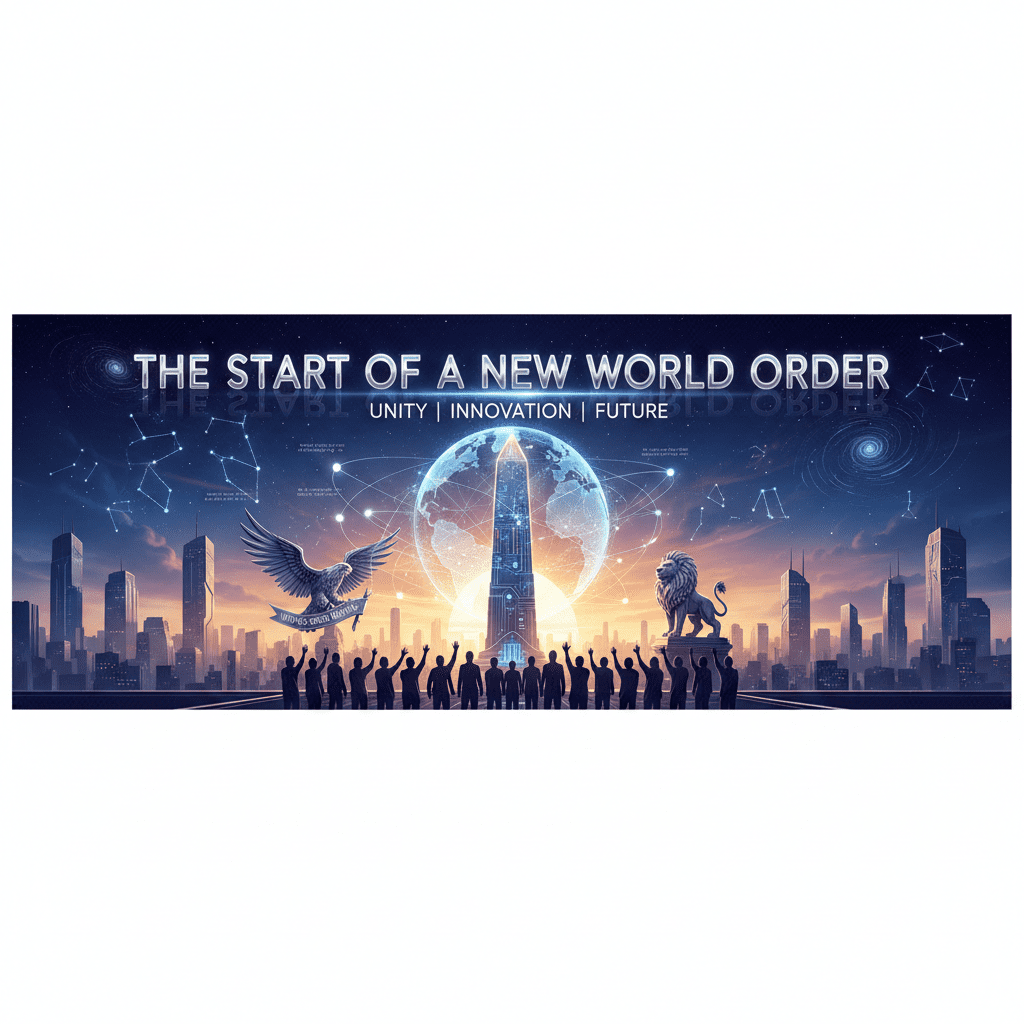
Call it rupture, multipolarity, the end of a rules-based order — the language matters because leaders are choosing words that signal more than rhetoric. What was once discussed in conspiracy forums is now being named explicitly by the people who run the world. The old global architecture that rested on predictable trade, U.S.-led security, and faith in international institutions has stopped functioning the way it did for the second half of the 20th century. That matters for geopolitics, for markets, and for every treasury plan or portfolio strategy built on the assumption that yesterday’s rules would still hold tomorrow.
This article lays out what broke, why it matters now, the competing systems trying to replace the old order, and the practical wealth-preservation and wealth-creation moves that make sense in a fragmented world. The goal is straightforward: understand the mechanics shaping the world, then build a resilient plan that doesn’t rely on promises that can be broken or printed away.
Table of Contents
- 1. The Rupture: Not a Transition but a Replacement
- 2. What Broke — The Timeline
- 3. Five Leaders, Five Visions — And One Shared Diagnosis
- 4. Mechanics Matter More Than Politics: The Three Pillars
- 5. Why Now? The Convergence of Long Cycles
- 6. Four Competing Paths Forward
- 7. The New Financial Playbook: From Promises to Real Assets
- 8. Tactical Steps: Building a Treasury Doctrine for Uncertainty
- 9. Portfolio Architecture: Practical Allocation Ideas
- 10. Short Checklist for Immediate Action
- 11. The Role of Technology and Crypto
- 12. What Success Looks Like
- 13. Final Thought
- FAQ
- Further Reading and Resources
1. The Rupture: Not a Transition but a Replacement
There is a useful distinction between a transition and a rupture. A transition implies change while keeping an underlying continuity of rules and institutions. A rupture means something breaks beyond repair and a different system grows in its place. That is the word being used: rupture. It captures what is happening to the post-World War II rules-based order — the Bretton Woods architecture, the UN system, NATO security guarantees, and the global trade networks that flowed from them.
Look at the institutional architecture created after 1945: a common monetary framework, the IMF, the World Bank, the UN, and NATO. For decades that framework underpinned a high-efficiency global economy: supply chains stretched across continents, capital flowed freely, and the U.S. security guarantee reduced the perceived need for many nations to spend heavily on defense. That deal worked while the incentives held.
But systems fail when the pillars that keep them upright are degraded. The rupture we are living through is not merely geopolitical theater. It is the visible result of three structural pillars losing integrity at roughly the same time. When trade, security, and trust all crack simultaneously, whole architectures change.
2. What Broke — The Timeline
The breakup of the postwar order did not happen overnight. It unfolded in phases:
- Post‑war consolidation (1945–1971): Bretton Woods and a set of institutions created predictable international economic relations.
- The end of the gold link and unipolarity (1971–1991): The Bretton Woods monetary link to gold ended; the Cold War structure gave way to a unipolar moment after the USSR collapsed.
- Globalization and China’s rise (1995–2008): WTO rules, China’s WTO entry, and decades of supply‑chain efficiency created extraordinary growth but also fragility.
- Post‑2008 erosion and multiple shocks (2008–present): The global financial crisis, rising trade frictions, regional conflicts, and pandemic-era governance breakdowns produced a sustained loss of confidence in institutions.
Each of these phases layered stress on the system. Policies that made sense under a stable, rules-based environment became liabilities when the rules no longer applied with the same certainty. The result: fragmentation — not only of trade flows but also of payments, defense arrangements, and political alignments.
3. Five Leaders, Five Visions — And One Shared Diagnosis
It is revealing when leaders from different regions and political traditions converge on one diagnosis: the old order is not coming back. What they propose next varies dramatically, and those differences define competing system architectures.
Here are five archetypal positions that capture the competing blueprints for the world that is being built right now.
Mark Carney — Values‑Based Realism
Carney describes what he calls a rupture — a break that cannot be repaired. His response is pragmatic: build coalitions of the willing with shared values and norms. In practice that means alliances centered around rule of law, democratic governance, and compatible regulatory approaches. These are flexible, value-aligned mini‑coalitions rather than a single global institution. The goal is to avoid being excluded from emerging arrangements: “If you’re not at the table, you’re on the menu,” is an accurate encapsulation of the stakes.
Olaf Scholz (Germany) — Alarm from the Export Engine
Germany was long the poster child of the rules-based globalized order given its export-focused model. When its leadership says “the old order is unraveling at a breathtaking pace,” it signals a deep cognitive shock: the economic model that served Germany depended on cheap energy imports and reliable trade partners — conditions that may no longer exist. That forces Europe to rethink energy, industrial policy, and defense.
Alexander Stubb (Finland) — Multipolar Disorder
Stubb’s framing is striking: this is not a new smooth order but a disorder of competing powers. He warns that what replaces liberal norms is likely to be raw power politics — transactional arrangements where states pursue immediate advantage rather than long-term cooperative institutions. The South — countries in Asia, Africa, Latin America — are the most contestable region in this multipolar scramble.
China — Multilateral Leadership Under a Different Script
China’s representatives defend a form of multilateralism but one that is calibrated to its own priorities. The message is: multilateral cooperation remains useful, but the rules and institutions will reflect new centers of influence. That raises questions about who writes the norms and how inclusive they will be.
United States — Re‑nationalization and Bilateral Leverage
The U.S. posture in this shift is to prioritize national interest and bilateral leverage over multilateral guarantees. That includes pushing NATO partners to raise defense spending, reshoring strategic industries, and negotiating deals that favor direct American benefit. Globalization, as previously structured, is no longer the default.
All five agree the old rules are dead. They disagree radically on what replaces them. That competition — simultaneous and global — is the main political story of the next decade.
4. Mechanics Matter More Than Politics: The Three Pillars
Rupture happens because mechanical incentives decay. Politics channels the consequences, but to prepare you must understand the mechanics. There are three pillars that held the rules-based order together:
- Trade: A high-growth, high-efficiency global trade system built on comparative advantage and long supply chains.
- Security: A U.S.-anchored security guarantee that reduced the need for many allies to fund heavy defense budgets.
- Trust: Legitimacy and functioning of multilateral institutions and global financial referees — the IMF, World Bank, WTO, WHO, among others.
Each pillar is under stress.
Trade: Fragmentation and Weaponization
From 1990 to 2008 global trade growth averaged around 6 percent per year. Since 2008 it has slowed to roughly 1.5 percent. Restrictions proliferate: hundreds of trade interventions ballooned into thousands. Sanctions and tariffs are no longer targeted instruments — they are systemic levers that reshape commerce.
When trade becomes a tool of power, supply chains re‑shape for security and redundancy, not for lowest cost. That turns the global efficiency model on its head.
Security: Re‑nationalization
The postwar bargain that let many countries underinvest in defense is ending. NATO’s long-standing 2 percent target for defense spending has been more aspiration than reality — until recently. Now partners are rapidly increasing defense budgets because the expectation of unconditional U.S. protection has weakened.
That matters because security provisioning is expensive and it changes national budget priorities. More defense spending can mean less social spending, different industrial policy, and new geopolitical blocs organized around mutual security interests rather than a single global order.
Trust: The Most Fragile Pillar
Of the three, institutional trust is the most consequential. Public confidence in multilateral institutions has fallen sharply. Polls tracking trust in international institutions show a decades-long decline. Bank rescues, uneven pandemic management, corruption allegations, and perceived regulatory capture have all chipped away at legitimacy.
When people and states stop trusting the referees, they stop playing by the old rules. That sets the stage for unilateralism, transactional diplomacy, and competing standards.
5. Why Now? The Convergence of Long Cycles
Historic ruptures are rarely random. Large-scale transformations tend to appear when multiple long-term cycles line up. Three cycles are especially important.
- Political revolution cycles (250 years): Major shifts in governance models and ideological orders tend to happen on very long arcs.
- Financial revolution cycles (80 years): Credit, monetary systems, and banking crises often recur in generational patterns.
- Technological revolution cycles (50 years): Waves of transformative technology — the steam engine, electricity, mass production, microprocessors, and now digital networks, AI, and decentralized finance — arrive in clusters roughly every half century.
When the 250-year political cycle, the 80-year financial cycle, and the 50-year technological cycle converge, the likelihood of systemic change rises. New technologies rewire information, money, and control points. Financial stresses unravel established credit and monetary arrangements. Political cycles produce pressure for different governance arrangements. The present moment is such a convergence.
6. Four Competing Paths Forward
There will not be a single post-rupture world. Instead, multiple architectures will be competing simultaneously. Below are four plausible broad systemic outcomes:
Path 1 — Values‑Based Realism (Coalitions of the Willing)
Actors with shared norms form targeted coalitions on strategic issues — supply chains for critical industries, technology standards, and defense cooperation. These coalitions trade with other blocs but prioritize trustworthiness and shared legal frameworks. This approach aims to preserve a degree of multilateralism without a universal set of rules.
Strengths: Values alignment can reduce friction where trust exists.
Weaknesses: Excludes countries that do not share the same norms, leading to fragmentation and competition in other spheres.
Path 2 — Power Competition (Block Rivalry)
Two or more major blocs build independent systems: payment rails, supply chains, standards, and markets. Each bloc prioritizes resilience and internal self-sufficiency, trading across blocs only when necessary.
Strengths: Clear lines of power and defined supply frameworks within blocs.
Weaknesses: High geopolitical tension, unstable balance, risk of technological bifurcation, and elevated economic costs.
Path 3 — Nationalist Self‑Interest (Bilateralism and Protection)
Countries emphasize sovereignty, tariffs, and bilateral agreements to protect domestic industries. Global cooperation diminishes as national political leaders prioritize their electorates and domestic narratives of economic security.
Strengths: Strong focus on domestic resilience and immediate political accountability.
Weaknesses: Lower overall efficiency, slower growth, and heightened risk of trade wars.
Path 4 — The Global South as a Wild Card
Emerging economies — India, Brazil, Indonesia, parts of Africa, and some Middle Eastern states — refuse to be forced into binary choices and instead pursue their own development banks, payments systems, and trade networks. The BRICS and other southern coalitions aim to create alternatives that reflect their priorities.
Strengths: Potential to decentralize power and create new growth engines.
Weaknesses: Institutional capacity varies; global coordination is harder without shared norm foundations.
All four paths may coexist in varying degrees, producing a complex, layered global system rather than a single replacement order.
7. The New Financial Playbook: From Promises to Real Assets
Under the old rules-based order, the core financial playbook was simple and effective: own stocks for growth, hold bonds for safety and income, and keep some cash for liquidity. That playbook relied on stable trade, security guarantees, and institutional trust — because stocks and bonds are promises that depend on legal and financial systems to honor them.
When trust in institutions and cross-border enforceability weakens, promises lose part of their value. The alternative is a shift toward assets that are durable, non‑replicable, and less dependent on third-party integrity.
Real assets replace certain financial promises
Consider what an asset needs to be resilient in a fragmented world:
- Not easily created or inflated by monetary policy — limited supply or physical scarcity helps.
- Useful across political regimes — commodities and critical minerals retain intrinsic value.
- Capable of acting as a settlement or store of value when payment rails are contested.
That points toward a clear set of asset classes:
- Commodities and critical minerals: Copper, lithium, nickel, rare earth elements, and other inputs are essential to electrification, batteries, and infrastructure. Their physical supply cannot be printed, and they are required across competing technological pathways.
- Gold and precious metals: Longstanding stores of value that are portable and recognized across systems.
- Bitcoin and decentralized digital assets: Bitcoin combines scarcity (fixed supply) with a permissionless settlement layer. In a fragmented payments environment, Bitcoin and certain blockchains can act as alternative rails. If you trade or hedge across multiple jurisdictions, on‑chain settlement reduces counterparty reliance.
- Real assets: Land, industrial capacity, and energy infrastructure that provide tangible utility and are less dependent on cross-border legal enforcement.
These assets are not immune to volatility, but they are less reliant on institutional promises that can be altered by policy choices or geopolitical coercion.
8. Tactical Steps: Building a Treasury Doctrine for Uncertainty
Treat the coming era like the end of an operational model and the beginning of an environment that prizes resilience over efficiency. Below are pragmatic moves that align financial exposure with the new mechanics of power, trade, and trust.
1. Reassess what “liquidity” means in a multipolar world
Traditional liquidity (USD cash and short-term Treasuries) may remain useful, but consider diversifying settlement options. Holding a mix of major currencies, allocation to hard assets, and programmable digital assets can reduce settlement friction if cross-border clearing becomes more contested.
2. Increase exposure to strategic commodities and critical minerals
Supply chains for batteries, renewables, and semiconductors are strategically important. Direct exposure through stocks, ETFs, or physical holdings (where practical) is a logical move. For investors who prefer signals and trade ideas, curated resources can provide timely entry and exit points — for example, services offering targeted market intelligence and trade alerts for crypto markets can complement commodity allocations by providing execution signals during high-volatility windows.
Note: If you trade crypto, consider professional-grade market signals to identify high-probability opportunities and manage risk during rapid regime shifts. Free crypto signals can be a useful complement for those building tactical exposure to digital assets, particularly when macro rotations create short-term dislocations.
3. Rebalance the defensive sleeve toward real assets
Replace a portion of traditional bond exposure with durable, income-producing real assets: energy contracts, physical metals, or real estate focused on strategic sectors (warehouse/logistics for nearshoring, energy infrastructure). These assets may offer a hedge against local currency devaluation, supply disruptions, and higher inflation driven by reindustrialization.
4. Allocate a risk-managed stake to Bitcoin and select cryptos
Bitcoin is not a perfect store of value, but it is the first widely accepted scarce digital asset with independent settlement. A disciplined allocation — sized to your risk tolerance — can act as portfolio insurance against monetary regime changes and capital controls. Use secure custody, cold storage for longer-term holdings, and tactical trading for shorter duration exposures.
For active traders, leveraging reliable market intelligence can sharpen execution. Free crypto signals can help identify momentum opportunities and risk windows when volatility spikes, but always vet the source and combine signals with disciplined position sizing.
5. Focus on supply‑chain resilient equities
Not all stocks will behave the same. Favor companies with nearshore manufacturing, diversified suppliers, or control of critical inputs. Defense contractors, domestic chip manufacturers, and industrials with local production capacity will look different in the new world than low-margin global supply-chain plays.
6. Stress-test for counterparty and cross‑border risk
Simulate scenarios where payment clearing is delayed, where sanctions restrict access to accounts, or where assets in one jurisdiction are frozen. A treasury doctrine that includes contingency accounts across stable jurisdictions and a tested recovery plan for digital assets is not optional — it’s insurance.
9. Portfolio Architecture: Practical Allocation Ideas
There’s no universal allocation. The proper mix depends on age, objectives, liabilities, and risk tolerance. Below is a template for those seeking resilience rather than maximal short-term returns.
- Core defensive sleeve (30–40%): Diversified real assets, a portion of short-duration sovereigns, physical gold and silver, and real estate with strategic value.
- Growth sleeve (35–50%): Equities that capture reindustrialization, defense, semiconductors, energy transition, and domestic manufacturing leaders.
- Strategic alternatives (5–15%): Commodities, critical minerals exposure, and private positions in infrastructure or supply-chain plays.
- Digital assets and tactical cash (5–15%): A measured exposure to Bitcoin, with disciplined rebalancing and active risk management. Use tactical free crypto signals and market intelligence for trading windows, but keep the strategic allocation insulated from day-to-day noise.
These are starting points. The key is to build a doctrine and then test it with scenarios that matter.
10. Short Checklist for Immediate Action
- Audit exposure to foreign payments and dependency on single clearing rails.
- Identify suppliers or counterparties in geographies at high geopolitical risk.
- Size strategic commodities exposure and identify tradable instruments to access those markets.
- Create contingency custody and cross-border settlement options for digital assets.
- Set explicit rules for portfolio rebalancing when volatility crosses predefined thresholds.
11. The Role of Technology and Crypto
Technologies like decentralized networks and programmable money are not simply speculative toys. They represent alternative infrastructure for value transfer and settlement. That does not mean they will automatically replace existing rails, but they provide powerful optionality in an environment where central systems can be weaponized.
Bitcoin’s fixed supply and permissionless settlement provide a unique combination of scarcity and portability. That is why it appears alongside commodities in the list of durable assets. Other blockchain networks and tokenized commodities represent another frontier: tokenized ownership of physical assets can allow faster settlement and cross-border transfers without the inconvenience of traditional banking relationships.
Traders and treasury managers can use crypto signals and on‑chain analytics to identify dislocations and arbitrage opportunities when markets bifurcate. If you choose to engage in crypto trading, pair intelligence services with strict risk controls. For many, free crypto signals offer an approachable way to learn how signals are used in live markets without large upfront fees. They should be part of a broader toolkit, not the whole plan.
12. What Success Looks Like
Success in the coming era is not about predicting which single system will dominate. It is about building optionality and resilience so you can navigate competing systems. Practical indicators of a resilient plan include:
- Ability to settle obligations across multiple rails and currencies
- Exposure to physical inputs and assets that preserve purchasing power
- Operational flexibility in supply chains and sourcing
- Clear contingency plans for counterparty, custody, and sanctions risks
- Disciplined rebalancing that locks in gains and limits drawdowns
13. Final Thought
We are not entering a chaotic free-for-all. We are moving into a complex, layered era in which multiple competing architectures will coexist and collide. The danger is pretending the old rules still apply — continuing to build on efficiency when resilience is the demanded currency of survival. The advantage goes to those who see the mechanics shaping the change and who design a financial doctrine that matches the new reality.
That doctrine emphasizes real assets, strategic commodities, secure custody, diversified settlement options, and disciplined use of new technologies. It also uses standards of governance and risk management that assume institutions may no longer provide the same guarantees.
Systems change. Designs that look clever today can become liabilities tomorrow if they assume a continuity that has ended. Plan for resilience, allocate to durability, and keep your playbook flexible.
FAQ
Is the “new world order” already happening or is it just rhetoric?
The old rules-based order is under strain and many leaders describe a structural rupture rather than a smooth transition. Multiple indicators — trade fragmentation, rising defense spending outside traditional guarantees, and declining trust in institutions — show the system is changing in real time. This is best understood as systemic reconfiguration rather than simple rhetoric.
Which countries will decide the future global architecture?
There is no single decision-maker. Instead, power will be distributed among major actors — the United States, China, the European Union and its large members, and a dynamic Global South made of India, Brazil, Indonesia and others. Each will push for arrangements that serve their strategic interests, which produces competition and overlapping blocs rather than a single global order.
Should I sell stocks and buy commodities right now?
Not necessarily. Stocks still represent productive capacity and growth opportunities. The recommendation is to rebalance based on your risk tolerance: increase exposure to durable real assets and critical minerals while keeping a diversified equity sleeve tilted toward resilience and strategic industries. Tactical allocations to commodities and precious metals can hedge regime risk.
What role should Bitcoin play in a portfolio?
Bitcoin can function as a scarce, portable digital asset that is less dependent on traditional institutions. A small, risk-managed allocation can act as insurance against monetary regime changes and provide settlement optionality. Use secure custody, size positions according to your risk tolerance, and combine strategic holdings with tactical trading if you have the capacity and intelligence to act on market signals.
How can I get tactical crypto trade ideas without paying huge fees?
There are services that offer free crypto signals and educational resources. They can help you learn how signals work and identify potential trade setups. Use them as a complement to your broader plan, verify performance and transparency before allocating significant capital, and always apply risk controls like stop-losses and position limits.
What should businesses do to prepare?
Businesses should stress-test supply chains, identify alternative suppliers, evaluate currency and settlement risk, and build inventory and redundancy where critical inputs are at stake. Consider strategic investments in domestic production or nearshoring for core components and develop contingency plans for sanctions and export controls.
How long will the rupture last?
Historical cycles suggest multi-decade reconfiguration periods. The convergence of long-term political, financial and technological cycles indicates this transition will play out over years, not months. That means planning for medium- and long-term structural changes rather than short-term fixes.
Further Reading and Resources
- Study long-cycle frameworks: political (250 years), financial (80 years), and technological (50 years) patterns help frame systemic timing.
- Follow developments in critical minerals and infrastructure as indicators of reindustrialization.
- Track defense spending and bilateral security agreements to anticipate shifting alliances.
- Explore secure custody solutions and diversified settlement options for digital assets.
Systems change. Wealth preservation now requires understanding how rules, incentives, and technologies reconfigure power. Build a doctrine that assumes rupture, not continuity. Design for resilience. Allocate for durability. Keep execution disciplined and flexible.