

Buying Bitcoin in 2026 feels different than it did a few years ago. Markets are rattled, headlines are loud, and everyone seems convinced the bottom is either already in or about to crater further. Here’s the clear-eyed, no-nonsense guide to the risks, the opportunities, and how to act if you want to buy Bitcoin this year — written the way investors actually talk: blunt, practical, and with a little humor to stop you panicking at 2 a.m.
Table of Contents
- Why investors are freaking out (and why that matters)
- The on-chain and technical picture: what the charts and data are saying
- Three realistic bear-market scenarios — from mild to brutal
- Why the “quantum hack” panic is overblown (for now)
- Where to consider buying: value zones and execution strategies
- Taxes and paperwork: do not ignore this
- Long-term perspective: how Bitcoin stacks up versus stocks and gold
- Practical checklist before you buy
- Behavioral tips to avoid rookie mistakes
- Quick recap
- FAQ
- Final note
Why investors are freaking out (and why that matters)
Fear drives markets. Right now several recurring narratives are amplifying that fear:
- The four-year cycle: Bitcoin tends to move in roughly four-year cycles tied to halvings and market psychology. When price topped near the expected cycle peak, a lot of people hit sell. That timing obsession creates headline-driven momentum — which turns into fear when the move reverses.
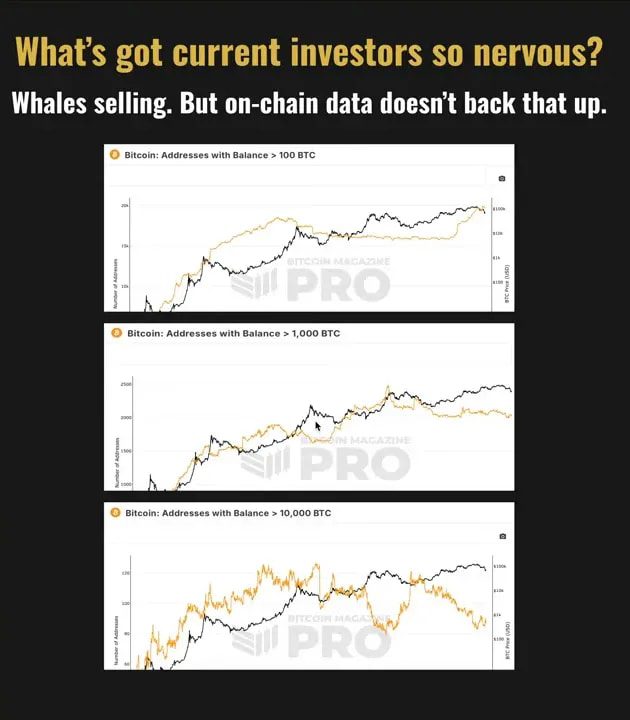
- Whale selling stories: The media loves the rags-to-riches-then-exit tales: the guy who bought cheap and sold billions. Those stories are real, but they don’t tell the whole picture. On-chain data shows many mid- and small-sized holders have actually been accumulating, and some large addresses that sold have begun buying back after cashing profits.
- Tech panic: quantum computing fears: The idea that quantum computers will instantly make Bitcoin insecure is scary. It’s plausible decades from now, but not an immediate, market-busting threat. Developers are already planning upgrades and big organizations are investing in quantum-resistance research.
- Conspiracy noise (Epstein-Satoshi): Viral claims that link unrelated figures to Bitcoin’s creation are distraction noise. They create social media hysteria but add zero constructive information about price, adoption, or fundamentals.
Sentiment matters because extreme pessimism often coincides with buying opportunities. When everyone is complaining about quantum hacks and Satoshi conspiracies, long-term buyers should at least be paying attention.
The on-chain and technical picture: what the charts and data are saying
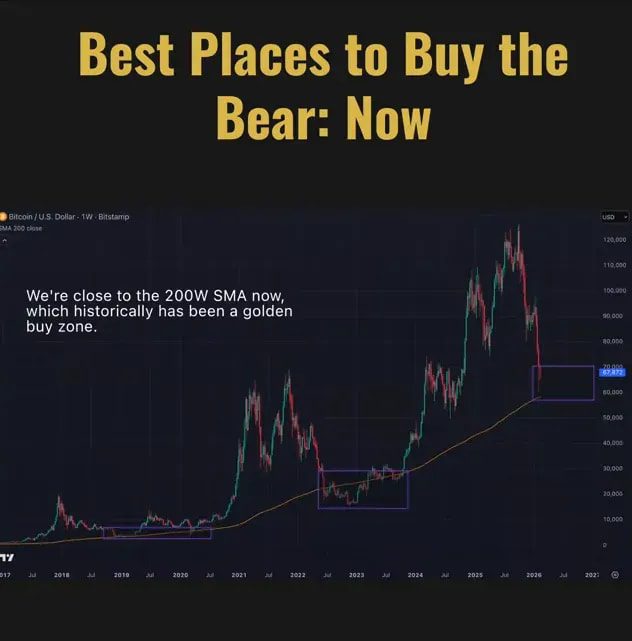
The cleanest technical measure veteran traders often look to is the 200-week moving average (SMA and EMA variants). Historically, major bear market lows tend to sit around that range. Here’s the current reality:
- Recent price action tested the 200-week EMA and then the 200-week SMA — a classic capitulation setup.
- On-chain indicators showed a major sell-off and panic (capitulation), followed by stabilization as some addresses began buying again.
- Address distribution tells a more nuanced story: addresses holding 100+ BTC have increased over the past year. Addresses with 1,000+ sat in a sideways pattern. Big 10k+ holders sold into the rally but have shown signs of buyback after cashing out near previous peaks.
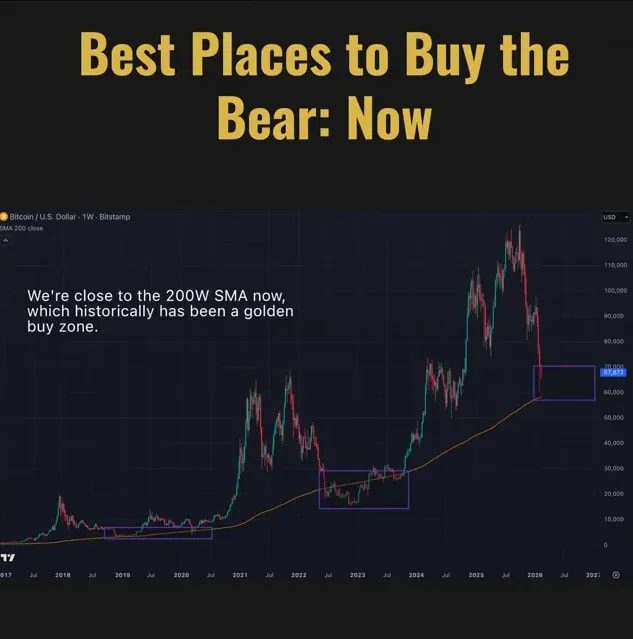
All of that means this environment has already flushed a lot of speculative froth. That’s not a guarantee of a bottom, but it’s a textbook sign that a major wave of selling has occurred and some long-term accumulation is starting.
Three realistic bear-market scenarios — from mild to brutal
No one can predict price with certainty. But it helps to map out plausible scenarios so you can prepare and act rationally:
- Stabilize and recover (base case)
Price re-tests historical support near the 200-week moving averages, bounces, and begins a multi-quarter recovery. Volatility remains high but no systemic contagion arrives. This is the scenario where disciplined buyers who dollar-cost average get rewarded.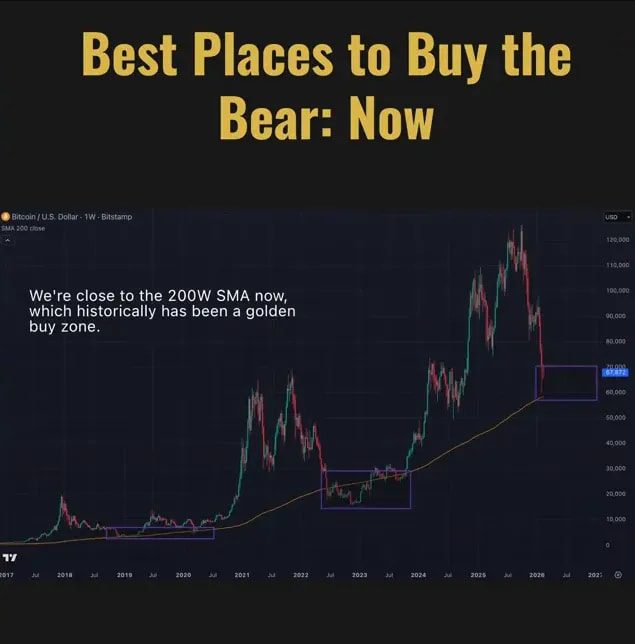
- Shallow deeper dip (possible)
A macro risk (stocks tumbling, geopolitical shock) drags BTC modestly below the 200-week SMA — think a dip into the low 50Ks if current levels are mid-50Ks. Painful headline-wise but ultimately short-lived once buyers step in.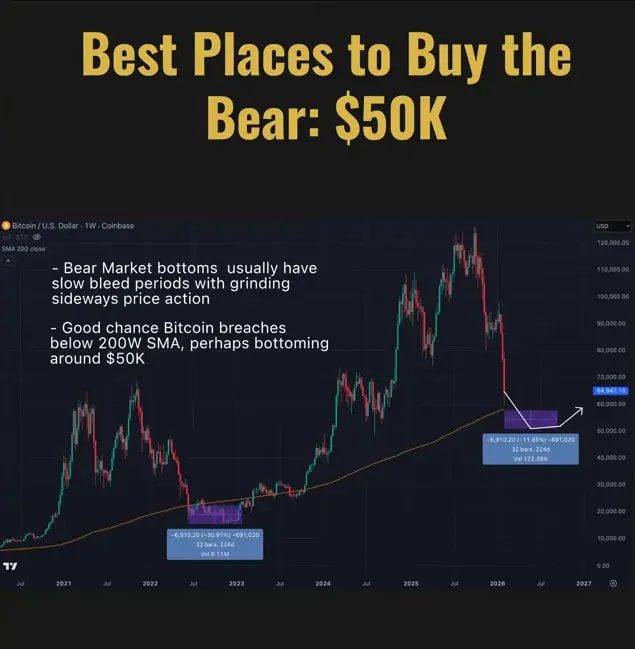
- Severe bear market (worst-case illustrated)
A sequence of catalysts — major fund insolvencies revealed, big exchange failures, or a cascade in altcoins — creates a full capitulation that repeats or exceeds past lows. A modeled extreme places a bottom near ~$34,000, representing roughly a 50%+ drawdown from recent highs. This would be brutal, but not impossible.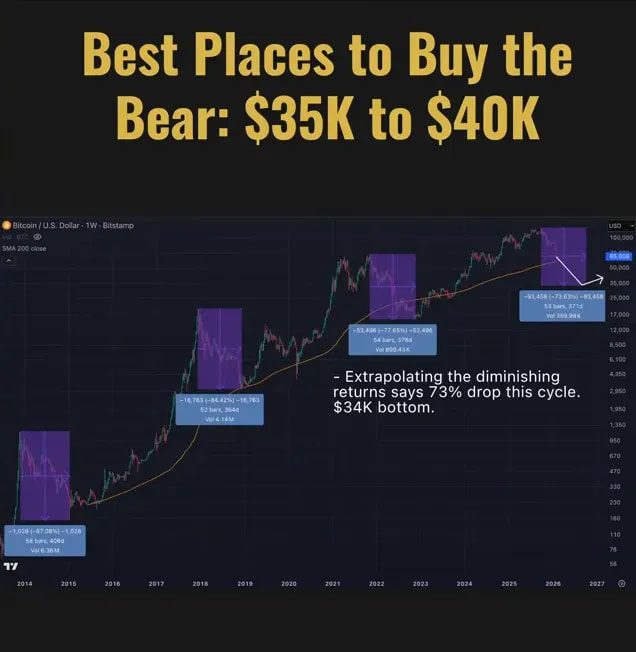
Which is most likely? The base case. Which is possible? All of them. Planning your approach around probability, not panic, is the point.
Why the “quantum hack” panic is overblown (for now)
Quantum computing will change many things. But the idea that Bitcoin will be instantly and unfixably broken in the next few years is unlikely. Key considerations:
- Most experts estimate practical quantum attacks on public-key cryptography are a decade or more away — often cited as 2030s or 2040s.
- Developers and companies are already working on quantum-resistance patches and migration plans. When a real threat appeared, coordinated protocol updates would be possible.
- If quantum can break Bitcoin, it can break everything: banking systems, social platforms, and government records. The problem is global, and the response will be multi-decade scientific and engineering work.
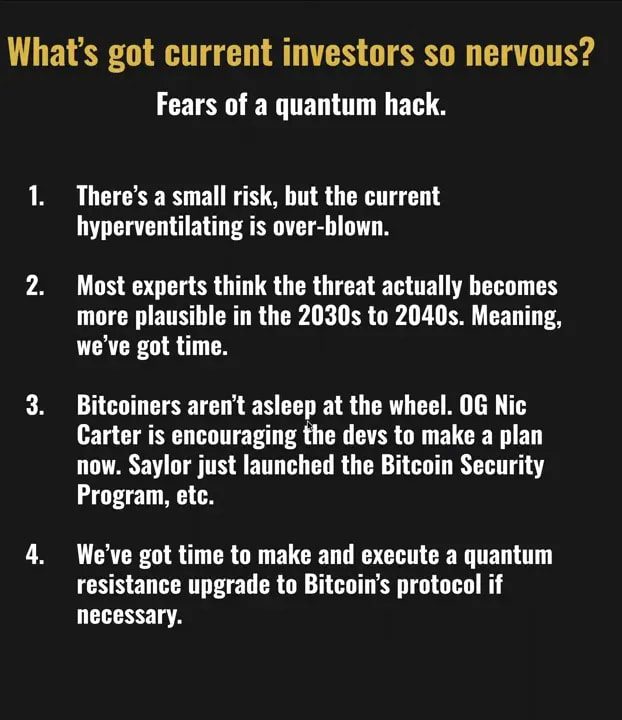
Bottom line: keep an eye on quantum research, but do not let it paralyze your investment decisions today.
Where to consider buying: value zones and execution strategies
If your goal is to accumulate Bitcoin in 2026, your best approach should be structured, unemotional, and repeatable. Here are practical rules that make sense in a volatile bear market:
1. Understand the “value zone”
Recent on-chain and technical action indicates we are in a historical value zone. That does not mean it’s the absolute bottom, but it tells you prices are discounted relative to prior cycles and fundamentals. Buyers stepping in now often get better long-term returns than those who panic-sell.
2. Dollar cost averaging (DCA) is your friend
Trying to time the exact bottom is a psychological trap. A disciplined DCA plan smooths out timing risk and removes the emotional guessing game. Simple options:
- Buy a fixed dollar amount weekly or monthly until you reach your target allocation.
- Add a second, smaller tranche to deploy if price falls into deeper value zones (for example, if BTC drops 20-30% from current levels).
3. Position sizing and allocation
Decide ahead of time how much of your portfolio Bitcoin will be. If you’re heavy in altcoins and emotionally fragile after a large drawdown, reduce concentration risk. If you have a long time horizon and conviction, allocate more, but only money you can afford to sit on — because you will need to be able to ignore headlines.
4. Use a checklist — not FOMO
- Confirm budget and allocation.
- Set DCA frequency and amount.
- Choose secure custody (hardware wallet or reputable custodial provider).
- Track cost basis and tax obligations (see below).
Taxes and paperwork: do not ignore this
Markets are noisy, but tax rules are not. Reporting requirements are increasing across jurisdictions. For example, exchanges in many countries are now required to report digital asset sales and transfers to tax authorities. That means sloppy records can lead to surprises.
Practical tax steps:
- Track cost basis for every transaction. Crypto-to-crypto trades are taxable events in many places.
- Use tax software or a qualified accountant who understands DeFi, staking, NFTs, and airdrops.
- Keep historic records — one subscription to a reliable crypto tax tool often covers multiple years and many exchanges.
Long-term perspective: how Bitcoin stacks up versus stocks and gold
It helps to zoom out. If you’d invested modest amounts across different assets at the beginning of 2020, Bitcoin still outperformed gold and the S&P 500 by a wide margin — even after recent drawdowns. That doesn’t guarantee the future, but it does frame the magnitude of past returns relative to traditional stores of value.
When you own assets with deep conviction, the real gains typically come from buying when others are fearful. That’s boring advice because it works: buy more when fear is high and hold through volatility.
Practical checklist before you buy
- Decide your allocation and risk tolerance. Write it down.
- Set a DCA schedule; automate it if possible.
- Choose custody: hardware wallet for long-term HODL, trusted custodian for convenience.
- Track transactions for taxes; connect exchanges and wallets to a tax tool.
- Maintain an emergency fund outside crypto; do not touch retirement or essential capital for speculative buys.
- Revisit allocation annually rather than reacting to daily prices.
Behavioral tips to avoid rookie mistakes
- Do not chase “call-the-bottom” clout on social media. People love betting that they called a bottom after the fact.
- Resist the temptation to leverage near a probable bottom. Leverage amplifies regret.
- Keep emotions out of execution: algorithmic buys (DCA) reduce the impulse to chase or bail.
- Learn from mistakes: small, disciplined trades teach more than big, emotional bets.
Quick recap
We are in a discounted price environment with risk and opportunity on both sides. Major sell-offs and on-chain capitulation have already happened, which often precedes recovery, but worse-case scenarios remain possible if additional systemic catalysts surface. The smartest move isn’t predicting the exact bottom — it’s building a plan, using disciplined execution like DCA, securing assets, and tracking taxes.
FAQ
Is the bottom already in for Bitcoin?
The bottom may or may not be in. On-chain signals and moves around the 200-week moving averages suggest a major capitulation occurred and a lot of panic is priced in. However, macro shocks or unexpected catalysts could push price lower. The prudent approach is to assume uncertainty and use a structured accumulation plan like DCA.
How worried should I be about quantum computing breaking Bitcoin?
Worried enough to care but not enough to panic-sell. Practical quantum attacks on public-key cryptography are generally considered a mid- to long-term risk (often cited as the 2030s or later). Developers and institutions are already planning defenses. Stay informed, but don’t let speculative timelines derail current investment decisions.
Should I sell altcoins and buy Bitcoin now?
That depends on your conviction and risk tolerance. Bitcoin is the market’s safe lane for long-term crypto exposure, but altcoins can offer higher returns and higher risks. If you’re emotionally taxed from losses, consolidating into Bitcoin to maintain exposure while reducing volatility might be sensible. Always avoid impulse moves and consider taxes when executing swaps.
What is the smartest way to buy Bitcoin in a bear market?
Dollar cost averaging is the simplest, most effective strategy for many investors. Decide your target allocation, automate recurring buys, and optionally set extra tranches for deeper value zones. Combine DCA with secure custody and tax tracking for a robust plan.
Could Bitcoin drop to $34,000 (or lower)?
Yes, that worst-case level is possible in a severe bear scenario involving cascading failures or major systemic shocks. It’s not the most likely outcome but it is plausible. Preparing for that possibility means budgeting your buys and keeping risk manageable so a single outcome won’t ruin your portfolio.
How should I handle taxes for crypto trades?
Track cost basis for every transaction. Crypto-to-crypto trades are taxable in many jurisdictions. Use reliable crypto tax software or a qualified accountant that understands DeFi, NFTs, staking, and airdrops. Keep historic records and ensure any reporting forms required by exchanges or tax authorities are covered.
Final note
Markets are messy, headlines are loud, and luck plays a role — but discipline wins more often than not. Buying Bitcoin in 2026 is about balancing opportunity with risk, having a plan, and executing it without succumbing to fear or FOMO. Stack sats. Automate buys. Secure your keys. Track your taxes. Then sleep like a normal human.