

Table of Contents
- Why most people lose money in crypto
- 1. Dollar cost averaging: the simplest way to build wealth
- 2. Everyone is shilling their own bags—do your own research
- 3. Holding winners with product-market fit beats constant trading
- 4. Stick to your plan and your targets
- 5. You may regret FOMO, but you will never regret learning
- Combining long-term investing with short-term opportunities
- Putting it together: a simple, repeatable plan
- FAQ
Why most people lose money in crypto
People come into crypto with good intentions. Some chase life-changing gains. Most want a better financial future for themselves and their families. Yet for every headline about someone who made a fortune, there are many more who lost money. The common thread is not luck or the asset class itself—it’s human behavior.
1. Dollar cost averaging: the simplest way to build wealth
Dollar cost averaging, or DCA, is the single habit I live by. It is a time-tested investing strategy across markets, not just crypto. The core idea is simple: invest a fixed amount regularly instead of trying to time the top or bottom.
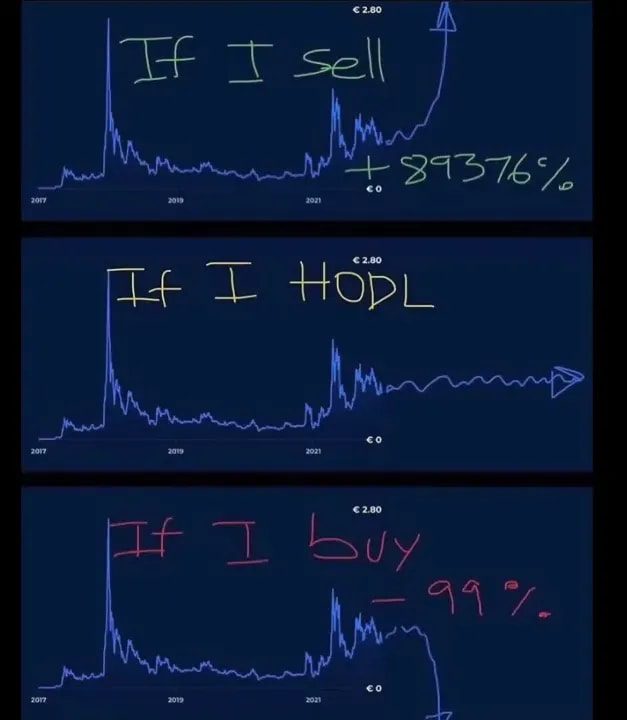
Markets are driven by emotion. When everyone is euphoric, people jump in—often at the top. When everyone is panicking, they sell—often at the bottom. Because you cannot reliably time markets, DCA removes emotion and forces discipline.
Practical approach:
- Set a schedule: weekly, biweekly, or monthly purchases.
- Pick quality assets: prioritize assets with clear product-market fit.
- Stick to the plan: if you decided to buy more after a 35% drop, follow through when it happens.
2. Everyone is shilling their own bags—do your own research
Crypto communities are noisy. People promote projects they hold. That is normal and legal, but it creates bias. When you see hype on social platforms, assume many participants have a financial stake.
Do your own research. Look for transparency: tokenomics, team, on-chain activity, and real user adoption. If creators disclose their holdings, that’s better than hidden conflicts—still, use disclosures as one input among many.
3. Holding winners with product-market fit beats constant trading
Generational wealth came from land in the past and internet wins in the dot-com era. Today, crypto offers similar asymmetric upside. The best strategy for most people is to identify assets with real adoption and hold them long term.
Practical portfolio construction:
- Bet on product-market fit: if users are adopting the network, that’s a good sign.
- Use a concentrated basket: I suggest a basket of roughly six well-researched assets. Expect a couple to fail, a couple to be mediocre, and one or two to deliver outsized returns over years.
- Cut losers fast: if the project never gains users, don’t be sentimental—reallocate to winners.
While AI and other technologies are generating buzz, retail access to life-changing gains is still easiest in liquid crypto markets. Decentralized AI projects and other emerging protocols can offer exposure that stock markets may not provide to the average investor.
4. Stick to your plan and your targets
A common mistake is changing profit targets as emotions swing. When your bags grow during a bull market, keep your exit plan the same. When the market plunges, don’t abandon your buy plan out of fear.
Set rules ahead of time:
- Decide entry rules (DCA schedule or percentage dips you will buy).
- Decide exit rules (profit-taking thresholds or rebalancing rules).
- Respect the thesis you wrote down.
5. You may regret FOMO, but you will never regret learning
Buying the wrong thing at the wrong time stings. FOMO leads to mistakes. What you will not regret is investing time to understand markets, protocols, and users. Knowledge compounds—just like money.
Spend time on high-signal sources, learn how to read on-chain data, watch adoption metrics, and follow credible disclosures. The more you learn, the better you can distinguish a sustainable project from short-term hype.
Combining long-term investing with short-term opportunities
Holding and DCA should be the foundation of most portfolios. That said, some traders want to capture shorter-term dips or momentum moves. If you choose to be active, do it with rules and tools that reduce emotional mistakes.
One way to complement a DCA-and-hold approach is to use reliable trading signals designed for spot markets. Crypto spot trading signals can highlight timely setups across Bitcoin, Ethereum, Solana, and other blockchains, helping you make more disciplined short-term entries without chasing noise. Use them as a tactical overlay—not a replacement—for your long-term plan.
Putting it together: a simple, repeatable plan
- Decide allocation: how much of your portfolio goes to crypto versus other assets.
- Choose your basket: pick 4–8 assets with strong adoption potential.
- Set a DCA schedule and stick to it.
- Define rules for cutting losers and taking profits.
- Continue learning and refine your thesis over time.
Repeat this with discipline. Over time, discipline beats timing every time.
FAQ
Is dollar cost averaging better than lump-sum investing?
DCA reduces timing risk and emotional mistakes, which helps most people avoid buying at euphoric highs or selling in panic. Historically, lump-sum can outperform when markets rise steadily, but DCA lowers regret and improves consistency for retail investors.
How can I tell if someone is shilling a coin?
Look for repetitive promotion, lack of transparent disclosures, and overly bullish claims without user or on-chain evidence. Check token distribution, team history, and whether the project shows real adoption. Treat promotional posts as a starting point for research, not an endorsement.
How many cryptocurrencies should I hold?
A concentrated basket of roughly six assets is a sensible balance between diversification and conviction. Expect a couple to fail, a couple to be average, and one or two to potentially deliver outsized returns over years.
Can I combine DCA with active trading?
Yes. Use DCA as your core accumulation strategy and set aside a smaller portion for active trades. If you want help spotting short-term opportunities without emotional bias, consider using vetted crypto spot trading signals to identify disciplined entries across major blockchains.
What if I miss the bottom?
You rarely know the bottom in real time. DCA solves this by spreading purchases over time so you capture different price points. If you still want to be opportunistic, allocate a reserve to buy during sharp dips that meet your pre-set criteria.