

Table of Contents
- Outline
- Price suppression and the core thesis
- What is rehypothecation — and why it matters
- Why fundamentals look much stronger than the current price
- Exchanges, tokenized markets, and where capital goes next
- Meta’s stablecoin comeback — why Ethereum and Solana matter
- Trading implications and risk management
- Actionable checklist
- FAQ
Outline
- What Michael Saylor means by price suppression
- Rehypothecation explained with real-world examples
- Fundamentals that argue Bitcoin should be much higher
- How exchanges and product expansion change capital flows
- Meta, stablecoins, and the opportunity for Ethereum and Solana
- Trading implications, risk, and tactical steps
- FAQ
Price suppression and the core thesis
The short version: an overhang of synthetic, paper Bitcoin positions created by rehypothecation and leverage can hold the price down even as real-world demand and fundamentals accelerate. That mismatch creates an artificial supply of “paper BTC” that competes with the spot market, compressing price until that overlay unwinds.
“I think what holds down the price of the asset is the lack of a fully formed non-rehypothecating credit system.”
What is rehypothecation — and why it matters
Rehypothecation happens when a financial intermediary reuses the same collateral multiple times to back new loans. In traditional finance, there are rules and practical limits. In parts of the crypto economy, collateral (like Bitcoin) can be transferred and reused across shadow banks, exchanges, and OTC desks with few practical limits.
Imagine you post 10 million dollars worth of Bitcoin as collateral. If that collateral gets rehypothecated two or three times, the ecosystem can end up with synthetic exposure equal to $30–$40 million while only one real $10 million stash exists. That creates excess leverage and synthetic supply that can push the spot price down without anyone moving the true Bitcoin supply.
Rehypothecation amplifies both directions. If traders want to short, they can create outsized short paper positions using reused collateral. If traders want to go long, the same mechanism can turbocharge upside. The danger is the market can stay suppressed for longer than fundamentals would suggest, then snap higher when the synthetic overlay unwinds — like a coiled spring.
Why fundamentals look much stronger than the current price
Several structural developments point to growing demand for Bitcoin and crypto infrastructure:
- ETF flows — institutional access broadens buyer base and can deliver sustained inflows.
- Corporate adoption — companies like MicroStrategy continue to add to reserves, and more firms may follow.
- Policy progress — regulatory movement such as stablecoin legislation, fewer aggressive lawsuits, and dialogues like the White House crypto summit clear the fog for institutional capital.
As one market leader put it, these developments should have Bitcoin trading far higher today. If the synthetic pressure is removed or reduced, price action could move quickly to new highs.
Exchanges, tokenized markets, and where capital goes next
When major exchanges expand their product sets, they change where and how capital moves. Coinbase adding stocks and ETF trading, combined with partnerships that put trading buttons where traders already consume information, means traditional capital becomes easier to route on-chain and into crypto-native products.

24-5 trading windows, tokenized equities, and integrated discovery (think trade buttons on major financial portals) reduce friction. That increases the odds that momentum shifts — once the macro overhang clears — will be faster and stronger. Signals that track these product launches and large flows can be useful for traders looking to spot inflection points. For those wanting tailored trade alerts, free crypto signals can provide timely cues when market structure or exchange flows begin to change.
Meta’s stablecoin comeback — why Ethereum and Solana matter
A tech giant planning to reintroduce stablecoin integrations is a big user-onramp story. Meta owns apps that reach billions of people; stablecoins that are US-compliant are mostly built on Ethereum, with Solana as the second largest host in that bucket.
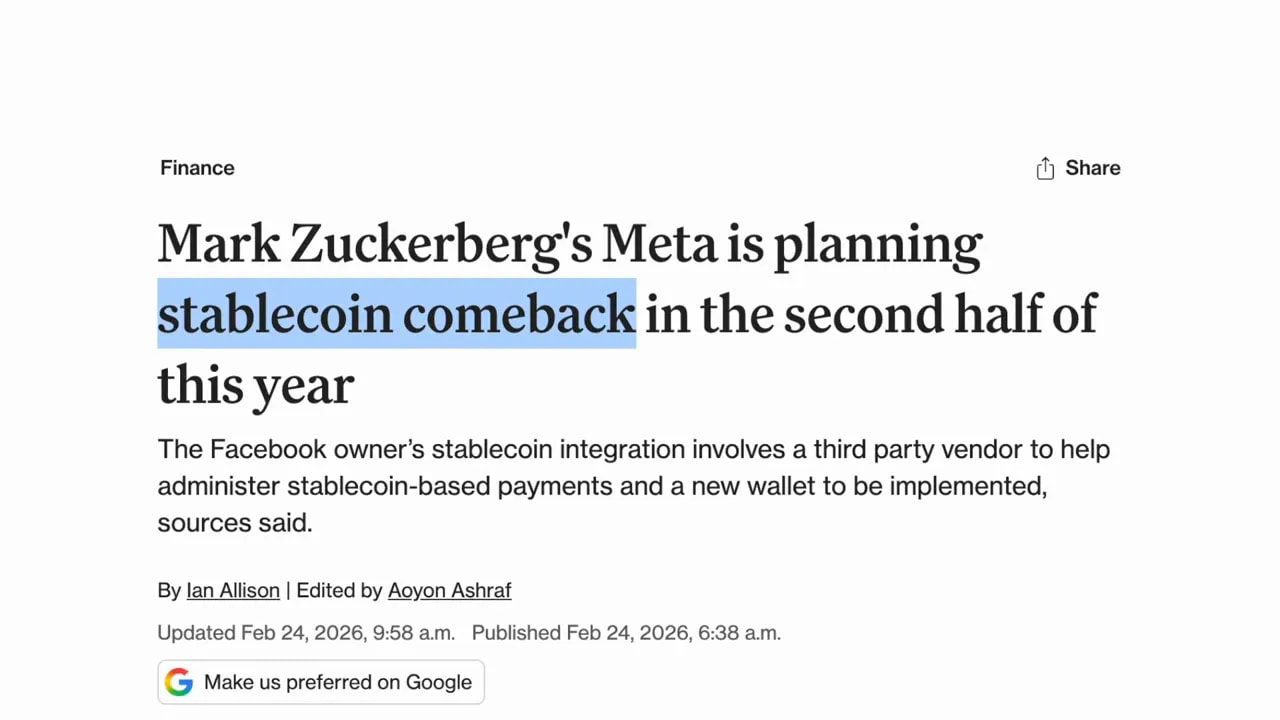
The stablecoin market today is sizable, and expectations from policymakers and industry—some projecting multi-trillion dollar markets over time—suggest material demand for the chains that host compliant stablecoins. That means broad fiat-to-crypto rails routed through Ethereum and Solana could bring sustained transactional demand, not just speculation.
For active traders thinking about allocation or on-chain flow strategies, signals that monitor stablecoin minting, on-chain transfers, and exchange inflows can be especially valuable. Our free crypto signals highlight those types of movements to help you catch early shifts in on-chain demand.
Trading implications and risk management
Rehypothecation can both suppress price and set the stage for rapid rallies. That means short squeezes and leveraged unwinds can be violent. Practical takeaways:
- Expect volatility when synthetic positions unwind. Position sizing and stop discipline matter.
- Prefer custody you control if you’re concerned about rehypothecation. Non-rehypothecating credit solutions are still immature.
- Watch flows, not just headlines. ETF inflows, on-chain stablecoin activity, and exchange order books give early signals of a regime change.
The structural picture favors more demand than supply for Bitcoin long term. The three horsemen of increasing institutional demand are: ETFs, companies, and sovereign or country-level allocations. If the macro gloom clears, that structural imbalance can produce rapid price appreciation.
Actionable checklist
- Monitor ETF net flows and major custody movements.
- Track on-chain stablecoin issuance and large transfers to exchanges.
- Prefer non-rehypothecating custody for large holdings.
- Use trade alerts or free crypto signals to stay ahead of sudden flow changes and leverage unwinds.
- Manage leverage carefully — the same mechanism that suppresses can amplify moves to the upside.
FAQ
What exactly is rehypothecation and how does it affect Bitcoin’s price?
Rehypothecation is when collateral is reused by intermediaries to back additional loans. In crypto, the same Bitcoin can be pledged, transferred, and re-pledged multiple times, creating synthetic market exposure that competes with spot supply. That extra synthetic supply can depress the spot price until the overlay is unwound.
Can price suppression last forever?
No. Synthetic suppression can persist for long periods, but structural demand (ETFs, corporations, sovereign purchases) and on-chain adoption eventually reassert themselves. When the synthetic positions unwind, the market can move quickly, like a coiled spring releasing.
Do ETFs really move the needle?
Yes. ETFs lower the barrier for institutional and large retail capital. Strong net ETF flows over time create sustained demand that is difficult for synthetic short positions to counter indefinitely.
How should I manage risk given rehypothecation and leverage in markets?
Use conservative position sizes, prefer custody solutions that prevent rehypothecation, and avoid excessive leverage. Monitor exchange and on-chain flows. Tools that provide timely trade alerts, like free crypto signals, can help identify when pressure is building or starting to unwind.
Which chains benefit most from mainstream stablecoin integration?
Ethereum is the primary host for US-compliant stablecoins, with Solana often the second. Both stand to gain from large-scale stablecoin adoption because stablecoins fuel on-chain liquidity, DeFi activity, and easy rails between fiat and crypto.