

Table of Contents
- Outline
- What X402 Is and Why It Matters
- How X402 Payments Work (A Simple Flow)
- Who’s Building With X402: Big Names and Fast Progress
- X402 Version 2: Multi-Chain and Agent-Ready
- Blockchains and Token Standards to Watch
- Catalysts That Could Push X402 Into the Mainstream
- Which Assets Could Benefit—and How to Approach Trading Them
- Practical Use Cases: Where X402 Could Actually Make Life Easier
- Risks and Headwinds
- Where We Go From Here
- What exactly is X402 and how is it different from traditional payment systems?
- Which tokens are used with X402?
- Which blockchains stand to benefit the most from X402?
- Will stablecoins like USDC see meaningful value appreciation from X402 adoption?
- How can investors get exposure without holding risky altcoins?
- What should developers know before integrating X402?
- Final Thoughts
Outline
- What X402 is and why it matters
- How X402 payments work, step by step
- Which companies and tech giants are already building with X402
- Blockchains and token standards powering X402 adoption
- Catalysts that could accelerate adoption
- Assets and trading opportunities to watch
- Practical use cases, risks, and what to expect next
- FAQ
What X402 Is and Why It Matters
X402 is an elegant, internet-native payment protocol that turns a once-forgotten HTTP status code—402 Payment Required—into a standardized way to pay for digital services directly over HTTP. Think of it as an express lane for on-chain micropayments that works with the same web plumbing your browser already uses.
Born at Coinbase and launched in May of last year, X402 is designed to make tiny, one-off payments frictionless. No accounts, no long checkout flows, no API keys—just a client (a human, an app, or an AI agent) requesting access, a server asking for payment, and a verifiable on-chain settlement handled by a helper called a facilitator. It’s plug-and-play for developers: a few lines of code and a site can accept X402 payments.
Why should this matter to anyone outside crypto dev circles? Because it fixes a real-world problem that has resisted elegant solutions for years: the pain of paying for small, per-request digital services. Subscriptions, clunky paywalls, and slow credit card flows are poor fits for modern, ephemeral web interactions—especially when AI agents are buying services autonomously. X402 offers a lightweight, language-agnostic replacement.
How X402 Payments Work (A Simple Flow)
The flow is intentionally straightforward. At a high level:
- Client requests content or a service from a server.
- Server responds with HTTP 402 Payment Required and includes a payment request that states the price and accepted tokens.
- Client signs a payment in USDC or another supported token and retries the request with the payment attached.
- A facilitator verifies the payment and settles it on-chain.
- Server confirms payment and delivers the goods.
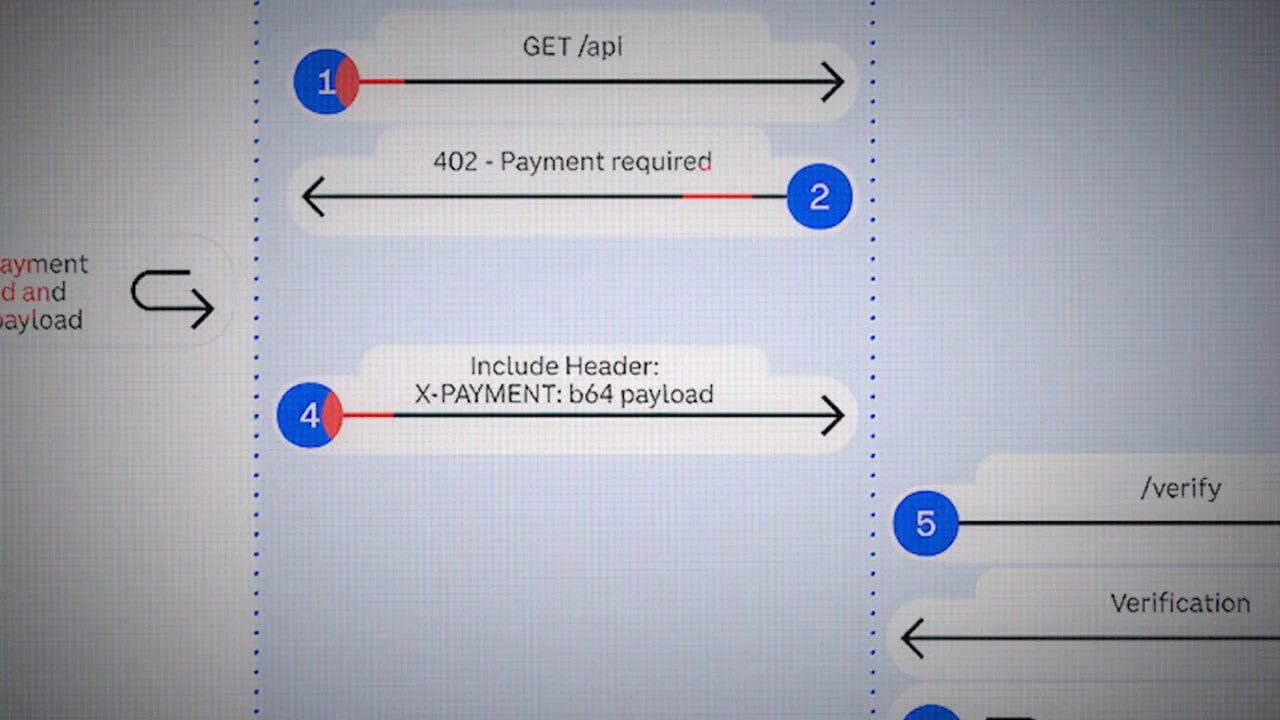
That facilitator step is key. Providers can avoid maintaining blockchain infrastructure because facilitators handle signature verification, token checks, and settlement. Coinbase runs a facilitator on Base with no fees, but X402 is intentionally chain-agnostic: it can run on multiple networks and accept multiple tokens while keeping the interface HTTP-native.
One immediate consequence is agentic commerce. AI agents can autonomously purchase API calls, data, cloud storage, or any number of tiny services in real time without human intervention. Agentic wallets and the Model Context Protocol (MCP) layer on top of X402 to create wallets and context for these agents, enabling continuous, permissionless microtransactions.
Who’s Building With X402: Big Names and Fast Progress
Progress has been rapid and backed by a surprising lineup of mainstream players. A non-exhaustive timeline of early movers helps explain why interest is so high:
- Coinbase created X402 and incubated the early ecosystem.
- Cloudflare partnered with Coinbase to help drive adoption across millions of websites.
- Google announced an AI agent protocol (AP2) that uses the X402 extension for inter-agent transactions.
- Visa announced work on its Trusted Agent Protocol and alignment with X402 for agentic commerce.
- Amazon Web Services added X402 support, indicating potential cloud integrations.
- Stripe integrated X402, enabling billing of AI agents in USDC on Base—a significant FinTech endorsement.
- CoinGecko enabled X402 for per-request payments in USDC, a clear real-world API use-case.
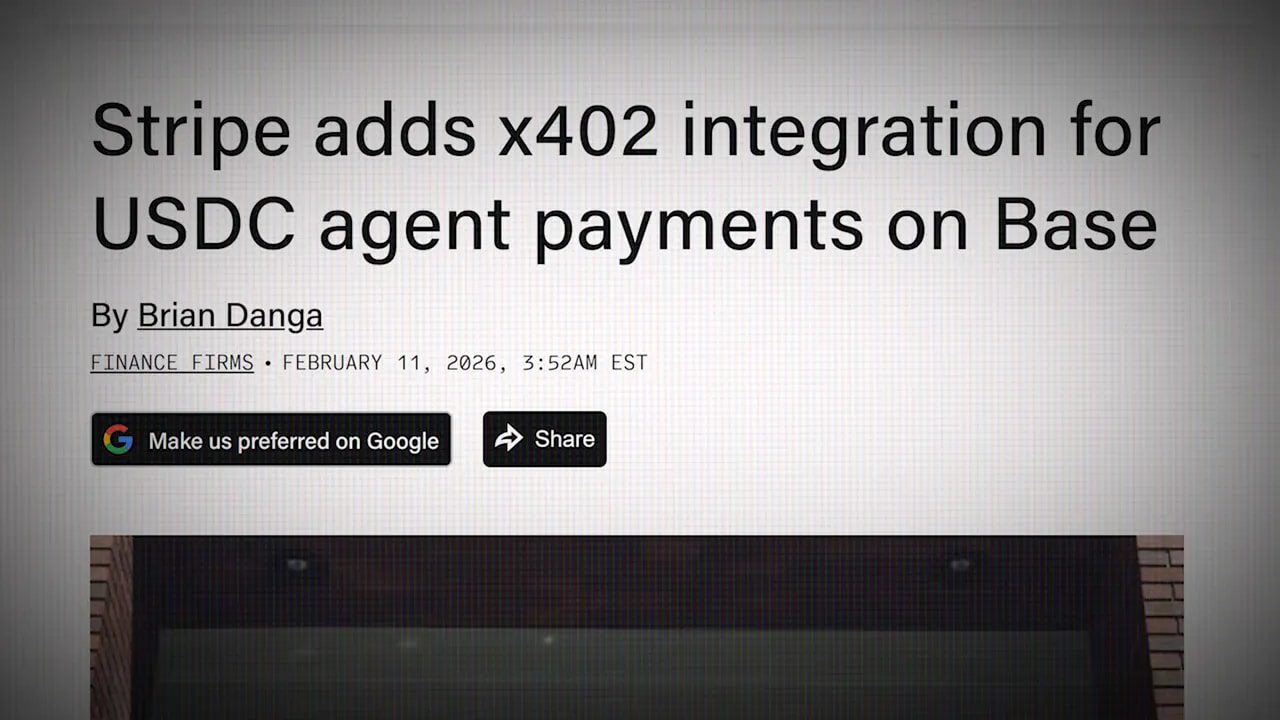
These partnerships matter because they move X402 from academic experiment to usable plumbing. When cloud providers, gateway processors, and API marketplaces support a protocol, developers and businesses can experiment without heavy infrastructure builds.
X402 Version 2: Multi-Chain and Agent-Ready
Just seven months after launch, X402 v2 arrived with a series of upgrades that show the protocol is maturing rapidly. Key v2 features include:
- wallet-based identity for agents and clients
- automatic API discovery
- dynamic payment recipients
- a modular SDK for custom networks and legacy rails
- standardized network and asset identification for multi-chain support
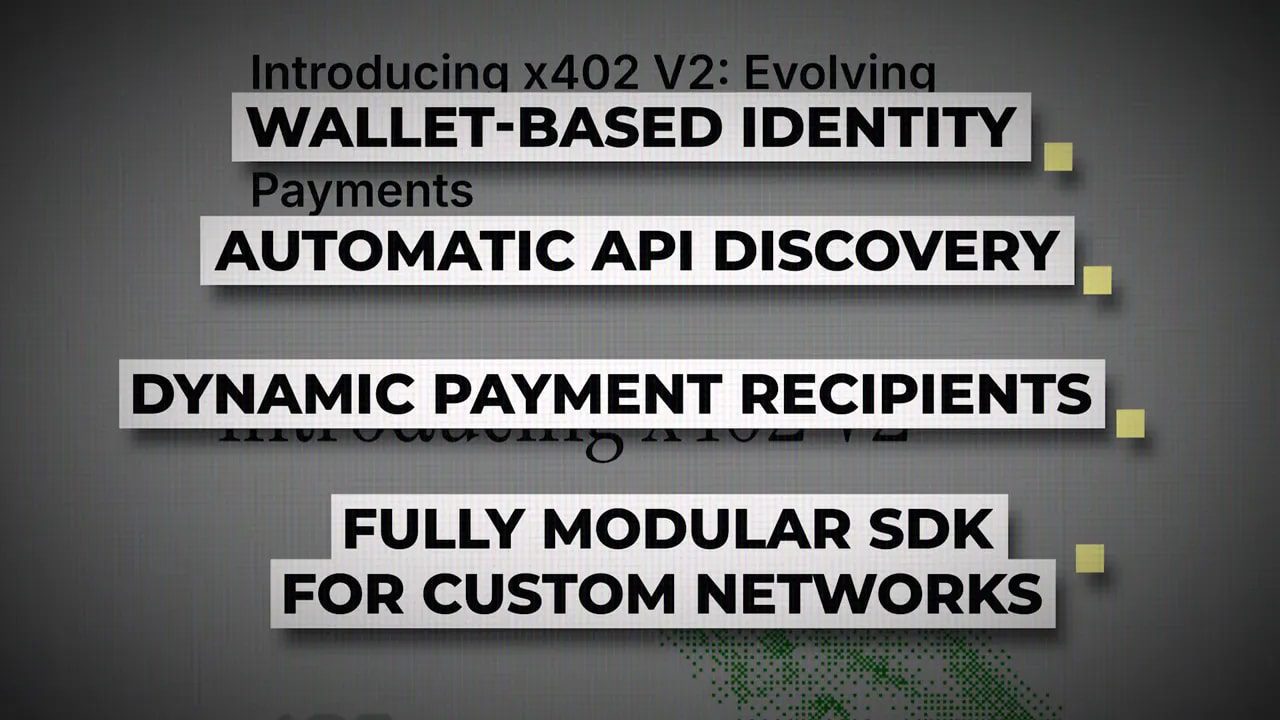
Those changes make it easier for projects to integrate X402 in a multi-chain world. The standardized asset and network IDs mean the protocol can confidently route and verify payments across diverse blockchains without bespoke integrations for every service.
Blockchains and Token Standards to Watch
Multiple chains have embraced X402, and the activity landscape has shifted since launch. A few high-impact pieces:
Ethereum and ERC-8004
Ethereum remains central because Base is built on top of it. A new token standard, ERC-8004, complements X402 by handling agent identity, reputation, and validation via three on-chain registries:
- Identity registry: assigns each agent an NFT as an ID
- Reputation registry: logs client feedback
- Validation registry: enables third-party verification
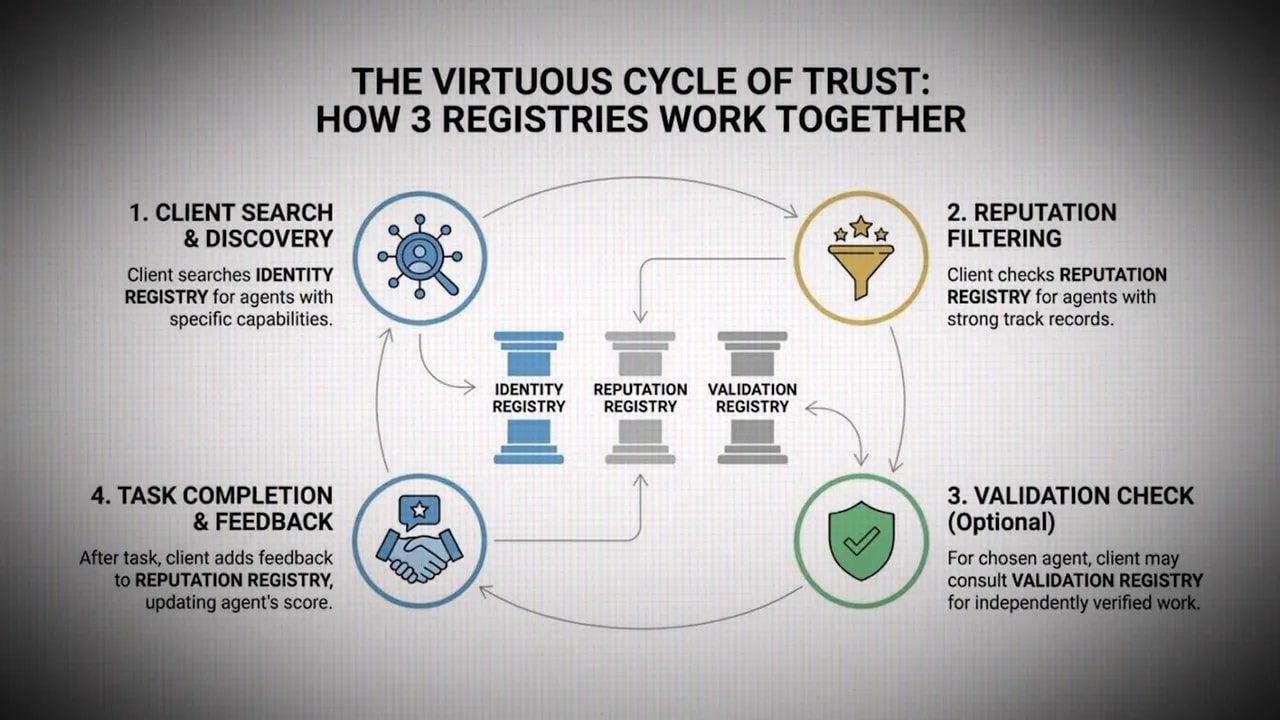
ERC-8004 went live on mainnet and splits responsibilities with X402—ERC-8004 handles identity and trust while X402 handles per-request USDC settlement. This combination creates a powerful primitive for agent economies on Ethereum.
Solana: Early Transaction Leader
Surprisingly, Solana overtook Base to become the busiest chain for X402 transactions by early December and handled over 90% of activity in some weeks. Its speed and low fees are a natural fit for micropayment-heavy workloads.
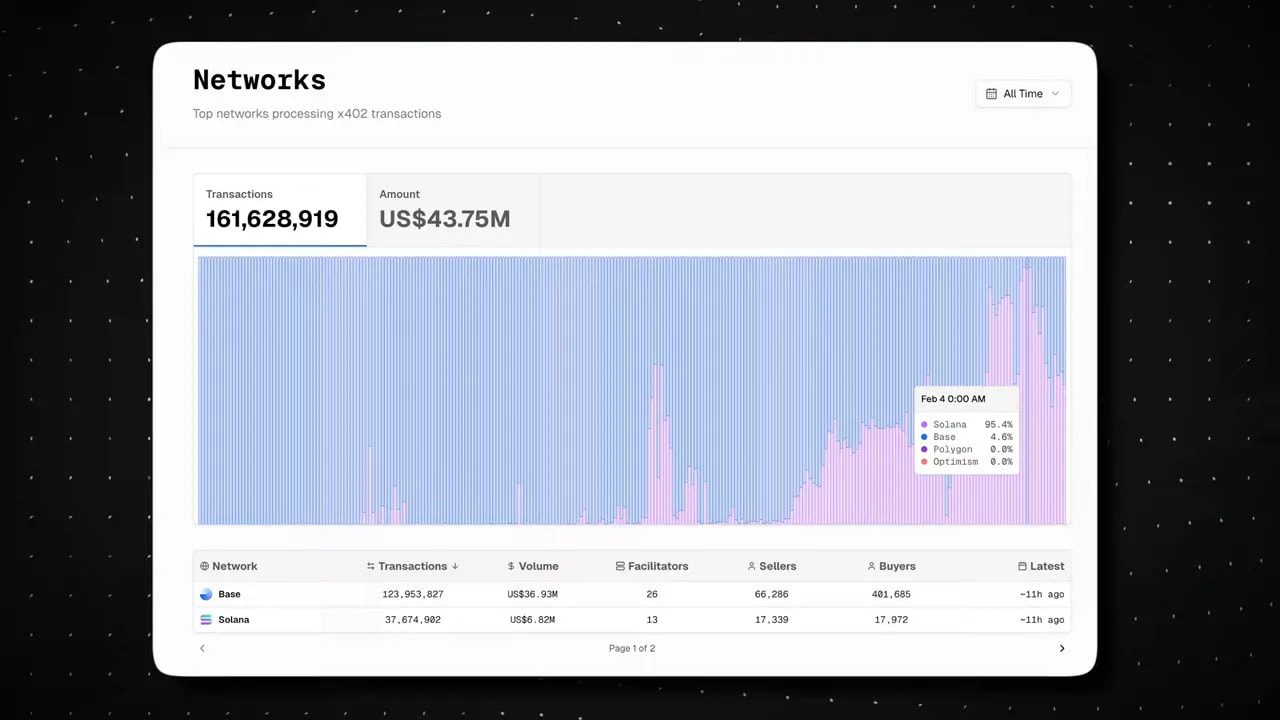
Analysts point to Solana as a likely beneficiary if X402 use shifts from speculative memecoin-driven volume to genuine micropayment use-cases. Fast settlement and low marginal costs make it attractive for per-request billing at scale.
Other Chains: Chainlink, Avalanche, NEAR, Polygon, Algorand, Cardano
- Chainlink integrated X402 into its Runtime Environment to enable verified tasks with X402 payments.
- Avalanche implemented a Rust-based X402RS variant to support native tooling.
- NEAR was an early collaborator with Coinbase and is focused on integrating liquidity for cross-chain agent transactions.
- Polygon has built agentic payments infrastructure, including facilitator tooling and documentation.
- Algorand added full X402 support on mainnet in mid-February after adding it to its roadmap.
- Cardano has been testing X402 on testnet—mainnet support appears likely as testing continues.
Catalysts That Could Push X402 Into the Mainstream
X402 is still young, but several clear catalysts could accelerate adoption:
- More TradFi and FinTech integrations — Stripe, Visa, and PayPal-level support would be transformative.
- Cloud provider rollouts — AWS and Google embedding X402 into cloud and AI services could create instant demand for agentic payments.
- Protocol development — Iterative upgrades and SDK improvements will lower friction for developers.
- Hackathons and developer incentives — Grants, competitions, and bounties attract builders who turn concepts into products.
- Regulatory clarity — Institutional adoption often follows legal certainty. Clear rules would remove a major barrier.
- Real-world success stories — Demonstrations of AI agents paying for useful services will encourage others to add X402 support.
Hackathons and developer events often produce the next big integrations. The community has already run dedicated X402 hackathons; expect more practical demos to emerge and attract attention at developer conferences and later at Ethereum Devcon.
Which Assets Could Benefit—and How to Approach Trading Them
X402 creates value in two broad buckets: payment rails (stablecoins) and infrastructure tokens (chains, oracles, and tooling). Understanding this split is key to identifying realistic gains and the right risk profile.
Stablecoins: USDC First Among Equals
USDC is currently the primary token used for X402 payments. The more transactions that flow through X402, the higher the on-chain circulation and utility of USDC. That’s a direct, mechanical beneficiary of protocol adoption.
Other stablecoins such as USDT or USDS could see increased usage if networks and providers decide to support them. Stablecoins enhance liquidity and minimize user friction, which is why they are central to the X402 model.
Infrastructure Tokens: ETH, SOL, LINK, AVAX, NEAR, MATIC, ALGO, ADA, and a Future Base Token
Value accrues to chains that host X402 activity. Ethereum benefits indirectly through Base and ERC-8004 adoption, while Solana’s early transaction dominance positions SOL as a potential winner if usage scales. Oracles and verification layers like Chainlink are natural beneficiaries because they tie real-world data to agentic workflows.
If you prefer lower-risk exposure, consider publicly traded stocks tied to X402’s success—Coinbase and Circle. These companies stand to benefit from Base activity and increased USDC utility, respectively. Keep in mind equities follow broader market sentiment and may not move in lockstep with on-chain adoption.
For traders looking to capitalize on rotation between chains or dips after initial hype, a structured approach helps. Crypto markets still respond strongly to narrative-driven volume. Tracking on-chain metrics such as X402 transaction counts, facilitator activity, and where transactions settle can reveal entry opportunities. A disciplined signal service can be useful here to time positions across chains as activity migrates from speculative peaks to sustained utility-driven flows.
Trading note: If you trade X402-related assets, consider using a reputable crypto trading signal service to identify high-probability setups and manage risk across multiple chains. Signals that combine on-chain activity, protocol news, and macro context can turn noisy headlines into actionable trades without constant monitoring.
Practical Use Cases: Where X402 Could Actually Make Life Easier
Use cases range from small but high-frequency payments to new business models that weren’t viable before:
- Per-request payments for APIs and data feeds (example: CoinGecko’s pay-per-data model).
- Agentic purchases for cloud compute, storage, and micro-SaaS functions where AI agents pay for incremental services.
- Micropayments for content and premium articles without forcing subscription walls.
- Machine-to-machine commerce where devices or services autonomously procure encrypted secrets, compute tasks, or validation services.
- Cross-chain agent workflows where liquidity routing and facilitator verification enables multi-chain transactions.

These scenarios are especially compelling where human friction is a bottleneck. Autonomous agents that can find, evaluate, and pay for services instantly unlock composability for enterprise and consumer workflows alike.
Risks and Headwinds
No innovation is without risk. With X402, consider:
- Regulatory uncertainty around stablecoins, on-chain payments, and automated agent wallets.
- Security concerns around facilitator implementations and signature verification.
- Centralization risks if a handful of facilitators or providers control significant transaction flow.
- Narrative volatility—early spikes were largely driven by memecoin speculation, which can rapidly inflate and collapse activity metrics.
- Adoption inertia—web services adopt slowly if internal payment and accounting systems need change, even with simple code installs.
Understanding these risks is essential before taking a position in any related asset. The most appealing opportunities often come after headlines cool and real usage starts to grow steadily.
Where We Go From Here
X402 is a rare example of a protocol that stitches together web-native interaction and blockchain settlement in a way that feels inevitable. The combination of HTTP-first design, facilitator abstraction, multi-chain support, and immediate utility for AI agents makes it stand out.
Yet the path from promising protocol to mainstream backbone passes through real-world integrations, regulatory clarity, and sustained developer activity. That’s why monitoring three things is useful:
- On-chain X402 metrics—transaction counts, facilitators, tokens used.
- Major integrations—cloud providers, payment gateways, API marketplaces.
- Developer momentum—hackathons, SDK releases, and practical demos.
For anyone watching markets, X402 creates both speculative and pragmatic plays. Stablecoins capture payment volume, chains capture settlement value, and tooling projects capture developer mindshare. If you trade these rotations, consider using a disciplined crypto trading signal service to identify entries when market noise subsides and real metrics start to move.
What exactly is X402 and how is it different from traditional payment systems?
X402 is an HTTP-native payment protocol that enables on-chain settlement for per-request digital services. Unlike traditional systems that rely on credit card flows, subscriptions, or centralized APIs, X402 integrates payment negotiation into standard HTTP responses (402 Payment Required), allowing clients—including AI agents—to attach signed stablecoin payments and receive immediate service delivery once a facilitator verifies on-chain settlement.
Which tokens are used with X402?
USDC is the most frequently used token for X402 transactions today. The protocol is chain-agnostic and supports other stablecoins and tokens if the provider and facilitator agree. The choice of token often depends on liquidity, regulatory comfort, and facilitator support.
Which blockchains stand to benefit the most from X402?
Ethereum benefits indirectly via Base and ERC-8004 integrations. Solana has already recorded the majority of transaction volume in some periods and is well-suited for micropayments due to speed and low fees. Chains like Avalanche, NEAR, Polygon, Algorand, and Cardano are also integrating X402 and could capture activity depending on developer adoption and facilitator deployment.
Will stablecoins like USDC see meaningful value appreciation from X402 adoption?
Stablecoins benefit from greater transactional volume and real-world utility, which can increase on-chain demand and circulation. However, stablecoins are designed to remain pegged rather than appreciating assets, so they are utility plays rather than speculative gains. Equity positions in companies issuing or managing stablecoins or related infrastructure may be better positioned for price appreciation.
How can investors get exposure without holding risky altcoins?
Lower-risk exposure can come from equities tied to the ecosystem, such as Coinbase and Circle. These publicly traded companies stand to benefit from Base activity and stablecoin usage. Another approach is focused exposure to large-cap blockchains like Ethereum and Solana, though these still carry crypto market volatility.
What should developers know before integrating X402?
Integration is lightweight: a few lines of code can enable X402 payments. Developers should evaluate facilitator options, supported tokens, and network compatibility. Considering user flows—how payments are requested, retried, and confirmed—is essential. Security audits for facilitator code and clear UX for failure modes should be prioritized.
Final Thoughts
X402 is more than a clever reuse of an HTTP status code. It is an architectural shift toward web-native, agent-ready payments that could unlock new classes of machine-driven commerce. The early movers—Coinbase, Cloudflare, Google, AWS, Stripe, Visa and a host of chains—have given the protocol legitimacy. Whether X402 becomes pervasive will depend on a mix of developer adoption, regulatory clarity, and the emergence of real, sustained use-cases beyond memecoin-driven mania.
If you are exploring trading opportunities around X402, remember to separate speculation from utility. Stablecoins capture payment value while chains and tooling capture settlement and developer value. For traders, disciplined signals that synthesize on-chain metrics, news, and price action can help turn protocol-level narratives into actionable strategies without constant monitoring.
There is a lot to be excited about. Keep an eye on transaction metrics, facilitator deployments, and the next wave of SDK-driven products—the future of autonomous, machine-driven commerce is being built right now.