

Table of Contents
- Overview
- What you need to set up
- Core trend filter
- Entry, stop loss, and target rules
- Practical tips and risk management
- When not to trade
- Quick strategy checklist
- FAQ
- Final thoughts
Overview
This is a simple, high-probability scalping approach built around the Williams Fractals indicator and three exponential moving averages. It is especially friendly to the one-minute timeframe, but the rules translate well to higher timeframes too. The core idea is to trade with the trend defined by the moving averages and use Williams Fractals as precise pullback entries.
What you need to set up
Use any charting platform that supports indicators (TradingView is a common choice). Add the following:
- Williams Fractals — set the period to 2. I prefer flipping the default colors so the bullish arrow is green and the bearish arrow is red for quick readability.
- Three moving averages — set lengths to 20, 50, and 100. Color them green, yellow, and red respectively so the order is obvious at a glance.
- Timeframe: start with the one-minute chart for scalping. This strategy works on other timeframes but expect fewer signals on higher frames.
Core trend filter
Only take trades that align with the moving average order. This keeps you trading with the higher-probability direction.
- Longs: 20 above 50, and 50 above 100 (20 > 50 > 100).
- Shorts: 100 above 50, and 50 above 20 (100 > 50 > 20).
- If the MAs are crossing or flat, skip the setup until the order is clear.
Entry, stop loss, and target rules
Entries rely on pullbacks and the Williams Fractal arrow as a trigger. Keep rules strict to increase win rate.
Long entry
- Wait for price to pull back under the 20 EMA or under the 50 EMA while the moving averages remain stacked bullish.
- Enter when a green Williams fractal arrow appears after that pullback. This is the trigger to initiate a long position.
- Place stop loss just below the 50 EMA if the entry came off the 20 EMA. If the price pulled below the 50 before the fractal, place the stop below the 100 EMA.
- Set a profit target at a 1.5:1 risk to reward.
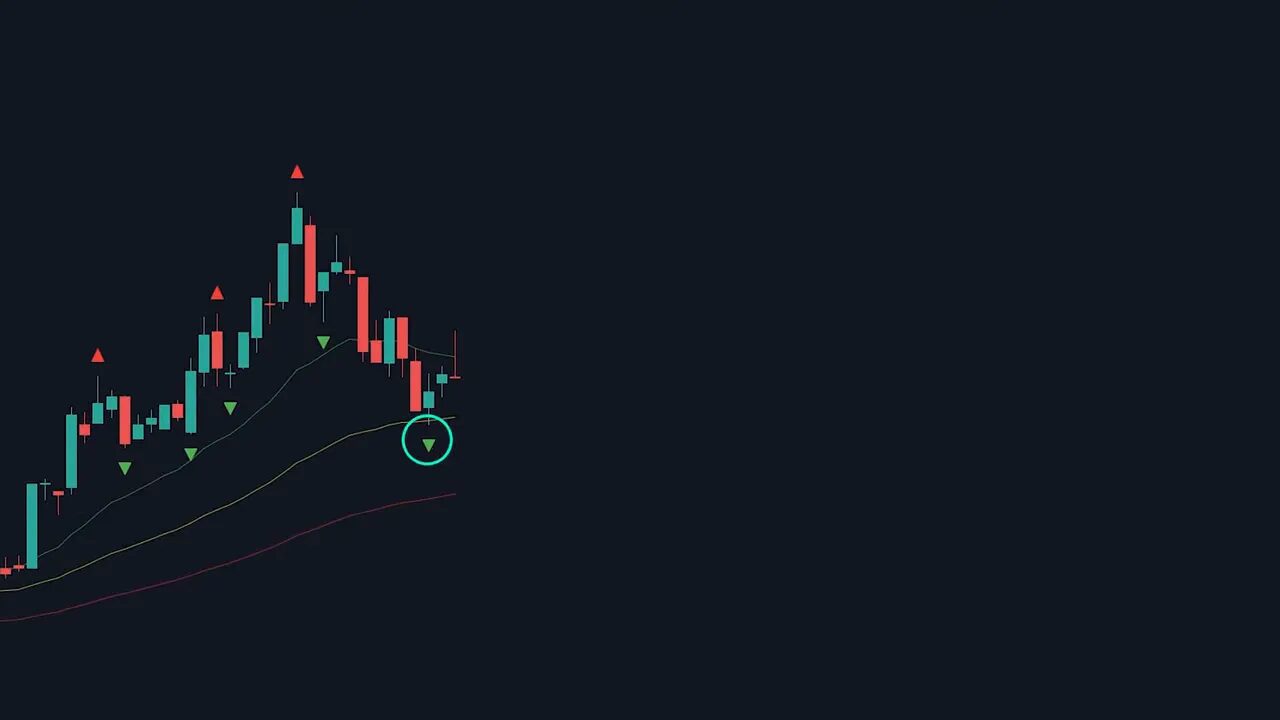
If the price closes below the 100 EMA at any point, do not take bullish fractal signals. A close under the 100 greatly increases the likelihood of further downside, so ignore green fractal arrows while the close remains below the 100 EMA.
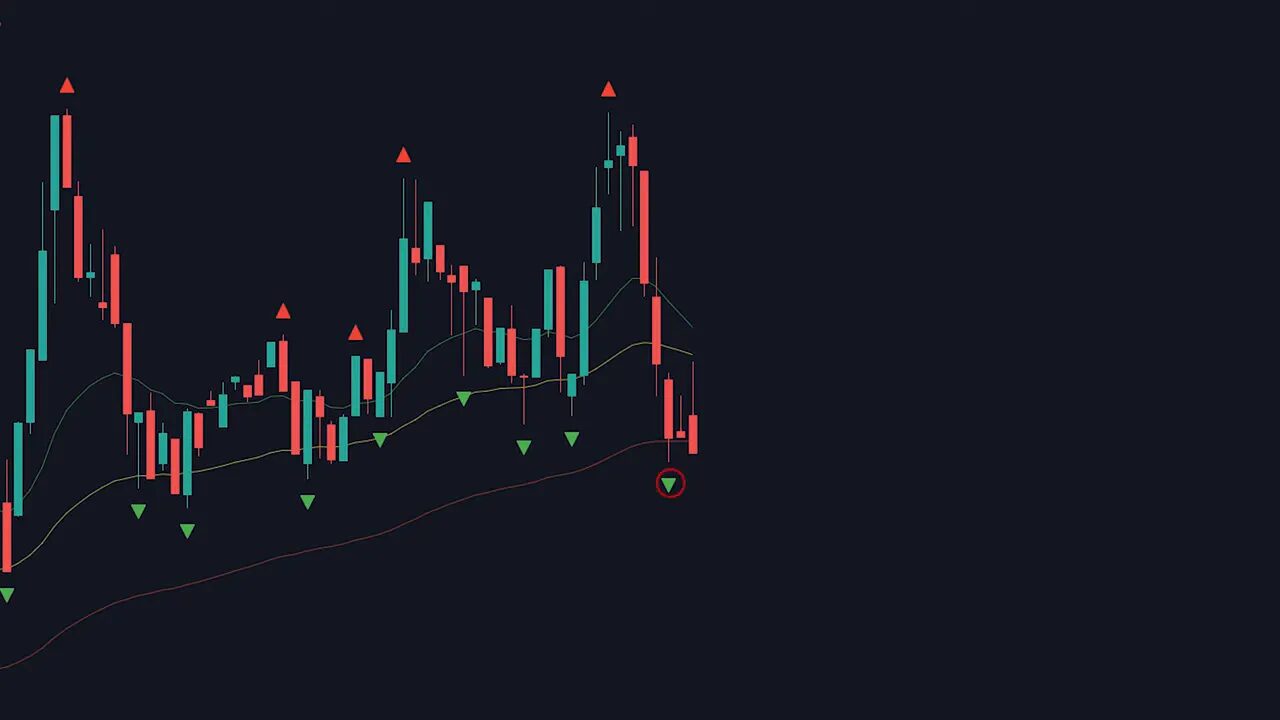
Short entry
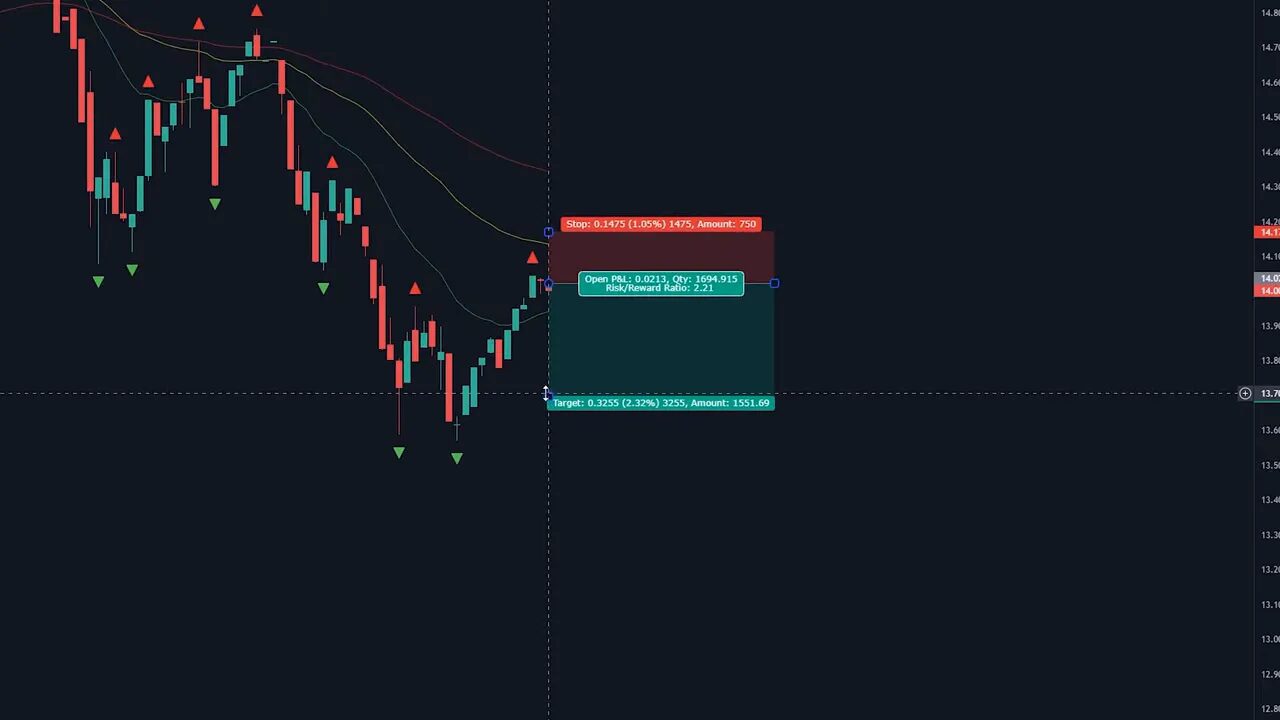
- Confirm the moving averages are stacked bearish (100 on top, 50 middle, 20 bottom).
- Wait for price to pull above the 20 EMA.
- Enter when a red Williams fractal arrow appears following that pullback.
- Place stop loss just above the 50 EMA and target a 1.5:1 reward.
Practical tips and risk management
- Trust the rules and be patient. Entries on the one-minute chart can take time to reach target; avoid jumping out early unless your stop is hit.
- Expect a large number of signals on very low timeframes. If scalping the one-minute, make sure your broker or exchange has low fees. High fees will eat into profits quickly.
- Position sizing: risk a small percentage of your account per trade. With a high volume of trades, consistent small risks preserve capital and reduce drawdown.
- Backtest the setup on the markets you trade. Results will differ between forex, stocks, and crypto due to volatility and liquidity differences.
For traders focused on crypto markets, combining this method with reliable trade ideas can save time and help filter opportunities. Our crypto signals provide vetted setups across major blockchains and can be a useful complement to a systematic scalping routine when you need fast, curated trade ideas.
When not to trade
- Avoid trading when the moving averages are tangled or crossing frequently.
- Stay out during major news releases that cause erratic price action unless you have a news-specific plan.
- Ignore fractal entries that occur after a daily close below the 100 EMA in the direction opposite your intended trade.
Quick strategy checklist
- MA order correct (20, 50, 100 for longs; reversed for shorts).
- Price pulled back under/above 20 or 50 EMA.
- Williams fractal arrow appears as entry trigger.
- Stop loss under/above appropriate EMA (50 or 100).
- Target set to 1.5 times the risk.
- Broker fees low enough for frequent trading.
FAQ
What timeframe is best for this strategy?
The one-minute timeframe is ideal for scalping and provides many setups. The rules also work on higher timeframes such as 5-minute or 15-minute, but expect fewer signals and adapt position sizing accordingly.
What indicator settings should I use?
Set Williams Fractals period to 2. Use three EMAs with lengths 20, 50, and 100. Color them distinctly to quickly identify stack order.
Where should I place my stop loss and target?
Place the stop just beyond the next higher EMA: for entries off the 20 EMA use stop below the 50 EMA; if price crosses the 50 before entry, use the 100 EMA. Use a 1.5:1 reward to risk ratio for targets.
Does this strategy work on crypto?
Yes, it works on crypto pairs but be mindful of greater volatility and occasional low liquidity. Pairing the strategy with curated trade ideas or a crypto signals service can help identify favorable markets and manage risk.
How many trades will I get and how do fees affect performance?
On the one-minute chart you will receive many signals. High trading frequency means fees can significantly reduce profits, so use a low-fee broker or exchange for scalping to preserve edge.
Final thoughts
This approach keeps things mechanical: trade with the trend, wait for a clean pullback, and use the Williams Fractal as a precise trigger. Discipline, low fees, and consistent risk management are the engines that turn this setup into a repeatable edge.
Practice on a demo account until the rules feel natural, then scale position sizes carefully. Small, consistent wins compound faster than occasional large ones when you trade frequently on short timeframes.