

Table of Contents
- Why one trader’s rule matters
- The pattern that shows up over decades
- What the stats say
- Backtest: 45 years of evidence
- Why this makes economic sense
- Limitations and the common criticism
- How to use the political-cycle edge without going all-in
- Practical checklist for traders
- What’s next? According to the rule
- Final thoughts
- Frequently asked questions
Why one trader’s rule matters
Stanley Druckenmiller is famous for producing extraordinary returns over decades. One simple rule he reportedly used changed how many traders think about macro timing: buy the market two years before a presidential election and sell at the election. The idea is blunt, almost rude in its simplicity, yet it maps to a clear political incentive—incumbent parties push for stronger near-term economic numbers to boost re-election chances.
The pattern that shows up over decades
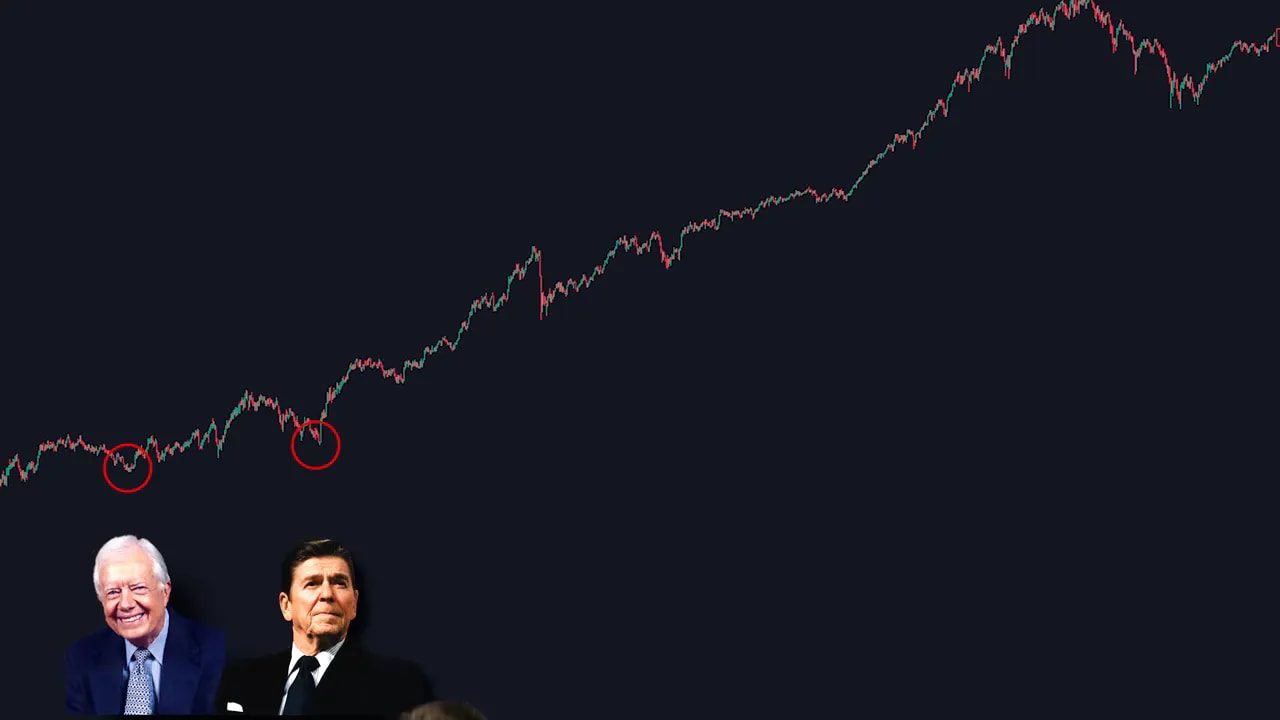
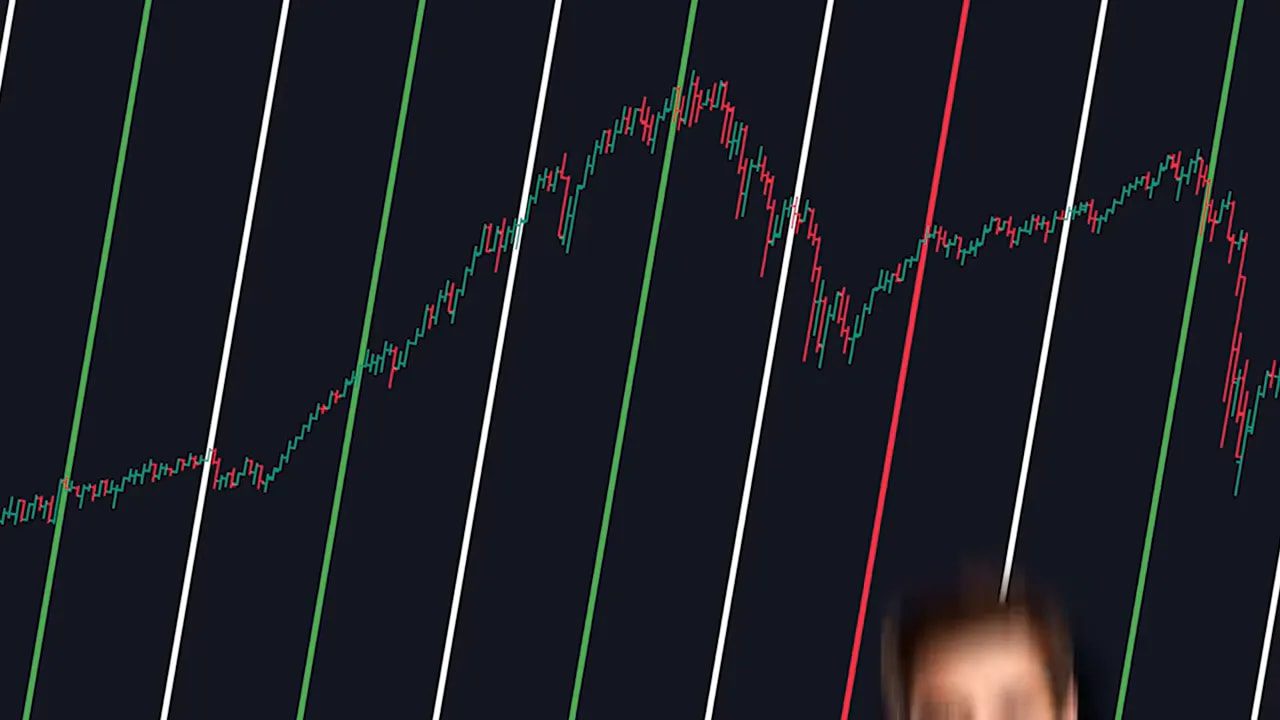
When you mark presidential cycles on long-term charts, a pattern emerges. Across multiple election cycles the market tends to become very bullish in the two years leading up to the general election. Historical bottoms line up in ways that look deliberate rather than accidental.
To summarize the observed sequence: major bottoms showed up around 1978, 1982, 1986, 1990, 1994, 1998 and 2002. One exception was 2006, when a prolonged policy push changed the rhythm. The net result: a repeatable window of higher-than-average returns late in the political cycle.
What the stats say
Broad statistics back the intuition. Average returns across the four-year political cycle are not uniform. Years one and two after an inauguration tend to underperform relative to years three and four. That means, on average, the back half of an administration delivers stronger market performance.
Backtest: 45 years of evidence
A simple backtest covering roughly 1980 to the present (about 45 years) paints the same picture. Mark a “buy” point two years before each election and a “sell” point at the election itself. In this construction the strategy produced positive returns in nearly every cycle, with the only real miss being the 2004 presidential election where results were essentially flat.
Why this makes economic sense
If a sitting president wants the same party back in office, the simplest levers are fiscal and monetary. Stimulate growth, engineer low unemployment and inflate asset prices—at least in the short run. That short-run inflation of the economy and markets creates a tailwind for equities before the election. Once the political calendar flips, markets often face an overinflated environment that corrects.
Limitations and the common criticism
The natural counterargument is obvious: buy-and-hold the S&P 500 beats this strategy in total return across the last several decades. That’s true. But performance alone doesn’t tell the whole story.
- Drawdown risk: Buy-and-hold required holding through the dot-com crash, the 2008 housing crisis and the 2020 pandemic shock—episodes where portfolios declined 50% or more.
- Emotional and capital efficiency: If you avoid the worst drawdowns, capital can be redeployed into more efficient opportunities while equities are depressed.
- Edge vs alpha: This political-cycle approach is not a silver-bullet alpha generator. Its real value is a probabilistic edge that helps you scale exposure based on cycle timing.
How to use the political-cycle edge without going all-in
This is not an instruction to blindly buy two years before every election and sell on election day. The practical, lower-friction way to use the edge is to incorporate it into position sizing and risk allocation.
Concrete ways to apply the idea:
- Scale position sizes larger during the late political cycle when statistics favor equities.
- Scale down exposure during the early political cycle and redeploy risk capital into markets that may outperform during equity drawdowns.
- Keep your entry and exit rules rooted in your trading system; use political-cycle timing as a filter for aggressiveness, not as the sole trade trigger.
- Rebalance regularly so that cycle-driven sizing does not lead to unwanted concentration risk.
If equities are likely to be out of favor during certain years, consider alternative markets where your capital can work harder. For example, during past equity downturns some traders found outsized returns in crypto spot markets and altcoin rotations. If you want curated, timely leads for short-term crypto entries across multiple blockchains, a crypto spot trading signals service can supply structured opportunities so you can put idle capital to work without hunting through noisy markets.

Practical checklist for traders
- Mark political-cycle windows on your calendar: know which years are early and late in a presidential term.
- Define what “scale up” and “scale down” mean for your portfolio in percentage terms.
- Use technical and fundamental signals for timing within those windows—don’t rely on the calendar alone.
- Plan where to park capital when you reduce equity exposure (cash, bonds, crypto, commodities, or active trading opportunities).
- Track outcomes and iterate. The edge is probabilistic, not absolute.
What’s next? According to the rule
Applying the two-years-before-election buy rule points to 2026 as a buying window and 2028 as a selling window under the classic interpretation. That does not mean 2026 will be a guaranteed green year—markets are influenced by countless variables—but it does suggest a higher-probability window to increase equity exposure if other signals align.
Final thoughts
Political cycles offer a simple, historically grounded edge. It is neither perfect nor magical, but it is useful. Use the pattern to tilt probabilities in your favor, not to override your trading discipline. Combine calendar-based edges with robust risk management, technical confirmation and diversification into other markets when appropriate.
Frequently asked questions
Does the political-cycle strategy beat simple buy-and-hold?
Buy-and-hold has delivered higher total returns over long periods, but the political-cycle approach reduces exposure during major drawdowns. The payoff is less absolute return but lower volatility and the ability to redeploy capital into more efficient opportunities during equity stress.
How reliable is the backtest evidence?
The pattern shows up across many cycles, but it is probabilistic. There are exceptions and regime shifts. Treat the backtest as one tool among many and avoid overfitting decisions to a single historical pattern.
Should I use the strategy by itself?
No. Use the political cycle as a sizing and allocation filter. Keep your existing entry and exit rules, and scale aggressiveness based on the cycle environment rather than replacing your strategy entirely.
Where else can I put capital when I scale back equities?
Possible alternatives include bonds, commodities, short-term active trading accounts, or other higher-volatility markets like crypto. If actively trading crypto is in your plan, curated crypto spot trading signals can provide actionable ideas across blockchains so idle capital can remain productive without requiring you to monitor every market 24/7.