
What if you could use a bank that nobody owns, nobody can shut down, and that never sleeps?
That is the core appeal of a decentralized exchange, or DEX. No CEO. No board. No account approval. No KYC gate standing between you and your assets. You connect a crypto wallet, interact with smart contracts, and trade directly onchain.
That freedom is exactly why decentralized exchanges have become such a major force in crypto. In 2025 alone, hundreds of billions of dollars flowed through the biggest DEX platforms. But not all of them serve the same purpose, and choosing the wrong one can mean higher costs, worse execution, or taking on risks you do not fully understand.
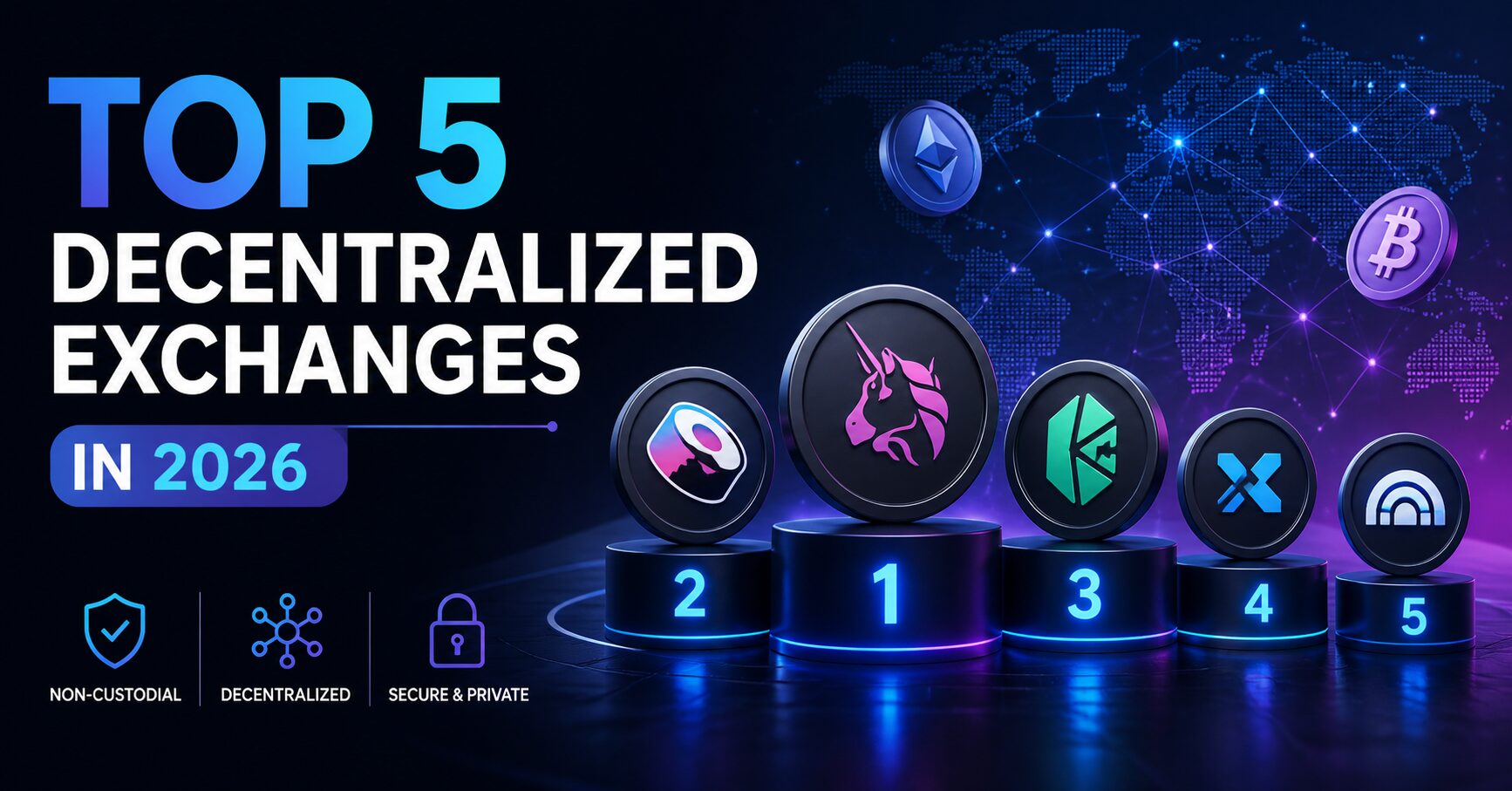
This guide breaks down the five most important decentralized exchanges highlighted for 2026: Uniswap, PancakeSwap, Hyperliquid, Curve Finance, and Raydium. More importantly, it explains who each platform is for, where the traps are, and how to match the right DEX to your strategy.
Table of Contents
- What a decentralized exchange actually is
- 1. Uniswap: the benchmark for decentralized trading
- 2. PancakeSwap: the all-in-one low-fee powerhouse
- 3. Hyperliquid: the advanced choice for onchain perpetuals
- 4. Curve Finance: the specialist for stablecoin swaps
- 5. Raydium: the gateway to Solana DeFi
- How to choose the right DEX for your strategy
- The overlooked issue: DEX trading and taxes
- Final thoughts
- FAQ
What a decentralized exchange actually is
A decentralized exchange is a crypto trading platform that works without a middleman. There is no central company custodying your coins and no need to create a traditional account. Instead, you connect a wallet and let smart contracts handle the process.
Most major DEXs rely on a model called an automated market maker, or AMM. Rather than matching buyers and sellers through a classic order book, the platform uses liquidity pools. Users deposit tokens into those pools so that others can trade against them. In return, liquidity providers receive a share of the fees.

The biggest advantage is simple: you keep control of your coins. Your assets stay in your wallet until you approve a transaction. That removes one of the biggest risks of centralized platforms, where an exchange can freeze withdrawals, impose restrictions, or fail outright.
But DEXs are not risk-free. Before using any of them, it is worth understanding the main downsides:
- Smart contract risk: Bugs or exploits can lead to losses.
- Impermanent loss: A key risk when providing liquidity to pools.
- User experience: Some interfaces can feel intimidating at first.
- Onchain costs: Fees can vary a lot depending on the network.
If you are still getting comfortable with DeFi basics, it also helps to understand the assets you are trading, especially stablecoins. This background on what stablecoins are and how they work is especially useful before using a platform like Curve.
1. Uniswap: the benchmark for decentralized trading
If there is one DEX that defines the category, it is Uniswap.
Uniswap has been the market leader for years, and no other decentralized exchange has matched its combination of scale, reach, and trust. For many traders, it is still the default place to start.
Why Uniswap remains dominant
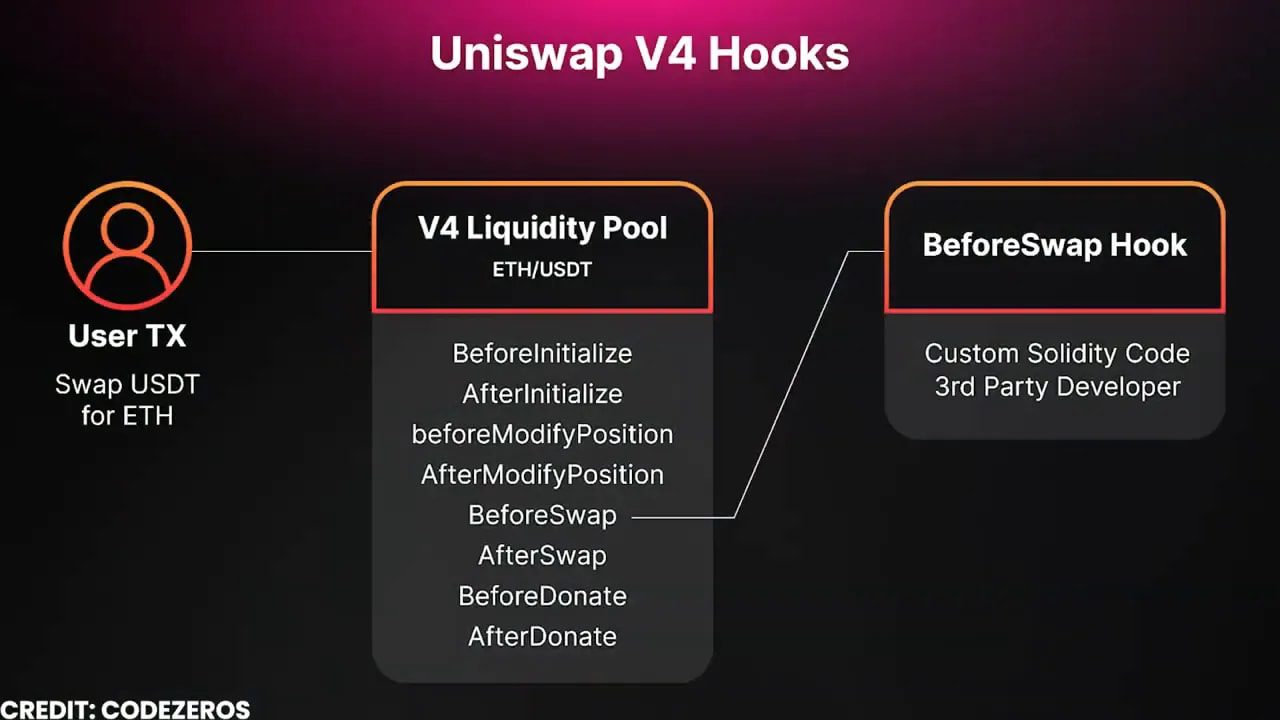
One major reason is the technology. Since early 2025, Uniswap has been operating on version 4, with a standout feature called hooks. The easiest way to think about hooks is as plugins for liquidity pools. They let developers build custom logic directly into trading pools.
That opens the door to features like:
- Dynamic fees
- Automated trading logic
- Protection against MEV bots, which try to intercept and manipulate transactions before they are finalized
This is what makes Uniswap more than a simple exchange. It is increasingly becoming a base layer for other DeFi products to build on.
The second advantage is reach. Uniswap supports more than 15 blockchains, including Ethereum, Arbitrum, Base, and BNB Chain. That gives users access to a massive token universe across multiple ecosystems.
The third is trust. Uniswap has been live since 2018, has been audited multiple times, and is widely seen as one of the most secure protocols in DeFi.
Who Uniswap is best for
Uniswap is ideal for people who want:
- The widest token selection
- Strong support across Ethereum and major layer 2 networks
- A DEX with a long track record and deep liquidity
If your trading activity lives mostly on Ethereum or layer 2s, Uniswap is hard to beat.
2. PancakeSwap: the all-in-one low-fee powerhouse
PancakeSwap started as a BNB Chain favorite, but it has grown far beyond that. It is now active on 10 blockchains, including Ethereum, Solana, Arbitrum, and Base.
By August 2025, PancakeSwap held roughly 30% market share. In June 2025 alone, it processed nearly $255 billion in monthly trading volume. Put that in centralized exchange terms, and it would have ranked as the second largest crypto exchange in the world behind Binance for that month.
What changed in 2025
In April 2025, PancakeSwap launched PancakeSwap Infinity, a major protocol upgrade. That brought:
- Lower costs
- Hook-like customization
- More efficient liquidity pools
- Cheaper trading execution
Just like Uniswap v4, this upgrade pushed PancakeSwap beyond basic swaps and made it more useful as a broader DeFi platform.
Why PancakeSwap stands out
The biggest practical advantage is cost. Fees can start at just 0.01%, which makes the platform very attractive for active traders and cost-sensitive users.
It also offers more than simple token swaps. Depending on your goals, you can use PancakeSwap for:
- Staking
- Yield farming
- Perpetual futures
That makes it one of the most complete all-in-one decentralized platforms on the market.
Who PancakeSwap is best for
PancakeSwap is especially strong for anyone who wants:
- Low fees
- Multi-chain flexibility
- Access to trading plus extra DeFi tools in one place
If your priority is doing more while paying less, PancakeSwap deserves serious attention.
3. Hyperliquid: the advanced choice for onchain perpetuals
Hyperliquid is not a general-purpose DEX for normal spot swaps. It is built for a very specific use case: decentralized perpetual futures trading.
Perpetual futures are crypto derivatives with no expiration date. They let traders speculate on both rising and falling prices, often using leverage. That makes them powerful, but also dangerous if you do not know exactly what you are doing.
What makes Hyperliquid different
Unlike many DEXs that run on existing chains, Hyperliquid operates on its own Layer 1 blockchain. The platform is built for speed and can process up to 200,000 orders per second.
That performance showed up in the numbers. In 2025, Hyperliquid reached a cumulative trading volume of nearly $3 trillion and generated around $844 million in revenue.
Everything happens fully onchain, which means trading activity is transparent and traceable. That combination of speed, scale, and transparency is a big part of why Hyperliquid has become such a serious name in crypto derivatives.
Another notable detail is its token distribution. More than 70% of Hyperliquid tokens were distributed directly to the community, without venture capital involvement. Even in crypto, that is still relatively unusual.
Who Hyperliquid is for
This platform is clearly aimed at experienced traders.
If you already understand leverage, liquidation risk, position management, and derivatives strategy, Hyperliquid is one of the most important onchain platforms to know. If you do not, this is not the place to learn by trial and error.
For anyone exploring leveraged trading, risk management matters more than almost anything else. Resources on the pros and cons of using crypto signals for trading can also help frame the difference between helpful trade ideas and overreliance on outside inputs.
4. Curve Finance: the specialist for stablecoin swaps
Curve Finance is one of those protocols that DeFi professionals rely on constantly, even if the broader market sometimes overlooks it.
Curve was built for one job and built extremely well: swapping stablecoins with very low fees and minimal slippage.
Why Curve matters
Slippage is the difference between the price you expect and the price you actually receive because the market moves during execution. That can eat into a trade, especially in large transactions or shallow liquidity pools.
Curve is designed specifically to minimize that problem for like-kind assets, especially stablecoins such as USDC, USDT, and DAI.
That makes it the go-to protocol for anyone who wants to move between stablecoins efficiently, with:
- Low cost
- Minimal slippage
- Reliable execution
Curve’s role in 2025 and beyond
In 2025, Curve evolved from a niche utility into one of the most widely used decentralized exchanges on Ethereum. It also expanded its role as DeFi infrastructure, including through its own stablecoin ecosystem.
This is an important distinction. Curve is not trying to be everything for everyone. Its value comes from being exceptionally good at a narrow but essential function.
Who Curve is best for
Curve is ideal for:
- Anyone swapping stablecoins regularly
- Traders who care deeply about execution quality
- Liquidity providers who prefer a calmer risk profile than highly volatile token pairs
If most of your onchain activity involves stable assets, Curve is one of the most useful tools in DeFi.
5. Raydium: the gateway to Solana DeFi
If Solana is your ecosystem, Raydium belongs on your shortlist immediately.
Raydium is the largest DEX in the Solana ecosystem by a wide margin. At times, more than half of all Solana trading volume has run through it. For many traders, it is the first stop on Solana and eventually the main one.
Why Raydium is so popular
The answer starts with the chain itself. On Solana, transactions often cost less than a cent, and confirmations can happen in under a second. That combination makes Raydium especially appealing for fast, frequent, low-cost trading.
Those economics matter. If you trade often, network fees add up quickly. On Ethereum, that cost can become painful during high congestion. On Solana, it is far easier to stay nimble.
Raydium’s interesting 2025 development
One particularly notable shift in 2025 was Raydium’s emergence as a major venue for tokenized stocks on Solana, including names like Apple, Nvidia, and Tesla.
That points to a broader trend: traditional finance is increasingly moving into DeFi, and Raydium is right in the middle of that transition.
Who Raydium is best for
Raydium is the best fit for people who want:
- Exposure to the Solana ecosystem
- Very fast execution
- Minimal transaction costs
- Access to emerging activity such as tokenized assets on Solana
If speed and low fees are your top priorities, Raydium stands out immediately.
How to choose the right DEX for your strategy
The best decentralized exchange is not the one with the biggest name. It is the one that matches what you are actually trying to do.
A simple way to think about it:
- Choose Uniswap if you want broad token access and strong Ethereum or layer 2 support.
- Choose PancakeSwap if you want low-cost, multi-chain flexibility and an all-in-one DeFi toolkit.
- Choose Hyperliquid if you are an advanced trader focused on perpetual futures.
- Choose Curve if you mainly swap stablecoins and care about minimizing slippage.
- Choose Raydium if you want to operate inside the Solana ecosystem with maximum speed and low fees.
Another important filter is experience level.
Good starting points for beginners
- Uniswap, if you are working on Ethereum or layer 2s
- PancakeSwap, if low fees and easier experimentation matter more
- Curve, if your activity is mostly stablecoin-based and relatively conservative
Better suited for experienced traders
- Hyperliquid, because perpetuals and leverage carry substantial loss risk
- Raydium, especially if you are actively navigating the faster-moving Solana ecosystem
If your strategy also depends on market entries and trade execution discipline, it may help to understand how to use crypto signals for maximum profit, especially in more active trading environments.
The overlooked issue: DEX trading and taxes
There is one practical reality that many traders underestimate. Every swap, liquidity move, farming event, or derivatives trade can create a tax-relevant transaction.
That gets complicated fast once activity spans multiple wallets, blockchains, and protocols.
Final thoughts
Decentralized exchanges are no longer a side story in crypto. They are core market infrastructure.
Uniswap leads in breadth and trust. PancakeSwap wins on flexibility and cost. Hyperliquid dominates a very specific high-performance derivatives niche. Curve remains essential for stablecoin efficiency. Raydium is the clear heavyweight in Solana DeFi.
Each one is important for a different reason. The real question is not which DEX is biggest. It is which DEX fits the way you trade.
FAQ
What is a decentralized exchange?
A decentralized exchange is a crypto trading platform that lets users trade directly from their wallets through smart contracts, without relying on a central company to hold funds or approve access.
Which DEX is best for beginners?
Uniswap and PancakeSwap are generally the easiest starting points, depending on which blockchain ecosystem you use. Curve can also be beginner-friendly for simple stablecoin swaps. Hyperliquid is not a beginner platform because perpetual futures and leverage are much riskier.
What is the best DEX for Ethereum?
Uniswap is the standout choice for Ethereum and major layer 2 networks because of its liquidity, broad token support, long track record, and continued technical development.
What is the best DEX for low fees?
PancakeSwap is one of the strongest low-fee options, with fees starting at 0.01%. Raydium is also highly cost-effective because Solana transaction fees are typically extremely low.
Which DEX is best for stablecoin swaps?
Curve Finance is designed specifically for low-slippage, low-fee stablecoin trading, which makes it the go-to option for swapping assets like USDC, USDT, and DAI.
What is Hyperliquid used for?
Hyperliquid is used for decentralized perpetual futures trading. It is built for advanced traders who want to trade derivatives onchain, including leveraged long and short positions.
What is the main DEX on Solana?
Raydium is the leading DEX in the Solana ecosystem and is known for fast execution, very low transaction costs, and deep integration with Solana trading activity.
Are DEX trades taxable?
They can be. Token swaps, liquidity provision, yield farming, and derivatives activity may all create taxable events depending on your jurisdiction. Keeping clean transaction records is essential.