
If I were starting fresh with $10,000 and building a crypto portfolio for 2026, I would not try to get cute with it.
I would not scatter money across 25 random altcoins. I would not chase every shiny new narrative. And I definitely would not pretend every coin has the same risk profile.
I’d build the portfolio in layers.
First, I’d secure the foundation. Then I’d add exposure to the biggest long-term trends in crypto: digital scarcity, tokenized finance, smart contract platforms, and decentralized AI. That’s the mindset here. Not gambling. Positioning.
This is opinion, not financial advice. Nobody can see the future. But after years in the space, one thing becomes obvious: the strongest portfolios usually balance conviction with risk management.
Here’s exactly how I’d allocate that $10,000.
Table of Contents
- My $10,000 Crypto Portfolio Allocation
- Why Half Goes Into Bitcoin
- Why Ethereum Gets $2,000
- The Next Layer: Taking More Risk With $3,000
- $1,000 in Solana as the Smart Contract Hedge
- $1,000 in Bittensor for the AI Narrative
- The Final $1,000: Pick a Coin With Product-Market Fit
- Why This Portfolio Works for Beginners
- How I’d Think About Time Horizon
- Why Not Go All-In on Altcoins?
- Key Themes Behind These 5 Picks
- FAQ
- Final Thoughts
My $10,000 Crypto Portfolio Allocation
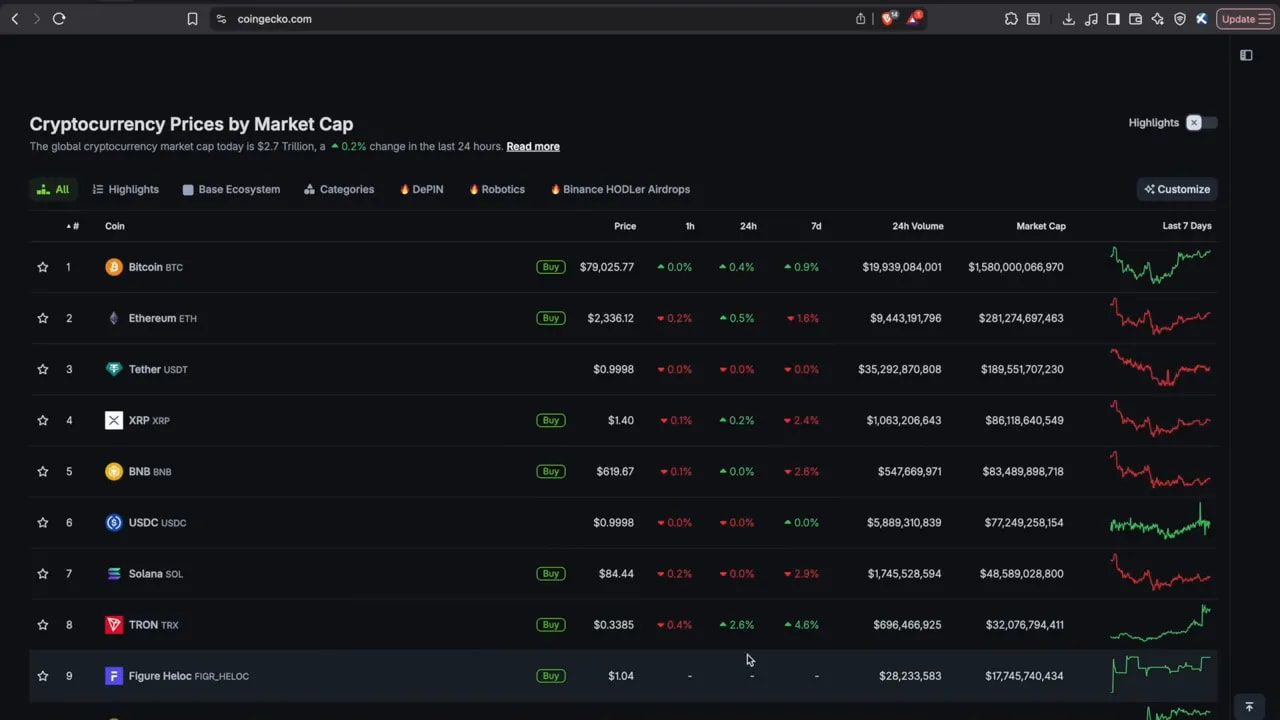
- $5,000 in Bitcoin
- $2,000 in Ethereum
- $1,000 in Solana
- $1,000 in Bittensor (TAO)
- $1,000 in one altcoin with clear product-market fit
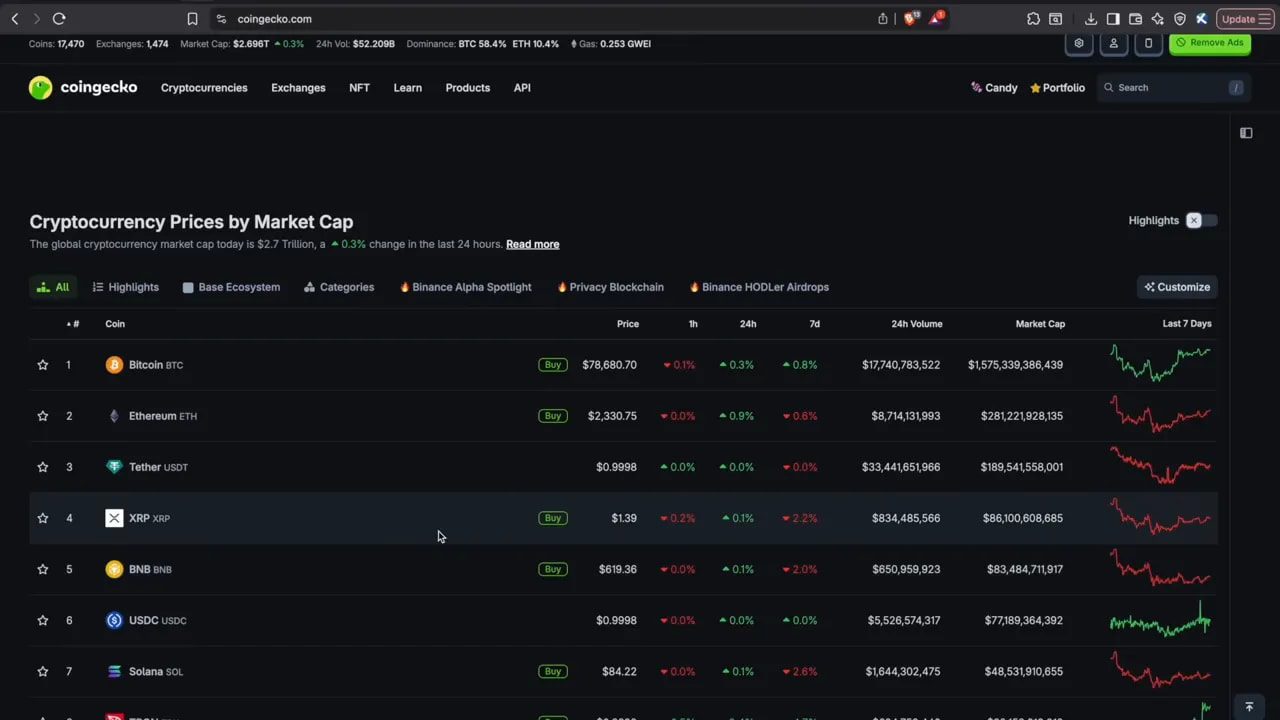
The reason this structure matters is simple. The first $7,000 goes into the assets I believe have the highest long-term conviction. The final $3,000 is where I take more calculated risk for potentially outsized upside.
That distinction matters a lot, especially for beginners.
Why Half Goes Into Bitcoin
If I’m building a portfolio to hold for five to ten years, Bitcoin gets the biggest allocation. No hesitation.
To me, Bitcoin is digital gold. Actually, I think the argument is even stronger than gold because Bitcoin is finite. Gold supply grows every year. Bitcoin has a hard cap. That matters in a world where people are constantly searching for a store of value that can’t be debased.
The core Bitcoin thesis is still early. It remains a tiny percentage of total global wealth, which means its total addressable market is still enormous. If real estate grows, if equities grow, if gold grows, it’s not a stretch to believe Bitcoin grows too. And because Bitcoin is still such a small piece of the global asset landscape, even modest market share gains could be meaningful.
This is why so many investors frame Bitcoin as an inflation hedge and a long-term reserve asset. Paul Tudor Jones has made similar points publicly, emphasizing Bitcoin’s scarcity advantage over gold. If you want a broader comparison of that debate, this breakdown of Bitcoin vs. gold as a store of value is worth reading.
I like to think of it this way: over long periods of time, people have always wanted access to scarce assets. Beachfront real estate. Gold. Prime land. Bitcoin is the digital-native version of that idea.
If this technological revolution keeps playing out, you probably want a meaningful position in the asset most recognized as the base layer of crypto.
Why Ethereum Gets $2,000
After Bitcoin, the next major allocation goes to Ethereum.
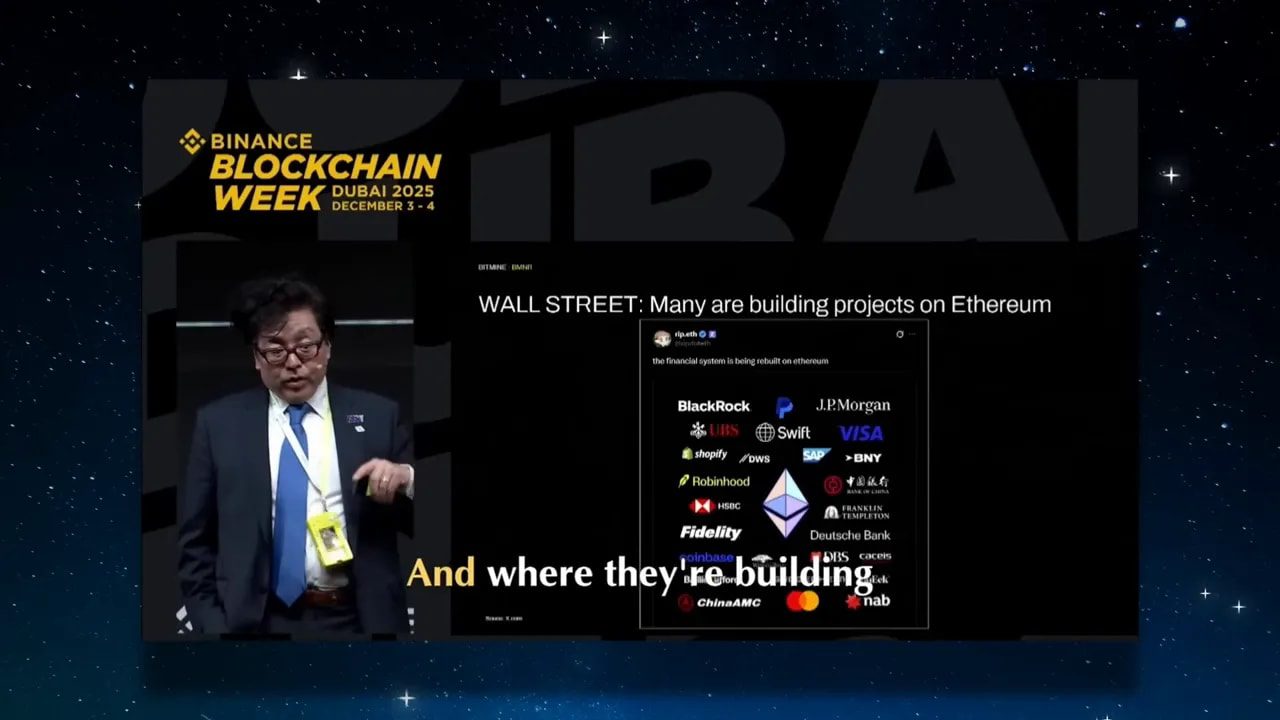
Why? Because if Bitcoin is digital gold, Ethereum is a bet on the future of finance.
The big idea here is tokenization. We are moving into a world where dollars, stocks, bonds, real estate, and other real-world assets are increasingly being represented on blockchain rails. That trend could be massive. And today, Ethereum remains the primary smart contract platform where a huge share of that activity is being built.
The stablecoin angle is especially important. Ethereum hosts the largest stablecoin supply, and stablecoins are not going away. If anything, they are becoming more central to crypto adoption, cross-border payments, and tokenized finance. If you want a quick primer on why that matters, this guide on how stablecoins work gives useful background.
That’s a big reason Ethereum continues to stand out. It’s not just a speculative asset. It’s infrastructure.
Tom Lee made a memorable case that Ethereum could become “the future of finance,” and that framing captures the long-term bull thesis well. The argument is not merely that ETH’s price can rise. It’s that Ethereum may become one of the foundational platforms for tokenized capital markets.
Ethereum is going to become the future of finance, the payment rails of the future.
That’s the lens I would use for a five- to ten-year hold. Ethereum has spent long stretches moving sideways, but if utility keeps increasing and tokenization continues gaining traction, the upside case stays compelling.
For anyone actively tracking rotation between major assets like BTC and ETH, this is also where disciplined market analysis becomes valuable. During strong trend shifts, some traders use crypto spot trading signals to identify entries, momentum confirmation, or support and resistance zones without overtrading every headline.
The Next Layer: Taking More Risk With $3,000
Once Bitcoin and Ethereum are funded, the portfolio already has a strong base.
Now the tone changes.
The remaining $3,000 is where I intentionally take more risk. Not reckless risk. The kind of risk where the position size is smaller because the uncertainty is higher, but the upside could also be significantly larger.
This is where narratives matter more. Adoption data matters more. And execution matters a lot more.
$1,000 in Solana as the Smart Contract Hedge
If Ethereum is my main smart contract platform bet, Solana is my hedge.
The thought process is simple: Ethereum may remain the dominant smart contract chain, but if a faster, cheaper, and more scalable platform captures major market share, I want exposure to that too.
You could make this case for other chains such as Cardano, Avalanche, or Algorand. But the pick here is Solana because of where the data appears strongest.
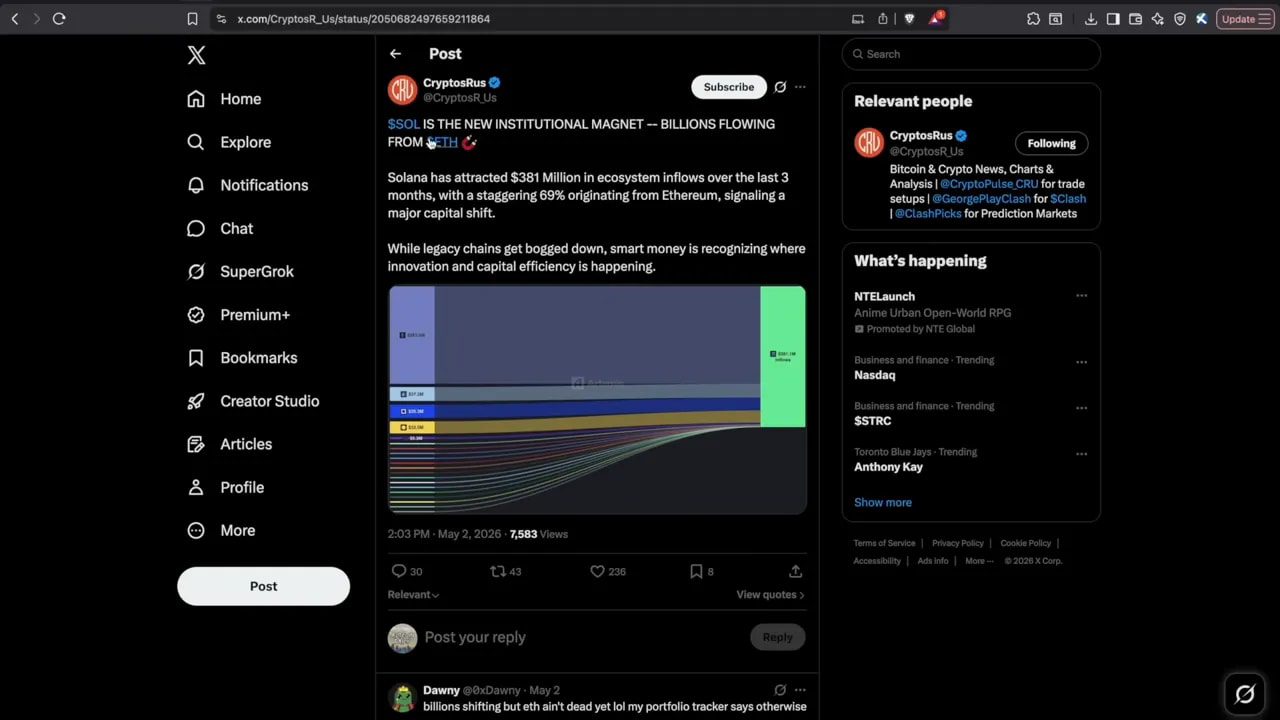
One of the biggest signals is stablecoin activity. Solana’s stablecoin daily active users have surged, and that growth matters because stablecoins often reflect real transactional demand. On top of that, the chain has been attracting significant inflows, including capital rotating from Ethereum.
That kind of on-chain migration gets my attention.
If institutions, developers, and users are increasingly active on Solana, that is not noise. That is signal.
So I’d frame Solana as a calculated hedge on the broader smart contract thesis. Ethereum is the higher-conviction core position. Solana is the complementary bet in case it captures a bigger share of the next growth wave.
For traders, Solana is also one of those ecosystems where momentum can move fast. That’s one reason some people pair long-term holdings with tactical research or crypto spot trading signals to better navigate high-volatility windows instead of blindly buying local tops.
$1,000 in Bittensor for the AI Narrative
Next comes the AI allocation.
I’m bullish on AI over the next several years. That part feels obvious. The real question is whether decentralized AI can carve out meaningful market share as the sector grows.
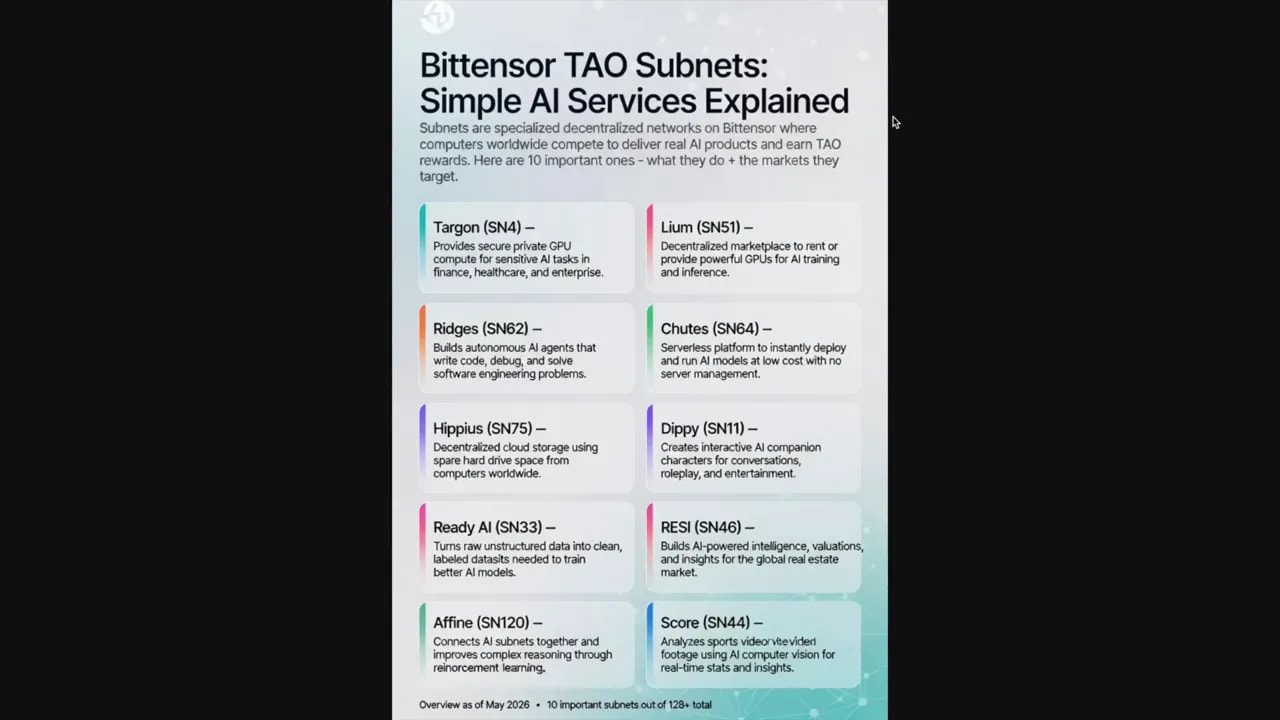
That’s why the $1,000 AI bet goes into Bittensor, also known as TAO.
The appeal of TAO starts with supply dynamics. Like Bitcoin, it has a hard-capped supply of 21 million tokens. But the bigger reason is infrastructure. Many AI-related crypto tokens will likely fail. In fact, most crypto tokens in general probably won’t make it over the long term. So if I’m taking a swing in this category, I’d rather bet on infrastructure than on hype.
That is the core Bittensor thesis.
Bittensor is positioned as decentralized AI infrastructure, with subnets that allow different projects and teams to build specialized services within the ecosystem. The strongest projects can rise, weaker ones can fade, and the broader network potentially benefits if real adoption takes hold.
The analogy used here is powerful: Bitcoin monetizes stranded energy, while Bittensor helps monetize stranded talent. That means anyone, anywhere, can contribute value to the network.
That’s a much more interesting thesis than buying some random AI coin with a good logo and no real utility.
There’s also a venture-style argument behind TAO. If the market cap is still relatively small compared with major chains, and if decentralized AI becomes a serious category, the upside from current levels could be substantial. Not guaranteed. Just substantial.
I think we could be sitting here and TAO in five to ten years could go 200x.
That kind of projection is obviously speculative, but that is exactly why the position size is only $1,000 and not the bulk of the portfolio.
If you’re exploring this theme further, this piece on AI crypto coins and how AI could reshape the crypto market adds helpful context around the broader sector.
The Final $1,000: Pick a Coin With Product-Market Fit
The last piece of the portfolio is not about story alone. It has to be a coin that is actually being used.
That filter becomes incredibly important in weaker market conditions. In a bear market, a huge percentage of altcoins get crushed. Prices fall 50%, 80%, 90%. Hype disappears. Liquidity dries up. What remains is usage.
So for the final $1,000, I would choose an altcoin showing real adoption, real users, and real demand even while the broader market remains selective.
That could mean:
- Growing user activity
- Increasing transaction volume
- Clear product-market fit
- Strong ecosystem traction despite market weakness
The exact name of that final pick is intentionally left open here, but the criteria are what matter most. This is not the slot for a meme gamble. It’s the slot for an altcoin proving it deserves to survive.
That distinction is everything.
Why This Portfolio Works for Beginners
A lot of beginners make one of two mistakes.
They either go too conservative and never get meaningful exposure to crypto’s highest-growth sectors, or they go full degen and build a portfolio that’s basically all lottery tickets.
This allocation avoids both extremes.
The portfolio has a barbell structure:
- The left side is Bitcoin and Ethereum, which provide the strongest long-term conviction.
- The right side is Solana, TAO, and one high-utility altcoin, which provide asymmetric upside.
That mix makes sense if the goal is maximum growth without pretending risk doesn’t exist.
It also reflects a realistic hierarchy of conviction:
- Bitcoin as the store-of-value base layer
- Ethereum as the tokenization and finance infrastructure play
- Solana as the high-growth smart contract hedge
- Bittensor as the AI infrastructure swing
- A utility altcoin as the tactical adoption play
How I’d Think About Time Horizon
This portfolio is not built for next week.
It’s built for a multi-year horizon.
That changes the entire game. If you are holding for five to ten years, you can think in terms of adoption curves, infrastructure buildout, macro trends, and market share capture. You are less concerned with every short-term candle and more focused on whether the original thesis is getting stronger or weaker.
That said, market conditions still matter. Crypto is volatile. Rotations happen fast. Sentiment can swing from euphoria to panic in days. So even long-term investors benefit from paying attention to trend confirmation, support levels, and ecosystem data.
That’s where risk management matters more than prediction. Some traders use crypto spot trading signals as an extra layer of decision support, especially when managing entries into large-cap names like Bitcoin, Ethereum, and Solana during volatile periods.
Why Not Go All-In on Altcoins?
Because most altcoins will fail.
That might sound harsh, but it’s probably true.
The early internet produced massive winners, but it also produced piles of companies that disappeared. Crypto is no different. A small number of protocols may capture enormous value. Many others will not.
That’s why portfolio construction matters so much.
Bitcoin and Ethereum help anchor the portfolio in the assets with the broadest recognition and strongest network effects. The smaller altcoin positions allow for upside without letting speculation dominate the entire strategy.
If you want a wider lens on balancing traditional markets with crypto exposure, this comparison of stocks vs. crypto investing is helpful for framing risk and return expectations.
Key Themes Behind These 5 Picks
If you strip this portfolio down to first principles, it’s really a bet on five themes:
- Scarcity through Bitcoin
- Tokenized finance through Ethereum
- Scalable smart contract adoption through Solana
- Decentralized AI infrastructure through Bittensor
- Real usage and product-market fit through the final altcoin slot
That makes the strategy coherent. It’s not just a list of coins. It’s a framework.
FAQ
Is Bitcoin still the best crypto for beginners in 2026?
For many people, yes. Bitcoin remains the simplest long-term crypto thesis because it is built around scarcity, security, and store-of-value potential. In this portfolio, it gets the largest allocation for exactly that reason.
Why allocate more to Bitcoin than Ethereum?
Bitcoin is treated here as the foundation of the portfolio. Ethereum has huge upside through tokenization and stablecoin growth, but Bitcoin still carries the strongest long-term conviction as digital gold and the most established crypto asset.
Why include Solana if Ethereum is already the main smart contract bet?
Solana serves as a hedge on the smart contract thesis. If Ethereum remains dominant, great. If a faster and cheaper chain captures a larger share of activity, Solana could benefit. Holding both gives exposure to that broader trend.
Is Bittensor too risky for beginners?
It is definitely higher risk than Bitcoin or Ethereum. That’s why the allocation is smaller. The thesis is that decentralized AI could become a major sector, and Bittensor offers infrastructure exposure rather than a pure hype play. Still, it should be treated as speculative.
What should the last $1,000 go into?
The final allocation should go into an altcoin with real product-market fit. That means growing usage, adoption, and utility, not just social media hype. In weaker markets, fundamentals matter more than narratives.
Should beginners use crypto spot trading signals?
They can be useful if used responsibly. Crypto spot trading signals may help with entries, trend confirmation, and risk awareness, especially in volatile markets. They are best used as a supplement to research, not a replacement for understanding what you own.
Final Thoughts
If I had $10,000 to invest in crypto as a beginner in 2026, this is how I’d do it.
I’d build around Bitcoin first. Then Ethereum. Then I’d use a smaller portion of capital to target the sectors that could outperform if the next wave of adoption accelerates: smart contract competition, AI infrastructure, and altcoins with real usage.
The biggest edge in crypto is not finding some magic coin nobody has heard of. The biggest edge is having a clear framework, sizing positions correctly, and staying focused on the trends that actually matter.
That’s how I’d pursue maximum growth without losing the plot.