

There’s a fresh, ugly story in crypto: a narrative that Jane Street, a massive quant trading firm, has been actively manipulating Bitcoin and other markets. It’s the sort of thing that gets people yelling “pump and dump” into the void and starts conspiracy chains on every platform. But like most market dramas, the truth sits somewhere between sensational headlines and dry data. This piece separates fact from fiction, explains the market mechanics at play, and lays out what traders should actually watch next.
Table of Contents
- The accusation: Jane Street and the 10 a.m. dump
- Data pushback: Is Bitcoin really dumped at 10 a.m. every day?
- What else could explain the moves? Clarity, policy, and retail demand
- Technical picture: Bitcoin setup and what traders are watching
- MicroStrategy: the most shorted stock and a potential short-squeeze catalyst
- Nvidia, AI, and the market’s structural bull case
- Energy, AI, and a new infrastructure narrative: nuclear comes up
- Altcoins spotlight: Solana and Meta’s chart drama
- Positioning and practical trade ideas
- Risk management checklist
- Conclusion — what matters from the Jane Street story
- FAQ
The accusation: Jane Street and the 10 a.m. dump
The allegation is dramatic: Jane Street, which can account for significant slices of equity and bond ETF volume, allegedly used insider info and sheer trading firepower to move markets — sometimes against crypto. That “10 a.m. dump” meme became a shorthand for a supposed recurring sell-off timed to Jane Street’s flows.
The specific legal story centers on claims that employees at Terraform Labs leaked a massive market move to counterparties who then capitalized on it. The fallout destroyed businesses, cost people money — and lost lives, according to some of the allegations. If true, this is a moral catastrophe. If false, it’s still a week where reputations and public trust in liquidity providers get tested.
Jane Street is the textbook example of a quiet but enormous market participant: few interviews, few PR moments, massive presence in ETFs and bond markets. That opacity makes them an easy lightning rod. People see a pattern and want a villain. It’s emotionally satisfying and politically convenient. But markets are messy, and correlation does not equal causation.
Data pushback: Is Bitcoin really dumped at 10 a.m. every day?
Not so fast. Data analyst Alex Krueger ran the numbers and found the “10 a.m. dump” pattern is not clear-cut. Looking at IBIT returns since January, the cumulative return in the 10:00–10:30 a.m. window was actually slightly positive, and the narrower 10:00–10:15 a.m. window showed noisy yet modest negative returns. In other words: inconsistent and noisy, not an institutionalized daily attack.
More critically, the short-window performance mirrors broader risk assets like the Nasdaq. That suggests the moves around 10 a.m. were less about a single actor dumping Bitcoin and more about macro or cross-asset repricing — risk-on or risk-off ripples across equity and crypto markets.
Bottom line: a headline-friendly narrative can mislead. Jane Street’s size and behavior deserve scrutiny. But the data does not unequivocally support a daily, methodical Bitcoin raid tied to a single firm.
What else could explain the moves? Clarity, policy, and retail demand
There are two alternative drivers worth watching that could explain the sudden bid and renewed momentum:
- Policy shifts and regulatory clarity. Betting markets on the Clarity Act (or similar regulatory clarifications) saw odds surge on prediction platforms. When regulatory risk drops, capital flows back into crypto. If white‑paper‑level clarity is on the horizon, institutional and retail demand can spike fast.
- Retail rediscovery. Searches for “how to buy Bitcoin now” are hitting five-year highs while interest in “is Bitcoin going to zero” also spikes. That extreme divergence reflects a generational debate: panic on one side; opportunistic buyers on the other. When sellers dry up and buyers step in — even at retail levels — price action can flip quickly.
Both factors are cleaner explanations than a single large firm orchestrating repeated dumps. Markets respond to perceived risk and certainty. Remove uncertainty and people allocate capital back into risk assets — crypto included.
Technical picture: Bitcoin setup and what traders are watching
The charts matter. Bitcoin recently rallied to nearly $70,000 before stalling under the 20-day exponential moving average (EMA). A higher low was formed, which is a constructive sign, but the real breakout confirmation for many traders will be a daily candle close above the 20-day EMA and confirmation with a shorter-term 2-day EMA.
That means traders are watching two things:
- Market structure: Is price making higher highs and higher lows on daily timeframes?
- Key EMA behavior: Does the daily close clear the 20-day EMA? Does momentum align with the 2-day EMA?
If both line up, the odds for a meaningful directional move to the upside increase. If not, range-bound or choppy action persists.
MicroStrategy: the most shorted stock and a potential short-squeeze catalyst
MicroStrategy’s story is a microcosm of crypto-meets-equities risk. After losing several billion dollars tied to Bitcoin exposure, the stock became one of the most shorted names globally. Crowded shorts after an 80 percent drawdown look tempting until they don’t.
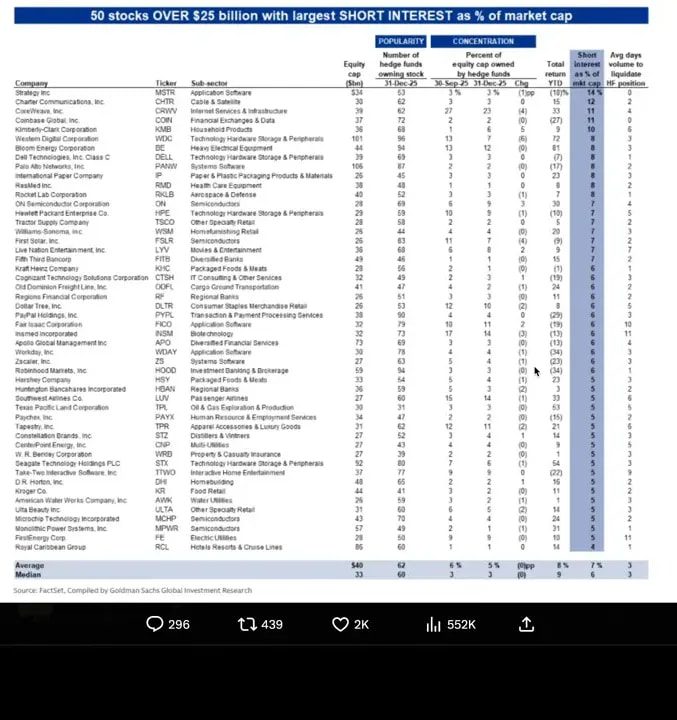
When a stock has:
- Very high short interest, and
- Exposure to an asset that can reaccelerate quickly (Bitcoin),
the setup for a classic short squeeze emerges. If Bitcoin starts a strong rally, short sellers in MicroStrategy can be forced to cover, which pushes the stock higher — and can feed back into Bitcoin if correlated trading flows follow.
Technically, MicroStrategy looked deeply oversold on weekly indicators like RSI and MACD — so much so that the MACD showed a bullish crossover on the weekly chart. That does not make it a buy on sight, but it makes the risk‑reward interesting for traders thinking about macro squeezes and correlation plays.
Nvidia, AI, and the market’s structural bull case
Outside crypto, market leadership has been concentrated in a handful of mega-cap tech winners — Nvidia chief among them. Nvidia reported record revenue and a jaw-dropping data-center growth rate, adding hundreds of billions in market cap in a single quarter. That performance can carry broad indices higher and keep liquidity flowing into risk assets.
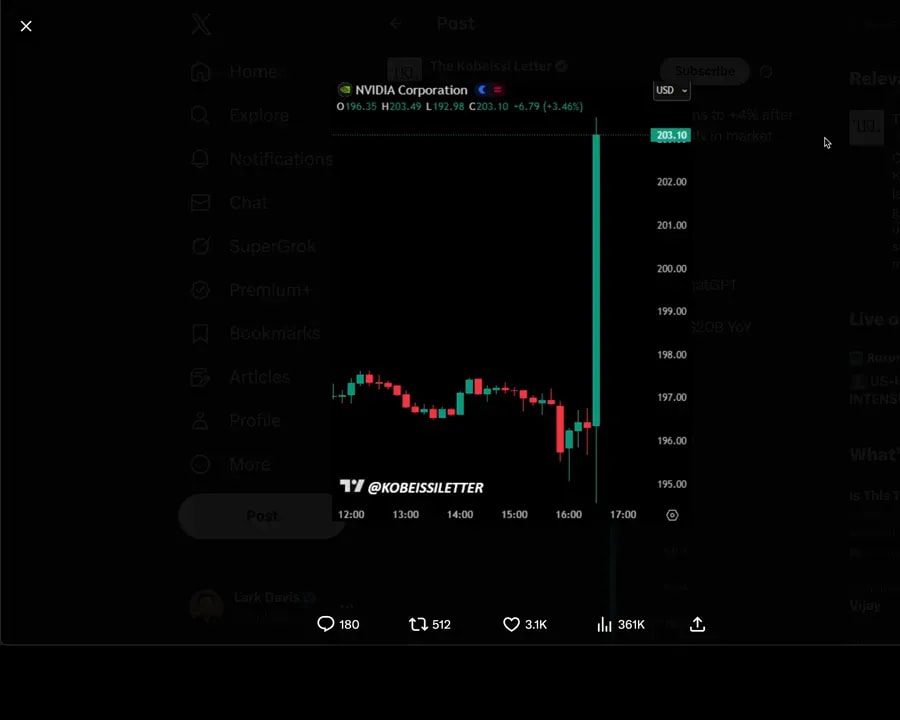
That said, buying mega-cap leadership at frothy valuations is not for everyone. The momentum is real, but valuation discipline matters. For many traders the smarter move is to use shorter timeframes for entries or to look at diversification plays rather than buying at the market’s top dollar.
Energy, AI, and a new infrastructure narrative: nuclear comes up
There’s an emerging conversation about large tech companies moving to secure their own energy supplies. Data centers powered by AI are energy hungry. Some proposals and policy discussions have suggested arrangements that effectively let big tech bring their own power — including advanced nuclear solutions — to ensure uninterrupted operations.
This trend has downstream implications:
- Utility and clean-power equities could see renewed appetite.
- Uranium and nuclear-related industries may reenter investors’ radar.
- Long-term structural investment themes could shift capital away from cyclical sectors.
If corporate America starts building its own micro-grids or modular reactors to power AI farms, the winners will include both hardware and power producers.
Altcoins spotlight: Solana and Meta’s chart drama
The big four crypto price actions — Bitcoin, Ethereum, Solana, and XRP — have been moving in a correlated way, each testing its short-term EMAs. Solana’s bounce came off a deep drawdown, but it still sits below key moving averages. Meta (not crypto) meanwhile is caught in a long triangle on the chart — a compression that could resolve explosively once price breaks out.
Key lessons here:
- Correlated moves across major cryptos mean that leverage and cross-margin traders should be especially careful.
- Triangles and compressions often lead to bigger moves when they break. Size your risk accordingly.
- For speculative altcoin trading, patience through consolidation beats chasing every bounce.
Positioning and practical trade ideas
With so much noise, it helps to simplify:
- Trade the structure. If Bitcoin closes above the 20-day EMA and confirms with a 2-day EMA momentum shift, it’s reasonable to consider directional long exposure with defined stops.
- Watch for short-squeeze catalysts. Big short interest names tied to crypto, like MicroStrategy, can create asymmetric opportunities. But manage position size — squeezes are violent and unpredictable.
- Diversify across themes. If you believe AI and data centers are structural winners, consider energy and infrastructure plays rather than putting all capital into single mega-caps at peak valuations.
- Be skeptical of single-cause narratives. Attribution is seductive. Markets move for many reasons at once: liquidity, macro news, policy shifts, retail flows, and sometimes a handful of very large players. Build decisions on data and structure rather than viral explanations.
Risk management checklist
Before putting money to work, run through this checklist:
- Define your risk per trade. Never risk more than you can lose.
- Set stop levels based on market structure — not arbitrary percentages.
- Scale in or out. If conviction grows, scale up. If pain appears, scale down or exit.
- Monitor cross-asset signals. Equities, bond yields, and crypto flows can influence each other rapidly.
Conclusion — what matters from the Jane Street story
The Jane Street allegations are serious and deserve scrutiny. They also highlight a structural tension: markets today are partly public and partly dominated by big, quiet liquidity engines. That mix breeds suspicion and fits neatly into the cultural narrative that big players can, and do, move markets.
But the short answer to “Why did Bitcoin really crash?” is rarely singular. It’s a blend of:
- liquidity frictions and large players adjusting positions;
- policy uncertainty and episodic regulatory news;
- cross-asset risk repricing; and
- human behavior — fear on one side, buying on the other.
If the regulatory picture brightens and technicals align, the market may have set the stage for the next leg up. If not, expect choppy, range-bound action and headline-driven volatility. Either way, focus on data, structure, and disciplined risk management. Narratives are entertaining. Consistency wins.
FAQ
Is there definitive proof Jane Street manipulated Bitcoin daily at 10 a.m.?
No. While the firm’s size and activity make it a natural suspect for observers, available intraday data shows noisy patterns that track broad risk assets like the Nasdaq. That suggests cross-asset repricing rather than a consistent, firm-specific daily dump. Legal allegations still require adjudication and independent verification.
What indicators should traders watch for a genuine Bitcoin breakout?
Focus on market structure and moving average behavior. A daily candle close above the 20-day EMA, supported by a positive 2-day EMA confirmation, improves the odds of a directional move. Also watch volume and flows: spot buying demand, ETF inflows (if relevant), and sentiment divergence can confirm the breakout.
Could MicroStrategy trigger a major short squeeze?
Yes, it is possible. MicroStrategy has high short interest and direct exposure to Bitcoin. If Bitcoin rallies sharply, forced cover by shorts could fuel a squeeze. This is a risky trade and requires precise timing and position sizing because squeezes can reverse quickly.
How can policy shifts affect crypto prices?
Regulatory clarity reduces uncertainty, which attracts capital. If lawmakers signal favorable frameworks or remove existential threats to crypto markets, institutional allocations can accelerate. Prediction market odds and policy developments are therefore important leading indicators.
Should I buy Nvidia or other mega-cap tech names now?
That depends on your time horizon and risk tolerance. Nvidia is powering AI-driven growth and has extraordinary fundamentals, but valuations are stretched. Consider dollar-cost averaging, using smaller position sizes, or alternative plays in energy and infrastructure if you want exposure to the AI theme without paying top-dollar for the mega-cap multiple.
Thanks for reading. Markets are noisy, narratives are seductive, and the truth usually lives in a messy intersection of data and behavior. Keep the ego small, the stop tight, and the thinking long-term when appropriate.