
Memecoin trading in 2026 is brutally fast.
If you are still hopping between slow DEX interfaces, manually refreshing Telegram, and trying to catch calls after the market has already moved, you are basically donating your edge to faster traders. That is just the reality now. Speed matters, access matters, and filtering signal from noise matters even more.
The setup I am using right now revolves around Trojan Terminal, and more specifically, a feature that genuinely changes how early-stage memecoin and low-cap trades can be tracked and acted on: the Alpha section.
This is not just another wallet tracker or social feed. It is a way to connect trading calls from Discord servers and Telegram groups directly into your terminal, so the moment a token is scanned or called, it appears inside the same environment where you trade.
That matters a lot in the trenches.
Table of Contents
- Why the old memecoin workflow is too slow
- What Trojan Alpha actually does
- How the setup works
- Why this can be more useful than wallet tracking
- What you see inside the Alpha panel
- The built-in leaderboard is a big deal
- Why group quality matters more than the tool itself
- How to use the Alpha feed without getting chopped up
- RIV and the case for utility plays even in a red market
- Altseason and the power of memeable narrative
- How to approach a high-risk meme trade properly
- What is actually on the watchlist right now
- The bigger lesson: infrastructure plus narrative plus discipline
- Final thoughts
- FAQ
Why the old memecoin workflow is too slow
The classic workflow looks something like this:
-
Someone posts a call in a Discord or Telegram group
-
You notice it late
-
You copy the contract
-
You open another tab
-
You check the chart
-
You try to trade it manually
-
Meanwhile the first move is already gone
That process is clunky, fragmented, and way too slow for Solana memecoin trading. By the time most people react, the best entry is gone and the risk-reward has already changed.
The biggest advantage right now is not just finding good coins. It is having infrastructure that lets you act fast when a good coin appears.
That is the real shift.
What Trojan Alpha actually does
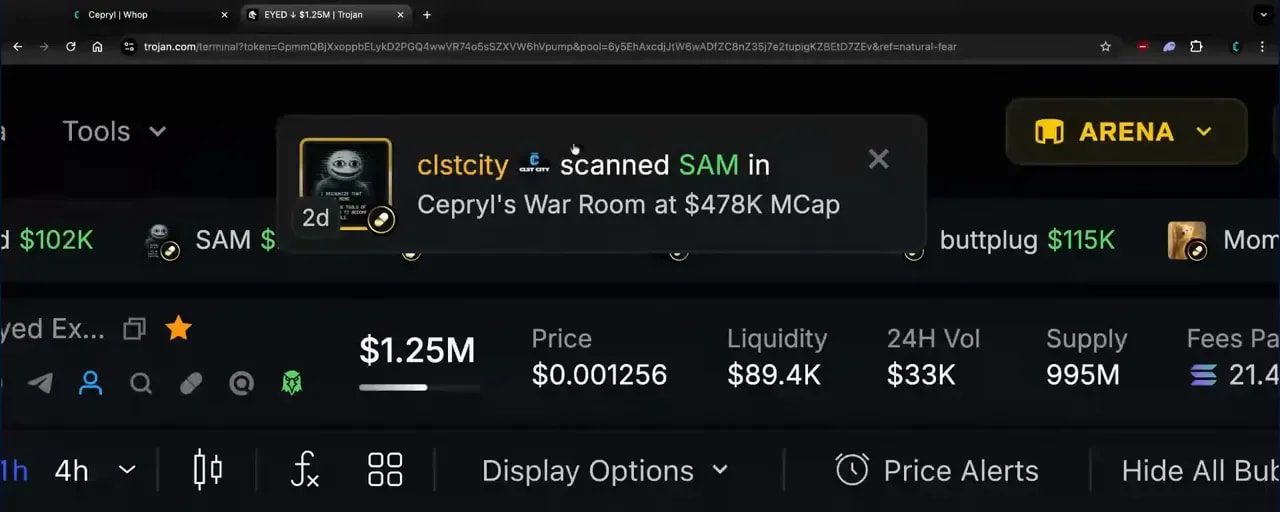
Trojan’s Alpha section connects directly to Discord servers and Telegram groups through TokenScan. Once a group has that scanner integrated, calls made in that community can be pushed into your Trojan terminal in real time.
So instead of chasing messages across apps, the calls show up right where you are trading.
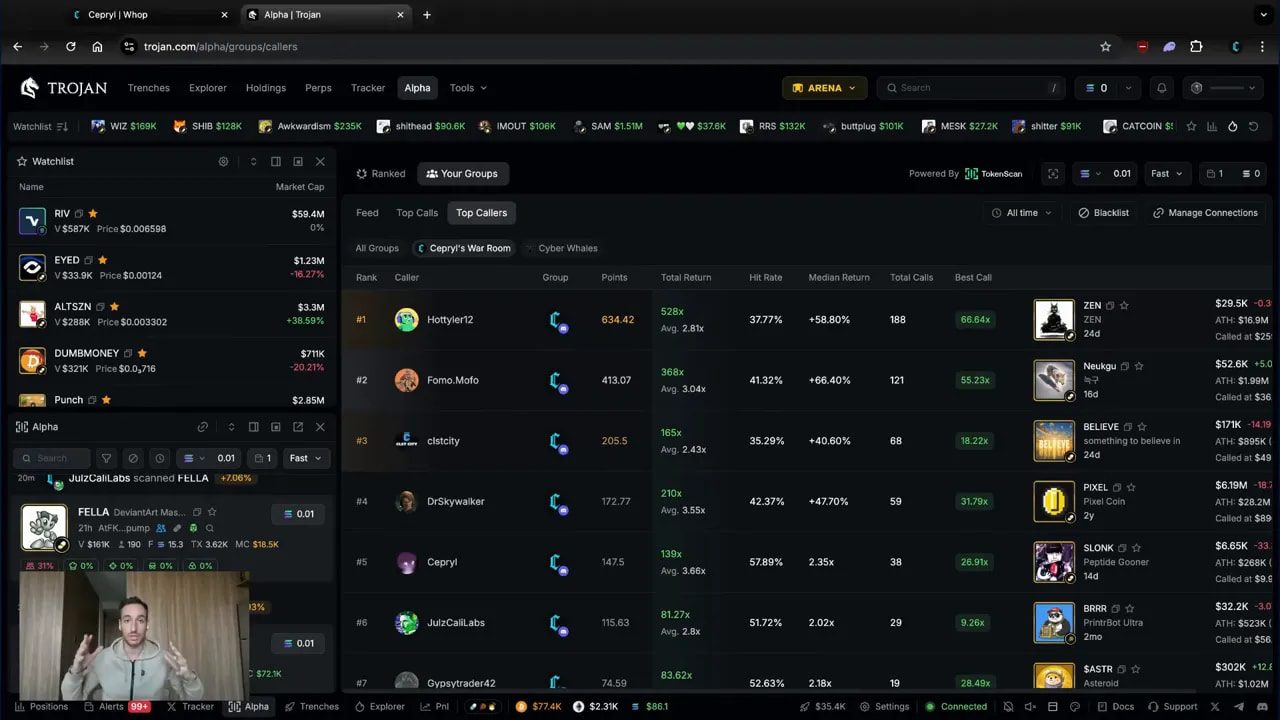
The result is simple:
-
You get faster access to new calls
-
You can see where the call came from
-
You can see who made the call
-
You can track how those calls perform over time
-
You stay inside one terminal instead of juggling five windows
That makes Trojan Alpha feel less like a chat integration and more like an on-terminal intelligence layer.
How the setup works
At a practical level, the flow is straightforward.
First, the Discord server or Telegram group needs to have TokenScan installed. Think of TokenScan as a scanner layer that identifies and pushes token calls. Once that is in place, the group can be linked to Trojan through the connect function.
After that, your terminal starts receiving those calls in the Alpha panel.
What I like here is that this does not force one layout or one style of trading. You can set it up however you want. Some traders might keep the Alpha section under a watchlist. Others might place it on the right side of the screen and keep charts and execution tools on the left.
There is no perfect universal layout. There is only the layout that best fits your own style.
For traders who are constantly monitoring multiple narratives, it helps to have the Alpha section visible at all times. For traders who only want selective entries, it may make more sense to use it as a secondary feed and then open it when something catches attention.
Why this can be more useful than wallet tracking
Wallet tracking still has value. No question.
But in the current market, especially when the trenches are noisy and narratives rotate fast, a direct alpha feed can be more practical than staring at wallet movements all day. Wallet tracking often gives you too much raw activity and not enough context. An alpha feed, when sourced from strong groups and good callers, can cut through a lot of that noise.
That is the key difference.
You are not just seeing that something happened. You are seeing that a person or group you care about identified it as worth attention.
That can be a much cleaner signal.
This is also where having access to strong free crypto signals can complement your workflow. If you are already using curated call feeds, market alerts, or chain-specific setups, adding another layer of quality signal can help you confirm narratives instead of blindly chasing candles. The edge is rarely one tool by itself. It is usually the combination of tools and good filtering.
What you see inside the Alpha panel
The Alpha section is not just a basic stream of token names.
Each call includes useful context:
-
The server or group where the call came from
-
The profile image of the caller
-
The market cap at the time of the call
-
The current performance multiplier or percentage gain
-
Expandable details that show more about the post and timeline
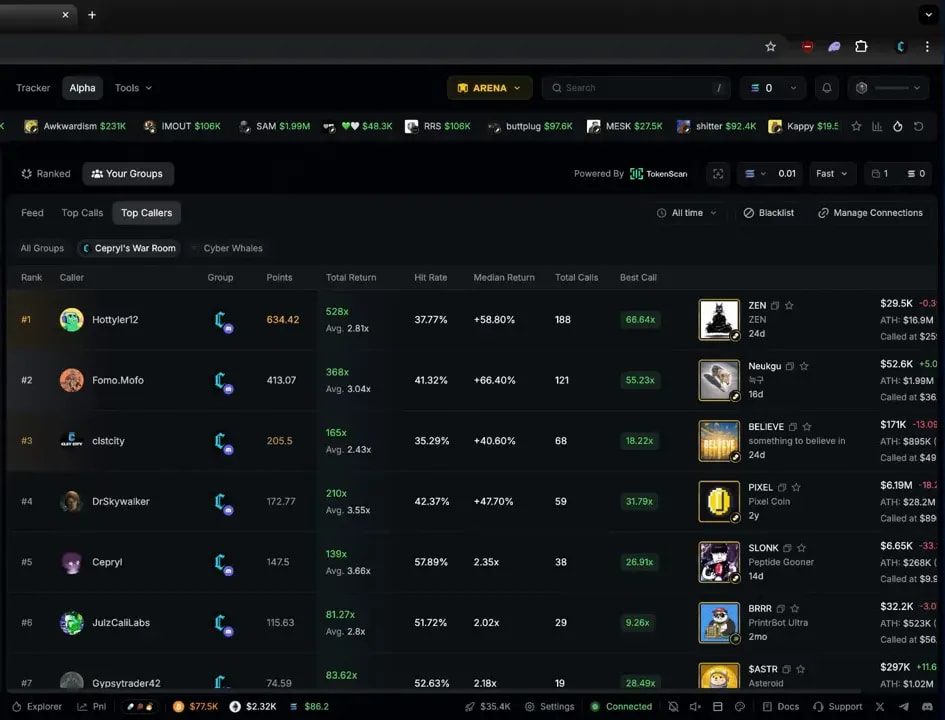
That means the system is not only helping you catch new ideas. It is also helping you evaluate the quality of the source over time.
If one person consistently drops strong calls, that becomes visible. If another person constantly throws random garbage into the feed, that becomes visible too.
And yes, you can mute callers you do not rate.
That sounds like a small feature, but it is actually huge. The more noise there is in the market, the more valuable your ability becomes to remove low-quality inputs.
The built-in leaderboard is a big deal
One of the smartest parts of the feature is the leaderboard.
Inside Trojan Alpha, you can see:
-
Top callers
-
Best-performing calls
-
Performance over specific timeframes
-
Filters by launchpad
-
Filters by market cap
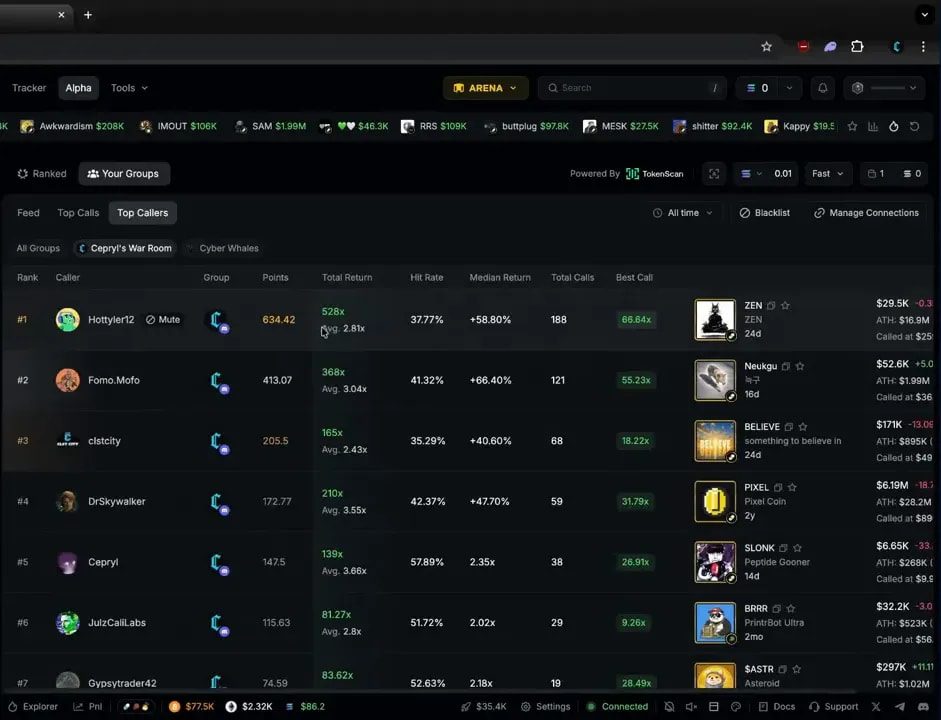
This turns the feed from a simple alert system into something much more useful. You can actually study who is performing, what kind of calls are working, and which market cap zones are producing the best opportunities.
That is real data, not just vibes.
If you run a trading group, this is honestly one of the strongest use cases. It gives your members visibility into what is being called, who is calling well, and where the strongest setups are emerging. If you are building a private circle, research group, or more organized alpha community, this kind of integration can make the group dramatically more actionable.
Why group quality matters more than the tool itself
Now here is the honest part that people often ignore:
A good terminal does not fix bad alpha.
If your Discord is full of random moonboy calls, automating that into your terminal just means you receive bad ideas faster. The tool amplifies the source. It does not magically improve it.
So the real way to use Trojan Alpha well is to combine it with communities or callers that have an actual track record.
That is why performance matters.
The examples discussed around recent calls were not small. There was a call on RIV around a 600k market cap that later ran to around 60 million. That is the kind of move that changes how people think about utility plays in weak market conditions. There were also references to prior outsized calls like Psyopanimate and Penguin, and more recent wins from members inside the group, including a 5x move on Display from roughly 400k to over 2.3 million.
The point is not to flex old wins for the sake of it. The point is that if you are going to build a workflow around incoming calls, the source quality has to justify the speed.
How to use the Alpha feed without getting chopped up
Just because a call hits your feed does not mean you instantly ape.
The proper way to use a tool like this is to treat it as a discovery and execution advantage, not as a substitute for judgment.
A good process looks more like this:
-
A new token appears in the Alpha section
-
You check who called it
-
You look at market cap and current price action
-
You evaluate whether the narrative makes sense
-
You decide whether to enter now, wait for a dip, or pass
-
You size the trade based on risk, not hype
This is especially important in memecoins, where the quality gap between “viral” and “dead in six hours” is razor thin.
If you are relying on outside inputs, whether that is a Discord scanner or free crypto signals, the real edge comes from combining those alerts with proper sizing and timing. The signal gets you to the idea early. Your execution and risk management determine whether you keep the profits.
RIV and the case for utility plays even in a red market
One of the more interesting takeaways here is the confidence placed in tech and utility plays even while broader market conditions are still far from euphoric.
RIV was highlighted as a major example. After an early call around the low hundreds of thousands in market cap, it scaled massively. Even after that kind of move, the belief remained that the project could still push much higher over time, potentially into the hundreds of millions and maybe beyond.
The thesis was tied to actual product development:
-
A real exchange or all-purpose trading platform
-
Support for indices and commodities
-
Additions like the Nasdaq and S&P 500
-
Non-KYC access using USDC
Whether or not someone agrees with the final valuation target, the broader point is valuable. In a market dominated by noise, utility plays with shipping product can still produce insane asymmetrical returns if they are found early enough.
That is an important reminder because not every low-cap opportunity has to be a pure meme. Sometimes the highest upside comes from projects with actual tech, especially when almost nobody is paying attention yet.
Altseason and the power of memeable narrative
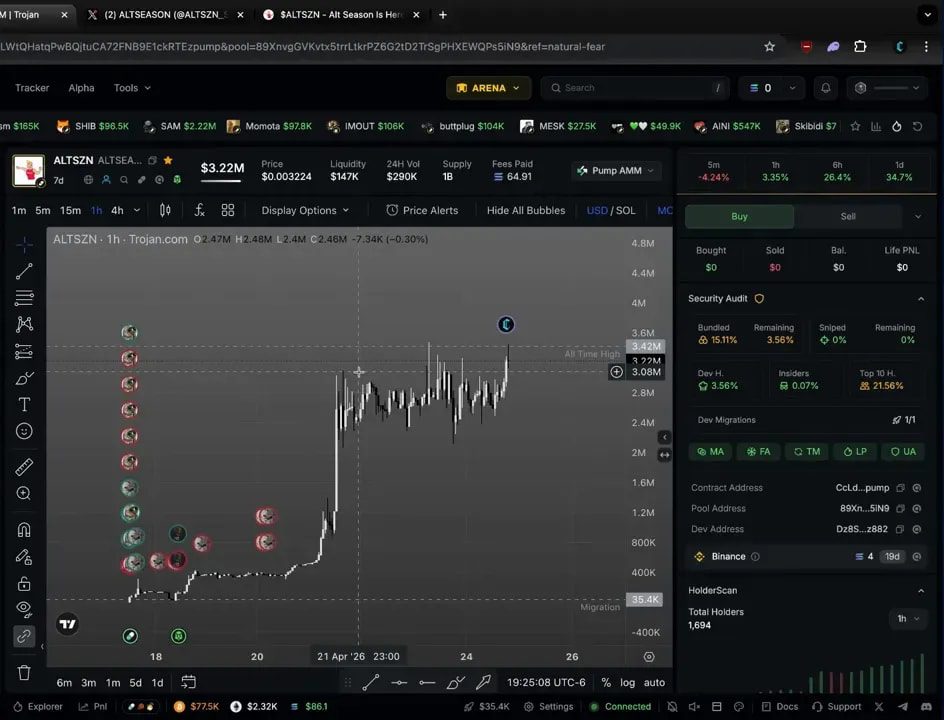
On the memecoin side, one of the standout ideas discussed was Altseason, represented by the ticker and branding around Chad.
The concept is simple, and that is exactly why it works.
It taps into the broader Wojak ecosystem. If Wojak is the defeated bear market character, Chad becomes the obvious symbol for altseason optimism, confidence, and the return of risk appetite. It is meme-native, instantly understandable, and easy for the market to run with.
Those things matter much more than people pretend.
A good memecoin narrative usually has a few ingredients:
-
Instant recognizability
-
Strong visual identity
-
Memeability that can spread across X and Telegram
-
A team that understands hooks and content
-
Organic traction from relevant accounts and communities
Altseason checked a lot of those boxes.
The website was described as strong and well-made. The content was considered highly memeable. The team was believed to have experience building successful hooks in the past, even if they were not publicly doxxed. And the token had started attracting attention from known crypto personalities and content creators, while engagement still felt organic.
That combination is usually what you want to see in a meme trade before the wider market really catches on.
How to approach a high-risk meme trade properly
Memecoins are still memecoins. No amount of narrative analysis changes that.
That means you need to approach them as high-risk speculation, not as guaranteed investments.
The framework used here was pretty grounded:
-
Do not deploy more than you can afford to lose
-
Do not buy local tops recklessly
-
Wait for dips or retracements when possible
-
If entering early, consider averaging in rather than full sizing immediately
-
DCA out into strength after meaningful upside
That is how you survive in the trenches.
For example, if a coin is already running and sitting at a local top, the smart move may be to wait for a 10 to 20 percent retrace instead of slamming size immediately. Or you start with a smaller allocation and add if price gives you a cleaner average. On the way up, you scale out rather than waiting for some fantasy number while round-tripping the trade.
This is especially relevant when comparing one meme character to another. Just because one token in a meta did a 10x or 30x does not mean the next one will do the same. Similar narratives can rhyme, but they do not guarantee the same performance.
What is actually on the watchlist right now
The watchlist discussed was relatively focused, not sprayed across dozens of random coins.
That alone is a useful lesson.
Rather than trying to track everything, the approach centered on a handful of names across two buckets:
-
Tech plays
-
Memecoin plays
The conviction remained highest on RIV as a long-term utility play. There was also interest in another undervalued project building a broader trading platform with exposure to non-crypto markets. On the meme side, Altseason stood out as a narrative trade with room to run if traction continued.
Other names were mentioned more cautiously. Some had already pumped and retraced hard, making them more suitable for swing attempts than fresh conviction buys. That distinction matters a lot.
Not every chart should be chased just because it once did a multiple.
The bigger lesson: infrastructure plus narrative plus discipline
If you strip this whole strategy down to its core, it comes down to three things:
-
Better infrastructure through Trojan and the Alpha feed
-
Better selection through stronger narratives and better callers
-
Better discipline through sizing, DCA, and profit-taking
That is the real edge in memecoin trading right now.
Not one magic ticker. Not one lucky call. A repeatable process.
And if you are serious about building that process, it helps to surround yourself with good information flows. Whether that is a private research circle, a solid scanner setup, or carefully chosen free crypto signals, the point is to create an environment where high-quality opportunities reach you early enough to matter.
Because there is still money to be made every day in this market. The problem is not lack of opportunity. The problem is that most people are looking in the wrong places, reacting too late, and taking too much size on bad setups.
Final thoughts
Trojan Alpha is one of the more meaningful upgrades for active onchain traders because it solves a very real problem: fragmented access to early information.
By connecting Discord and Telegram call flows directly into the terminal, it creates a faster and cleaner path from discovery to execution. Add the leaderboard, caller filtering, market cap visibility, and performance tracking, and you have a setup that feels far more professional than the average memecoin workflow.
But the tool is only part of the equation.
The real game is still about finding strong narratives early, understanding what makes a coin worth the risk, and managing exposure intelligently. That applies whether you are trading utility names like RIV, rotating into meme narratives like Altseason, or scanning the next low-cap idea as it drops into your feed.
The market is still noisy. Conditions are not easy-money euphoric yet. And that is exactly why having a better system matters now more than ever.
FAQ
What is Trojan Alpha?
Trojan Alpha is a feature inside Trojan Terminal that connects token calls from Discord servers and Telegram groups into your trading interface. It lets traders see new calls, who made them, where they came from, and how they perform over time.
How does TokenScan fit into the setup?
TokenScan acts as the scanner layer inside a Discord server or Telegram group. Once installed and connected, it allows those calls to feed directly into Trojan’s Alpha section.
Is this better than wallet tracking?
It depends on your style, but in fast-moving memecoin markets, an alpha feed can be more actionable than raw wallet tracking because it gives context and source attribution. Wallet tracking is still useful, but many traders may find curated call flow easier to work with in noisy conditions.
Can you filter or mute bad callers?
Yes. Trojan Alpha includes caller-level visibility, and users can mute callers they do not trust. This helps reduce noise and keep the feed focused on stronger sources.
What makes a good memecoin setup in 2026?
The strongest setups usually combine a memeable narrative, recognizable branding, organic traction, and a team that understands content and distribution. Fast access helps, but the narrative still has to be compelling.
How should risk be managed on meme trades?
Use small enough size that you can afford to lose it, avoid chasing local tops, consider averaging in on dips, and scale out into strength. Memecoins are extremely volatile, so risk management matters as much as entry timing.
Are utility plays still worth trading during a weak market?
Yes, especially if they are early and the project is building something real. Utility plays can still produce outsized returns when found at low market caps before the broader market starts paying attention.