
Solana Crypto Review time, because right now SOL is looking seriously strong. The setup is positive, the network activity is massive, institutions are getting involved, and Solana is increasingly behaving like the kind of blockchain that can support real scale rather than just hype.
That is the key point here. Solana is no longer just the fast chain people talk about when meme coins are running hot. It has grown into one of the most important ecosystems in crypto, and the argument for a return to $250 is not difficult to make at all.
In fact, if the next phase of crypto adoption brings more serious Web2 and financial players on-chain, there is a very real case that SOL goes much further than that.
Table of Contents
- Why I’m Bullish on Solana
- Solana Is Still the Leading Layer 1 for Throughput
- The Main Criticism of Solana
- Institutional Interest Is Starting to Show
- Solana Foundation Supporting Aave After the Hack
- Solana Survived the FTX and Alameda Fallout and Thrived
- The Usage Numbers Are Outstanding
- Partnerships and Financial Institutions Add More Weight
- Meme Coins Helped, but Solana Is Bigger Than Meme Coins
- Why Solana Could Become a Settlement Layer for Big Business
- My Solana Price Outlook
- What Makes Solana So Compelling Right Now
- Final Thoughts
- FAQ
Why I’m Bullish on Solana
The bullish case comes down to a few big themes:
- Solana leads in real-world throughput
- Its ecosystem kept growing even through fear and collapse around FTX and Alameda
- Institutions are beginning to commit capital
- The network has become one of the busiest in all of crypto
- It is proving useful for both speculation and serious infrastructure
That combination matters. Plenty of chains promise speed. Far fewer actually demonstrate meaningful usage at scale.
Solana Is Still the Leading Layer 1 for Throughput
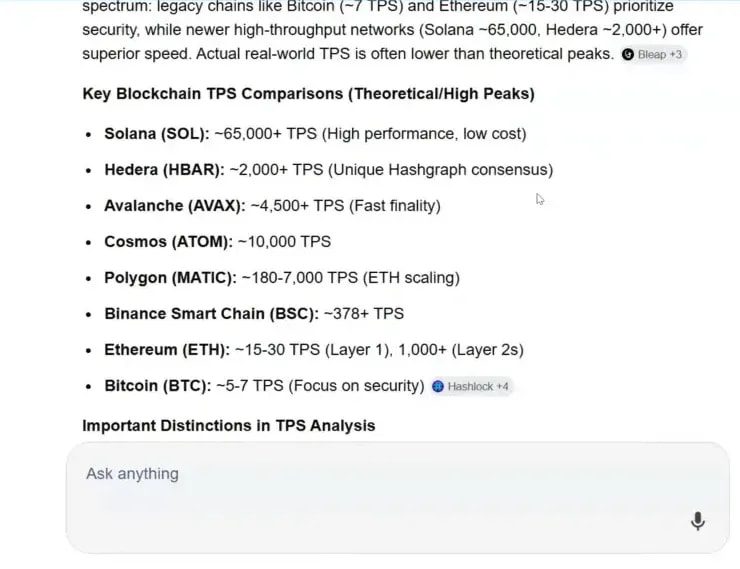
One of the biggest strengths in this Solana Crypto Review is simple: Solana remains the standout layer 1 when it comes to transaction performance.
There are other chains with impressive theoretical numbers. Sui gets talked about a lot. Aptos gets talked about a lot. On paper, some networks can post huge transaction-per-second claims.
But theory is not the same thing as reality.
Solana is the chain that has consistently shown high performance in practice. That is a massive distinction. It is one thing to say a blockchain could handle a certain load. It is another thing entirely to show that it is already doing meaningful work, repeatedly, under live conditions.
Now, no, Solana is not pumping out 65,000 transactions per second every second of every day. But that is mainly because the demand is not there yet. The network does not need to run at full theoretical capacity nonstop to prove itself.
What matters is this:
- It has headroom
- It already outperforms most competitors
- It is supporting very large volumes of actual on-chain activity
Compared with other major chains such as Avalanche, Cosmos, Polygon, or Ethereum layer 2s, Solana stands out for sheer performance and usability.
The Main Criticism of Solana
No fair Solana Crypto Review should ignore the downside.
The long-running issue with Solana has been reliability concerns around outages and the ability to effectively restart or reset the chain when congestion becomes severe. That has always been a valid criticism.
If you believe decentralization and uninterrupted operation should be non-negotiable, that history is not something you just wave away.
So yes, there is a blemish on the record here.
But beyond that, it is hard to deny the strength of the network. Speed, usage, and ecosystem growth are all there.
Institutional Interest Is Starting to Show
One of the more interesting developments is the increasing level of institutional exposure around Solana-related products.
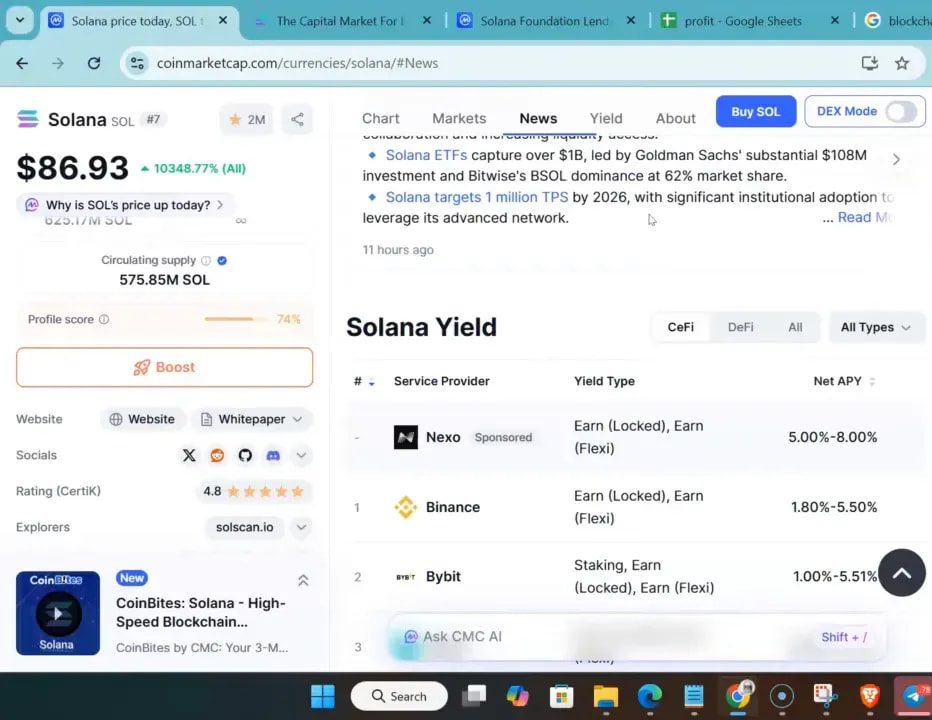
The standout point mentioned here is that Solana ETFs have attracted over $1 billion, with a notable $108 million investment from Goldman Sachs.
That matters for two reasons.
First, it is a sign that major players are not ignoring Solana. Second, even if that amount is not huge by Goldman standards, it shows intent. It says they are willing to get exposure and begin taking the asset class more seriously.
In crypto, institutional capital rarely arrives all at once. It usually starts with measured positioning. A toe in the water comes before a proper allocation.
And if you are actively looking for opportunities around those kinds of shifts in capital flows, this is exactly the type of environment where best crypto trading signals can help. When institutions start favoring specific ecosystems, timing entries and exits becomes far more important than just blindly chasing momentum.
Solana Foundation Supporting Aave After the Hack
Another development that says a lot about Solana’s maturity is the way its ecosystem is responding to stress.
The Solana Foundation reportedly lent USDT to Aave after Aave suffered a major exploit. The aim was to help stabilize liquidity conditions across Solana’s DeFi environment.
That is not a trivial story.
Aave is a blue-chip DeFi protocol. When a major protocol gets hit, confidence can evaporate quickly. In this case, the exploit involved unbacked collateral and led to roughly $190 million in withdrawals, exposing the protocol to significant bad debt risk.
What followed was a coordinated effort by DeFi participants to raise funds, pledge assets, support affected users, and restore stability.
Solana being one of the key players in that response is important. It suggests an ecosystem that is not just attracting users during the good times, but one that is increasingly willing to protect and support its broader DeFi infrastructure when things go wrong.
That is one of the signs of a chain that is growing up.
Solana Survived the FTX and Alameda Fallout and Thrived
This part of the bullish case should not be underestimated.
During the bear market, there was a lot of fear around Solana because Alameda and FTX held so much of it. Given what happened with Sam Bankman-Fried, FTX, and the wider fraud that blew up around that empire, many people questioned whether Solana would survive the fallout.
That fear was understandable.
But Solana did more than survive. It thrived.
That resilience matters. A chain that can withstand one of the ugliest collapses in crypto history, absorb the damage, and then continue expanding its ecosystem deserves respect.
Weak projects do not come back from that. Serious ones do.
The Usage Numbers Are Outstanding
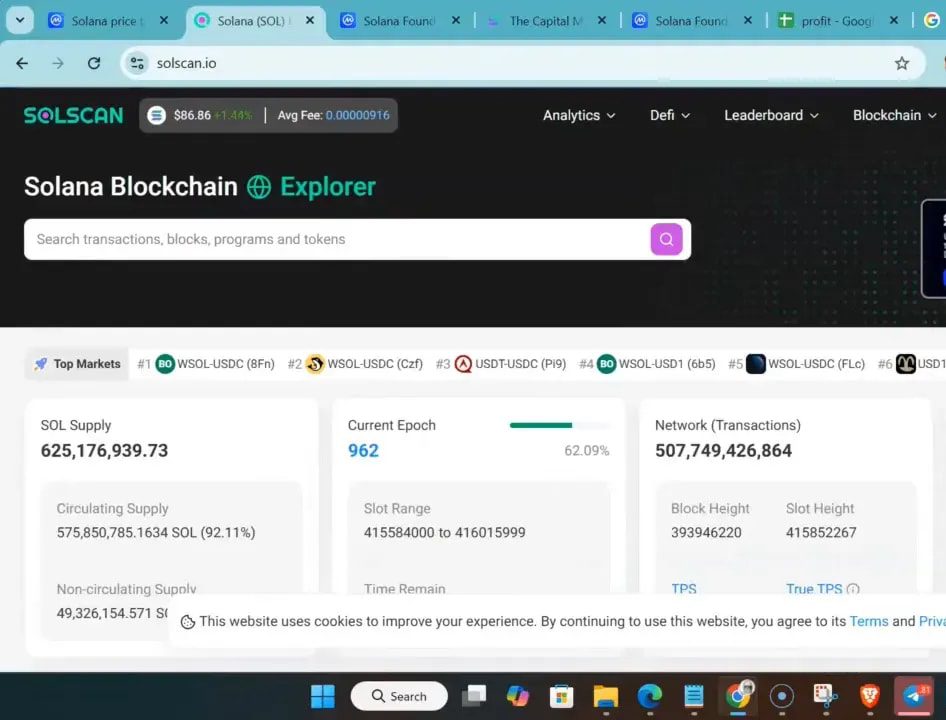
A strong Solana Crypto Review needs hard usage data, and this is where SOL really starts to separate itself from the pack.
The figures highlighted are impressive:
- True transactions per second: around 953 on average
- Transactions per second over the last hour or 24 hours: around 2,895
- Transactions in the last 7 days: roughly 250 million
- Daily activity: at least 30 million plus transactions
That is serious activity.
And that is really the point. Solana is not just technically capable. It is being used. A lot.
In crypto, actual usage is one of the cleanest signals of relevance. Token prices can go wild for all sorts of reasons, but sustained network activity is much harder to fake.
When a blockchain is processing tens of millions of transactions a day, you are not looking at a ghost chain. You are looking at infrastructure people actually choose to use.
Partnerships and Financial Institutions Add More Weight
Another reason SOL continues to look attractive is the caliber of the partnerships and attention it is receiving.
Major financial institutions are now entering crypto in a more meaningful way. Solana is one of the chains they appear to be taking seriously, and that should not surprise anyone.
If institutions want:
- speed
- high throughput
- low friction
- a chain that can scale with demand
then Solana naturally ends up on the shortlist.
The Goldman Sachs allocation is the obvious headline, but the broader message is bigger than one figure. Solana is becoming difficult for large players to ignore.
Meme Coins Helped, but Solana Is Bigger Than Meme Coins
It would be silly to pretend meme coins have not played a huge role in Solana’s recent rise.
Every cycle tends to produce a chain that becomes the hot destination for meme activity. In one era it was Ethereum by default because there were not many alternatives. In 2021, Binance Smart Chain became the meme frenzy hub. More recently, Solana took that crown.
And yes, that brought in an enormous amount of traffic.
Pump and similar launch environments have done extremely well. People who love meme coins have flocked to Solana because it is fast, cheap, and easy to use.
That has translated into millions of tokens and huge transactional activity across the network.
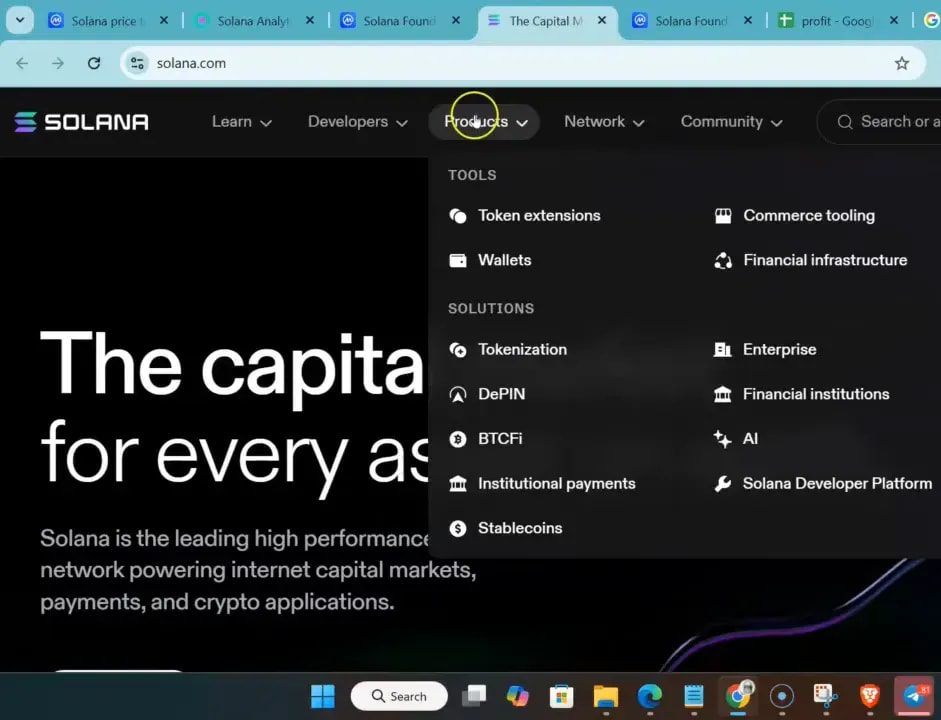
But the more important point is this: Solana is not just a meme coin chain.
It may have benefited from that speculative wave, but it is increasingly being viewed as a serious blockchain with serious long-term use cases.
That distinction is critical. Meme activity can act as an onboarding engine. The chain still needs real utility if it wants to matter over the long term. Solana increasingly looks like it has both.
For traders, that blend of hype cycles and foundational strength can create some of the best setups in the market. It is also why many people turn to best crypto trading signals during fast-moving periods on chains like Solana, where narratives can rotate quickly from memes to infrastructure plays to DeFi.
Why Solana Could Become a Settlement Layer for Big Business
This is where the long-term thesis gets really interesting.
The case being made is not about central bank digital currencies. The point is not that Solana becomes the default blockchain for CBDCs. It is that as more Web2 companies begin transitioning toward Web3 rails, they will need a blockchain that can handle massive operational demand without wrecking user experience.
And when you frame the problem like that, Solana starts to look like the obvious candidate.
Businesses do not want:
- slow settlement
- high transaction costs
- unreliable execution
- technical friction that interrupts operations
They want speed, consistency, and scale.
That is why Solana is being discussed as a potential settlement layer for payments and large-scale commercial activity.
The Amazon Example
One example raised is Amazon.
Whether or not Amazon ever actually chooses Solana is beside the point. The example is useful because Amazon represents the type of company that needs extraordinary transaction capacity. It handles an immense volume of commerce every day, and any blockchain used in that context would need to absorb a huge workload.
That kind of requirement eliminates a lot of chains very quickly.
Solana, however, at least has the profile to enter that conversation.
If large-scale companies begin using blockchains for settlement, payments, or commerce infrastructure, the upside for the networks that win that adoption could be enormous.
My Solana Price Outlook
So where does that leave price?
The near-term argument is straightforward: getting back to $250 looks very realistic.
That price is not some moonshot fantasy. Solana has already traded there before, and the current combination of ecosystem growth, institutional interest, and network usage gives that target real credibility.
Beyond that, the much bigger idea is whether Solana eventually becomes a $1,000 coin, which would imply something around a half-trillion-dollar valuation.
That would depend heavily on how many major companies end up building on or using Solana. If adoption remains mostly crypto-native, that kind of valuation becomes harder. If major businesses start using Solana as real infrastructure, the ceiling rises dramatically.
So the bull case can be thought of in layers:
- Return to previous highs around $250
- Break beyond that if the market cycle strengthens
- Potentially become a far larger network if enterprise adoption arrives
What Makes Solana So Compelling Right Now
To boil this Solana Crypto Review down to the essentials, SOL looks compelling because it combines several things that rarely come together in one project:
- Strong technical performance
- Heavy real-world usage
- Fast-growing ecosystem activity
- Institutional recognition
- Resilience after major industry shocks
- A credible path toward broader commercial utility
That does not mean there is no risk. There is always risk in crypto. It does mean Solana has moved well beyond being just another speculative layer 1 trying to get attention.
It has already proven it belongs in the top tier.
Final Thoughts
Solana looks good. More than that, it looks like one of the clearest major-chain winners in crypto right now.
It has scale, attention, activity, and a believable growth path. The return to $250 is the easy part of the thesis. The harder but more exciting question is how far Solana can go if it becomes infrastructure for the next wave of blockchain adoption.
If that happens, the upside is massive.
And if you are actively tracking opportunities across Solana and other high-momentum ecosystems, using best crypto trading signals can make a huge difference in spotting stronger setups early rather than reacting late after the market has already moved.
FAQ
Why is Solana considered one of the strongest layer 1 blockchains?
Solana is widely seen as one of the strongest layer 1s because it combines high throughput, strong real-world transaction volume, a large and active ecosystem, and growing institutional interest. Unlike some chains that mainly rely on theoretical performance claims, Solana has demonstrated substantial usage in live conditions.
Can Solana realistically reach $250 again?
Yes, the case for Solana returning to $250 is fairly strong based on the points covered here. Solana has traded at that level before, and its current fundamentals including network activity, ecosystem growth, and institutional exposure make that target look achievable if broader market conditions remain supportive.
What are the biggest risks for Solana?
The biggest concern historically has been network reliability and the fact that Solana has experienced outages and resets during periods of stress. That issue remains the main criticism even though the chain continues to perform strongly in most other areas.
Is Solana only popular because of meme coins?
No. Meme coins have absolutely boosted activity on Solana, but the network is bigger than that. It is also being used for DeFi, broader token activity, and is increasingly discussed as a serious settlement layer for larger commercial and institutional applications.
Could Solana eventually become a $1,000 coin?
It is possible, but that outcome would depend heavily on the level of adoption Solana achieves over time. For SOL to justify that kind of valuation, the network would likely need much deeper business and institutional usage, not just crypto-native demand.
What makes this Solana Crypto Review different from a short price prediction?
A proper Solana Crypto Review looks beyond price targets and focuses on the drivers behind the price. That includes throughput, ecosystem growth, institutional involvement, resilience through industry shocks, and the possibility of long-term real-world adoption.