

Table of Contents
- Overview
- Why now is a compelling time for long-term altcoin purchases
- Market structure and scenarios to prepare for
- How I’m approaching allocations and plans
- Automation: why bots beat manual limit orders in this market
- Ten altcoin buy zones I’m watching closely (and why)
- How to apply specific buy rules across these tokens
- Bot setup examples and grid logic
- Trading around CPI and macro releases
- Risk management and mental framework
- Combining signals, bots, and discretionary trading
- Practical portfolio blueprint (example)
- Execution checklist before you buy
- Common mistakes to avoid
- How I think about returns and recovery
- Tools and platforms I use
- Real examples of how I’m deploying capital
- How to combine signals and bots without overcomplicating
- Final mindset: patience + preparation beats panic
- What’s the best way to automate accumulation without getting liquidated?
- How do I choose between buying now or waiting for a deeper dip?
- Should I use signals or just read charts myself?
- How much cash should I keep as a reserve?
- Is buying coins like SUI, SOL, or AVAX a guaranteed win?
- When should I switch from accumulation to taking profits?
- Closing thoughts
Overview
Markets are moving sideways, volatility is alive, and that creates a rare setup for long-term investors and tactical traders alike. Right now, the altcoin landscape is offering some of the most attractive risk-to-reward opportunities we’ve seen in years—especially for quality blue-chip altcoins. Even if the market drops another 50%, many of these buy zones still present upside that’s multiple times larger than the downside.
This guide lays out a practical playbook: how to think about market structure, where to place long-term spot buys, how to use trading bots and limit orders to automate accumulation, and the specific tokens I’m targeting with why I like them. You’ll get tactical allocation ideas, specific price ranges to watch, and a repeatable process for turning a messy range market into systematic opportunity.
Why now is a compelling time for long-term altcoin purchases
The core thesis is simple: the altcoin market is deeply oversold, and many projects are trading far below what their medium- and long-term fundamentals imply. In prior cycles, small allocations at the right times produced exponential returns. Waiting for “absolute certainty” costs you far more than cheap dollar-cost averaging now.
Key points supporting this:
- Two-leg bear pattern: Historically, major bear markets often have two aggressive legs down. That creates a top-of-range and bottom-of-range dynamic. The top is where you can start building; the bottom is where you scale in heavier if needed.
- Risk-to-reward skew: Even with another 50% downside, many blue-chip altcoins offer a minimum of 1:6 risk-to-reward from current levels. That means the upside can easily dwarf potential losses.
- Dollar-cost advantage: Buying now means fewer tokens per dollar later if prices rise; earlier small buys often turn into outsized positions down the line.
Market structure and scenarios to prepare for
There are three macro scenarios to keep in mind and trade around:
- Breakout scenario — Price breaks the key trend line and moves higher for several weeks. That’s the big money-making period for altcoins and high-conviction mid-term trades.
- Range-bound scenario — Market continues to chop between a top-of-range and bottom-of-range. This is where grid bots, limit orders, and disciplined DCA win.
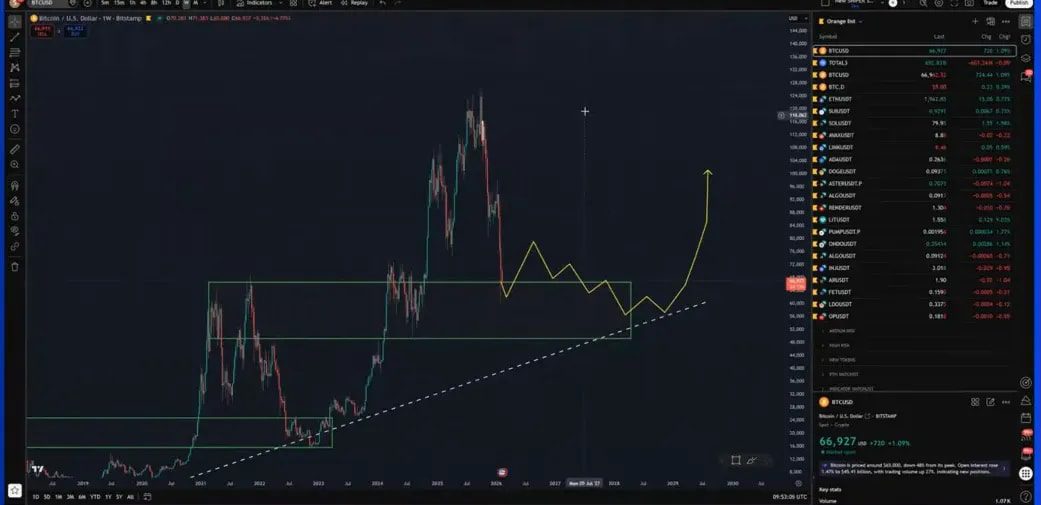
- Deeper drawdown — A second leg pushes prices materially lower (think Bitcoin to 48k or even 40–45k as an invalidation area). That is painful but presents the highest-quality A-class entries for long-term holders.
For now, treat the immediate trend line as the decision point. Until it’s convincingly broken, the bias is still cautious. Use the current environment to set initial positions and automate building lower if necessary.
How I’m approaching allocations and plans
Practical allocation rules I follow during high-uncertainty regimes:
- Small initial buys: Start with 5–10% of what you would deploy at conviction. That preserves capital for better entries later while still capturing potential upside.
- Scale with bots and limit orders: Use grid bots to build positions across a range automatically so you don’t miss fills or get glued to the screen.
- Keep a cash reserve: Hold leftover capital for opportunistic adds if the market revisits deep support zones.
- Use low leverage or spot: If you choose leverage, keep it conservative (I use 2x for bot grids). The goal is to capture upside without getting liquidated in normal market chops.
- Plan your invalidation: Decide the price that would cause you to reassess (for Bitcoin I use ~40k as a hard invalidation for current bots).
Automation: why bots beat manual limit orders in this market
Manual limit orders work sometimes—but markets are noisy and timing is rarely perfect. Grid bots and spot bots allow you to:
- Layer buys and sells: Bots systematically accumulate on dips and trim on strength without emotion.
- Recover faster: Better entries reduce the time needed for recovery compared to holding a single large losing position.
- Track ranges: Set grids between your top and bottom boxes and let the bot handle execution even when liquidity is low.
I’ve been setting grids across major ranges—for example, a Bitcoin grid that buys down to $50k and takes profits up to $80–85k. That kind of automation turns sideways markets into repeated trade capture opportunities.
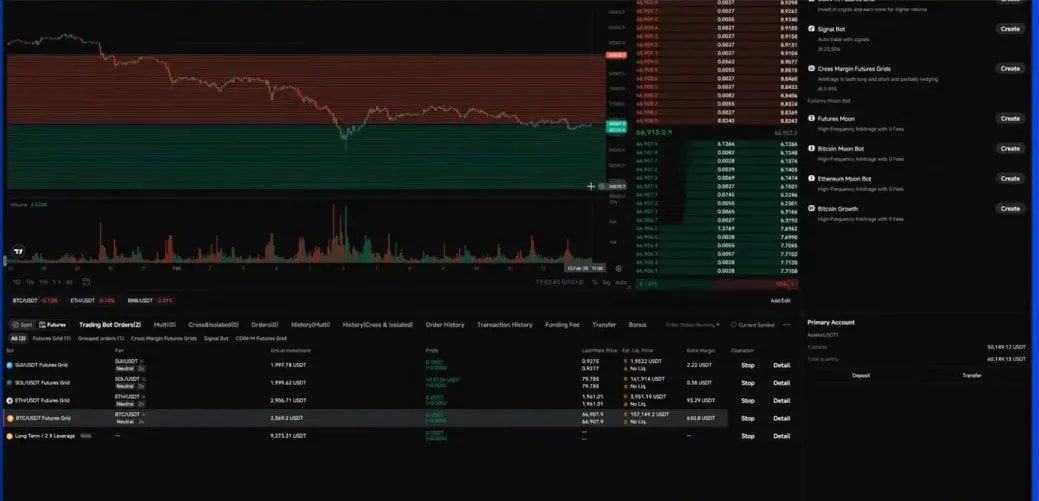
If you’re actively trading or building long-term spot positions, consider pairing automation with a signal service that highlights high-probability buy zones. A well-curated crypto spot trading signals service can complement bots by alerting you to high-conviction entry points and reducing time spent scanning the market.
Ten altcoin buy zones I’m watching closely (and why)
Below are the tokens I’m targeting, the buy ranges I consider reasonable, and the logic behind each pick. These aren’t all buy-now-or-die picks—think of them as tactical zones where the risk-to-reward becomes attractive for multi-year holds or meaningful swing trades.
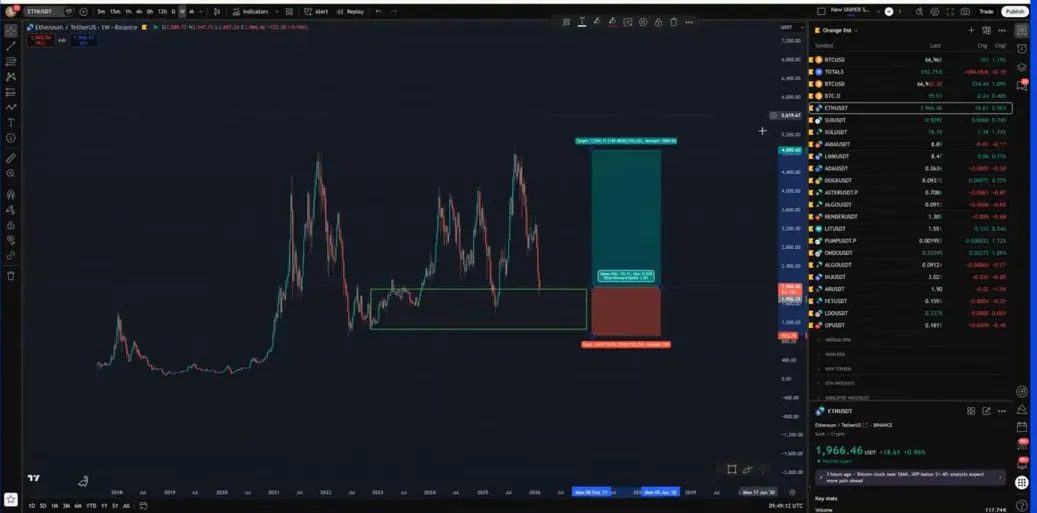
1) SUI — Buy zone and thesis
Target range: heavy accumulation around $2 down to $0.20–$0.30 for deeper corrections.
Why SUI: strong developer activity and emerging use cases. Even if SUI returns to half of previous highs, the upside remains significant. I went heavy near $2 and am prepared to scale more if SUI revisits sub-$1 levels.
2) SOL (Solana) — Buy zone and thesis
Target range: near-term accumulation targets $30–$50, long-term conviction for much higher price levels.
Why SOL: Solana’s ecosystem keeps innovating—builders, gaming narratives, and community momentum. There will be volatility and narrative resets, but the core network use cases remain intact, making dips attractive for multiyear holds.
3) AVAX (Avalanche) — Buy zone and thesis
Target range: consider $3–$6 as attractive buying zones if we revisit them.
Why AVAX: Fundamentals and ecosystem activity don’t seem to match price. Look for on-chain metrics and developer news to confirm; if fundamentals remain strong, the mismatch becomes a compelling long-term entry.
4) Chainlink — Buy zone and thesis
Target range: nodal accumulation around current dips; long-term holders should treat it as core infrastructure exposure.
Why Chainlink: it’s the oracle layer—a glue for many smart contract use cases. Long-term demand drivers make this a high-timeframe buy even when price action looks unimpressive.
5) RNDR (Render) — Buy zone and thesis
Target range: aggressive buyers can consider deep dips (think dramatic corrections), otherwise start small and scale down to $0.20 levels in worst-case scenarios.
Why RNDR: Render addresses GPU compute and creative economy needs on-chain. If demand for decentralized rendering grows, RNDR can see disproportionate upside from low bases.
6) ASTER (or new DEX tokens) — Buy zone and thesis
Target range: early stages—watch pullbacks to under $0.30 as opportunistic buys.
Why ASTER: newer Dex tokens often see strong short-term moves with protocol adoption. These are riskier but can reward patient buyers when the exchange gains traction.
7) PUMP (pump fund or memecoins with liquidity) — Buy zone and thesis
Target range: highly speculative. Use very small-sized positions and set strict caps on allocation.
Why PUMP-type tokens: some decentralized liquidity projects and memetic narratives produce parabolic short-term rallies. Treat these as trading toys, not core holdings. Consider using signals to time entries and exits.
8) LIT (lit-like ecosystem tokens) — Buy zone and thesis
Target range: accumulate at lower-mid cycle levels with strict scaling in case of deeper drawdown.
Why LIT: tokens that serve developer tooling or payment rail roles often recover strongly as adoption matures.
9) XRP — Buy zone and thesis
Target range: $1–$1.20 (long-term), but start smaller if you believe in the roadmap and potential regulatory clarity.
Why XRP: regulatory progress can create large moves; downside is possible but risk-to-reward is attractive if you expect partial recovery to previous ranges.
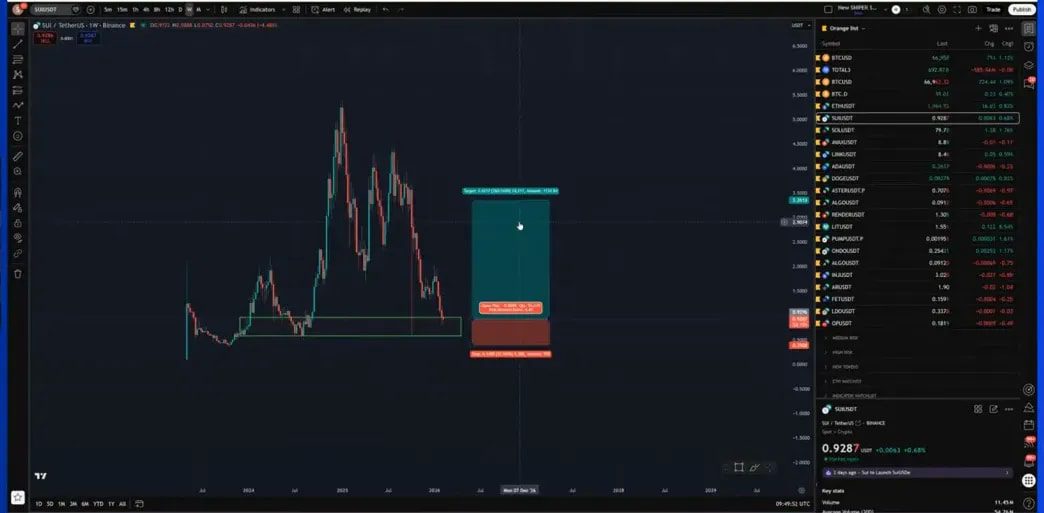
10) ETH — Buy zone and thesis
Target range: $900–$1,000 is an area I’ll comfortably size into if it happens; scale in earlier with smaller buys and use bots to accumulate.
Why ETH: layer-one settlement and smart contract demand. Even if a pullback occurs to $900–$1,000, the long-term utility and DeFi ecosystem keep ETH as a core allocation.
How to apply specific buy rules across these tokens
Use these repeatable rules when assessing an altcoin buy zone:
- Set a top-of-range starter buy: Deploy 20–40% of your planned allocation around the first “good” area. This anchors you in the range.
- Automate the rest: Use grid bots or staggered limit orders to buy into lower price bands automatically if the market revisits them.
- Decide invalidation levels: Pick a number where your thesis materially breaks and you’ll reassess. For Bitcoin-derived allocations, consider ~40k as a meaningful invalidation zone. For altcoins, it might be a protocol-specific break of fundamentals.
- Use conservative leverage if any: If deploying bots with leverage, keep it around 2x and include stop losses.
- Keep a cash reserve: Plan to hold at least 30–60% of your intended deployment until you see confirmation or deeper discounts.
Bot setup examples and grid logic
Grids are a practical way to capture range-bound moves. Here are conservative templates:
- Bitcoin grid (range market): Buy grid from $50k to $66k, sell grid up to $80–85k. Use 2x leverage only if you understand liquidation mechanics.
- ETH grid: Grid down to $900–$1,000, range sells in the $1,700–$2,500 areas. Spot bots can be used for pure accumulation.
- Altcoin grids: Use spot bots to accumulate SUI, SOL, AVAX across 20–40% price bands; use smaller grid sizes for higher volatility tokens like PUMP or ASTER.
Bots should be configured with stop-loss levels based on your invalidation plans. If a bot gets stopped out, consider it a scouting loss and build better grids lower as market structure evolves. Recoveries from better average entries often happen faster than from single-entry heavy losses.
Trading around CPI and macro releases
Macro days like CPI are volatility days—expect a V-shaped dump followed by opening pumps or the opposite. Best practice:
- Wait for CPI print and let volatility settle before committing large new entries.
- If you trade funded accounts or use margin, reduce size or stay on the sidelines until the first volatility wave passes.
- Look for follow-through moves. If price breaks your trend-to-turn levels, then enter with conviction.
Today’s CPI expectations (example) are often priced in. Use your trend lines as the final arbiter: until the main trend is broken, bias remains cautious and short opportunities may still be present.
Risk management and mental framework
Risk management is more than just stop losses. It’s a mental plan for handling uncertainty:
- Position sizing: Treat long-term buys like insurance for future upside. Don’t overcommit in one token—diversify across 6–10 high-conviction names.
- Time horizon: Have a multi-year view for core positions (3–5 years) but also set intermediate check-ins (3–6 months) to re-evaluate thesis.
- Expect losses: If you see positions sitting underwater, focus on better entries rather than forcing break-evens with high-risk trades.
- Prepare to scale: If price hits your lower boxes, add gradually—automate it with bots to avoid fear-based mistakes.
Combining signals, bots, and discretionary trading
The best approach in a choppy market is hybrid:
- Signals: Crypto spot trading signals can point you to high-probability entry points and help time larger buys. Use them to filter opportunities and confirm your analysis before scaling in.
- Bots: Use bots to execute a lot of the heavy lifting—grid accumulation, repetitive buys, and range sales.
- Discretionary trades: Keep a small portion of capital for opportunistic plays or quick swings when the market presents clear patterns (e.g., breakouts or retests).
Signals are especially useful if you prefer not to scan multiple charts all day. When combined with bots, they allow you to trade less but better—automation handles the orders while signals refine timing.
Practical portfolio blueprint (example)
Here is a sample framework to adapt based on capital and risk tolerance:
- Core Bitcoin/ETH exposure: 40–60% (with staggered buys or grids).
- Blue-chip altcoins: 20–30% (SOL, AVAX, Chainlink, SUI). Start small, scale by grids.
- Emerging protocols and DEX tokens: 5–10% (ASTER, RNDR, niche DEXes). Very small, automated DCA.
- Speculative/meme allocation: 1–3% (PUMP-style trades). Strict stop-loss and profit-taking rules.
- Cash reserve: 10–30% to reload on true panic levels or A-class entries.
Execution checklist before you buy
- Confirm the token’s core fundamentals and recent development activity.
- Set clear target entry zones and worse-case invalidation prices.
- Decide on automation: spot bot, grid bot, or staggered limit orders.
- Size initial execution to 5–40% of intended allocation depending on conviction.
- Reserve cash for scaling into lower zones if they occur.
- Use conservative leverage only if you understand margin and stop-loss rules.
Common mistakes to avoid
- Waiting for the perfect bottom: Perfect timing rarely appears. Small buys now protect you from needing to buy much more later at higher prices.
- Overleveraging: Leveraged grids without stop-loss discipline are a recipe for ruin in choppy markets.
- Ignoring macro events: Major prints (CPI, Fed minutes) can produce violent intraday moves—adjust sizes and tactics around those days.
- Holding junk: Trim speculative or low-quality holdings and concentrate on projects with clear roadmaps and on-chain demand.
How I think about returns and recovery
Some positions will sit underwater for long periods. That’s normal. Your goal is to get enough good entries that a small allocation today turns into a large return later. Often that means accepting small buys across many tokens rather than one huge bet.
For example, if you need a 500% appreciation to break even on a losing trade, buying new tokens at discounted prices helps shorten that path to recovery. Combining trading profitability with long-term spot accumulation creates the best chance to turn overall portfolio losses into net gains over time.
Tools and platforms I use
Practical tools that make this process repeatable:
- Grid/spot bots: Set up grids across intended ranges (2x leverage maximum for me when using margin).
- Limit orders: For small, precise entries, but expect to miss some fills.
- Signal services: Use crypto spot trading signals to surface timely buy zones and reduce the time spent scanning charts.
- DEX exposure: For newer tokens and airdrop accumulation, decentralized exchanges are essential—just mind slippage and liquidity.
Real examples of how I’m deploying capital
Current approach in practice:
- Opened a Bitcoin grid from roughly $50k up to $80–85k with 2x leverage and stop-loss management.
- ETH spot bot set to accumulate slowly down toward $900–$1,000 while trimming into strength.
- SOL and SUI spot bots in place; small starting positions sized to 5–10% of intended allocation with automated scale-ins.
- Small speculative allocation into newer DEX tokens to accumulate airdrop points while learning decentralized trading mechanics.
How to combine signals and bots without overcomplicating
A simple workflow:
- Use a trusted crypto spot trading signals service to highlight 2–4 high-probability buy zones weekly.
- Check fundamentals and set a starter buy at the top of the range (small size).
- Deploy spot/grid bots to accumulate across lower bands automatically.
- Monitor macro triggers—if the main trend breaks, re-evaluate and scale differently.
Final mindset: patience + preparation beats panic
The market will test patience. There will be fakeouts and volatility. Successful long-term accumulation is a marriage of structure and flexibility: set your rules, automate execution where it helps, and keep cash available to act when A-class entries present themselves.
A final reminder: only a small percentage of people buy at the real market bottoms. You don’t need to get the exact bottom to win; you need to be positioned early enough on quality projects to compound over time. This is the time to build, automate, and prepare.
What’s the best way to automate accumulation without getting liquidated?
Use spot bots when possible for pure accumulation, or limit leverage to conservative levels (2x) if you must. Always set stop losses tied to invalidation levels and divide funds across multiple grids. Avoid large single-entry leveraged positions in sideways markets.
How do I choose between buying now or waiting for a deeper dip?
Start with a small allocation now (5–20% of your intended buy). Automate the remainder with grids or limit orders to capture lower prices if they appear. That way you participate in any recovery but retain buying power for deeper discounts.
Should I use signals or just read charts myself?
Both approaches work. Signals save time and surface high-conviction zones, while your own chart work gives context. Use signals to flag opportunities and bots to execute, then validate with a quick fundamentals or on-chain check.
How much cash should I keep as a reserve?
A sensible reserve is 20–50% of your total deployable crypto capital during uncertain markets. This provides flexibility to capitalize on deep dips without overleveraging or panic-buying.
Is buying coins like SUI, SOL, or AVAX a guaranteed win?
No investment is guaranteed. These assets have strong long-term narratives and ecosystems, but they come with protocol risk, macro risk, and execution risk. Size positions appropriately and only allocate capital you can afford to hold long-term.
When should I switch from accumulation to taking profits?
Have target zones for profit-taking (e.g., partial sells at 2x, 3x, 5x). If price breaks major trend lines and starts a sustained bull phase, trim into strength and rebalance back to planned allocations.
Closing thoughts
This market is a rare blend of fear and opportunity. If you approach it with discipline—using small starter buys, automated accumulation, conservative leverage, and a ready cash reserve—you’ll be positioned to capture outsized gains while managing downside risk. Focus on quality projects, automate where possible, and let compounding and time do the heavy lifting.
If you’d like help identifying high-probability entries, pairing signals with bot automation streamlines the process and reduces guesswork. Use signals to find the zones and bots to execute the plan—this combination turns a chaotic market into a process-driven edge.