
One well-timed trade can still end up a loss if your stop loss sits in the wrong place. You enter because your indicators line up, the chart looks perfect, and then the price nicks your stop loss before reversing and running far past your original entry. The difference between a losing trade and a big winner often comes down to one thing: precise stop placement that accounts for market volatility.
Table of Contents
- Why stop loss placement matters
- What is the ATR (Average True Range)?
- Why use ATR to place stop losses
- How to calculate an ATR-based stop loss (step-by-step)
- Common mistakes to avoid
- FAQ
- Final thoughts
Why stop loss placement matters
Stop losses protect capital, but poorly placed stops do more harm than good. Put them too tight and normal market noise will take you out. Put them too wide and you risk more capital than your edge requires. The goal is to be precise: a stop wide enough to survive routine volatility but tight enough to limit losses when the trade thesis breaks.
What is the ATR (Average True Range)?
The ATR measures recent volatility by calculating the average size of price moves over a lookback period—commonly 14 candles. Instead of guessing how much “room” a price may need, the ATR gives a numeric readout you can use to set stops that reflect actual market behavior.
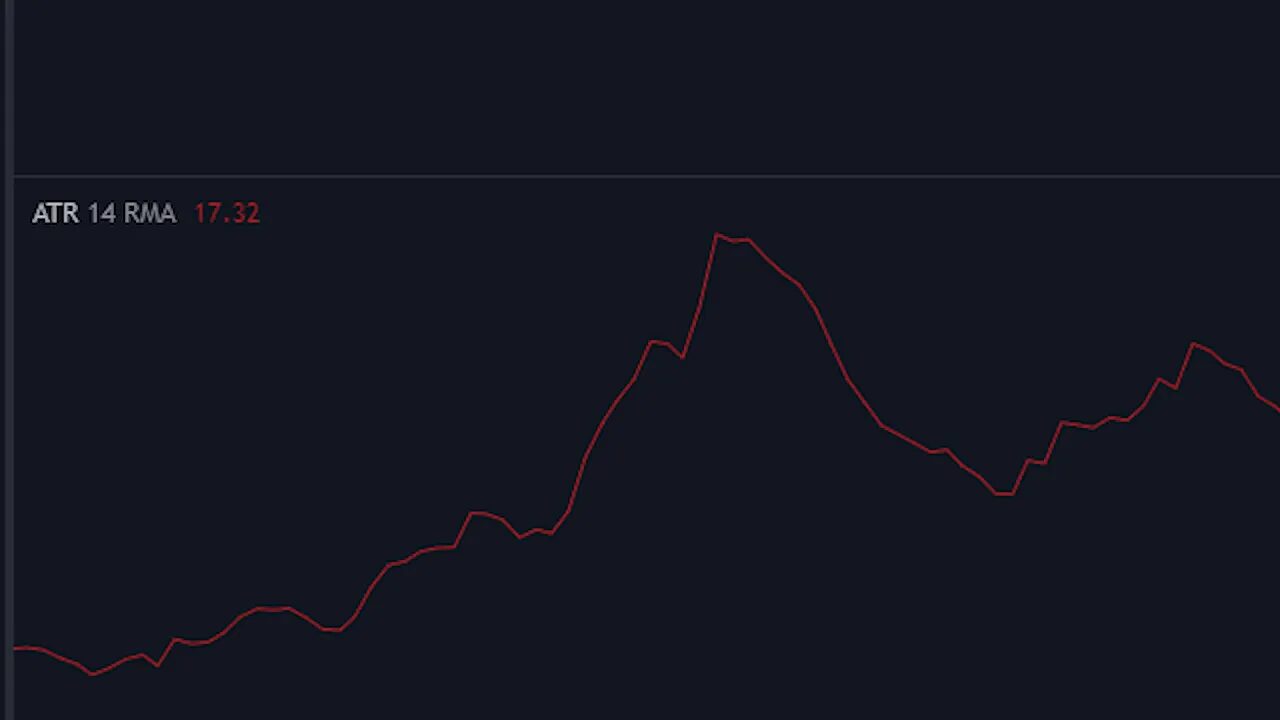
The ATR appears as a line on the indicator pane and shows a value representing the average candle size for the selected period. For example, an ATR value of 17.32 on an Ethereum chart means the average candle size over the past 14 periods is $17.32. That number is your volatility baseline.
Why use ATR to place stop losses
Different instruments and timeframes have very different volatility profiles. A 15-minute Bitcoin candle can be a few hundred dollars, while the daily candles can routinely be much larger. Using a fixed dollar buffer across instruments or timeframes is simply inefficient.
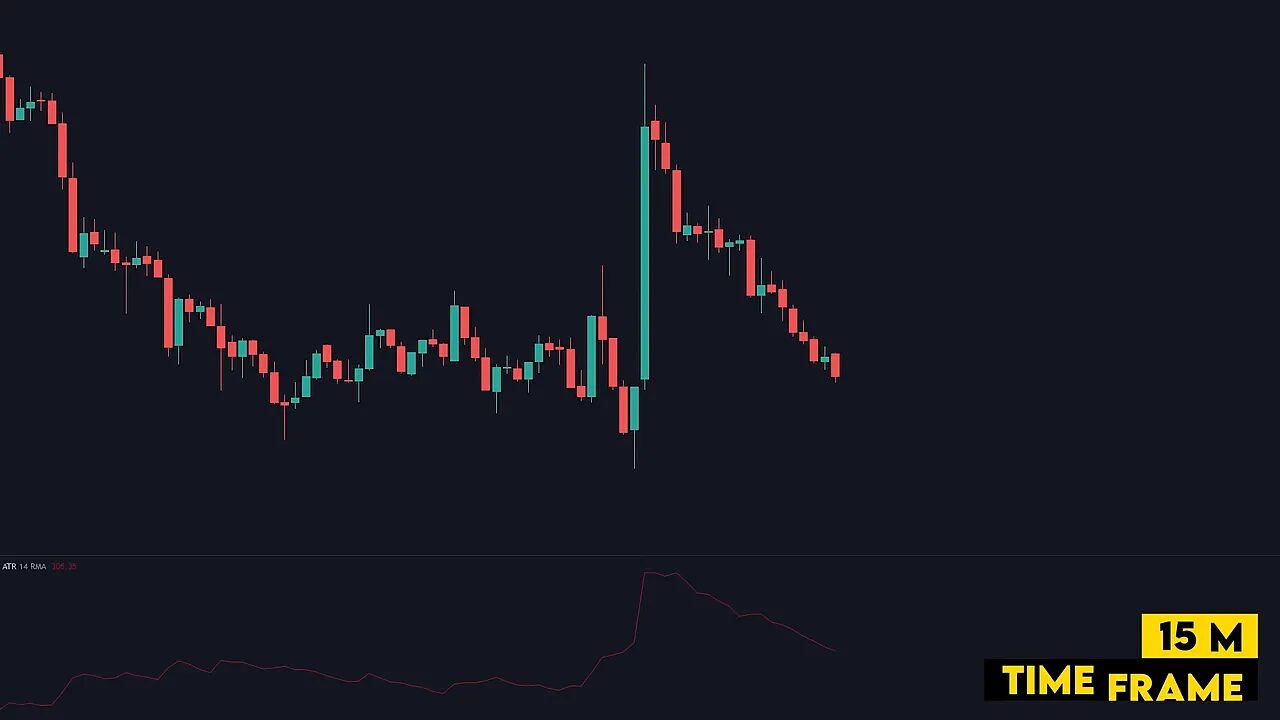
ATR allows you to scale your stop to the market. On higher timeframes you generally need larger stops; on lower timeframes you can use tighter stops. By tying stop placement to ATR, you avoid getting stopped out by routine noise while keeping risk proportional to the instrument’s movement.
For crypto traders, this is especially important. Cryptocurrencies often have larger, faster swings than traditional assets. Combining ATR-based stop placement with reliable cryptocurrency signals can improve the timing of entries and reduce false stop-outs when markets whip. If you rely on signals to find opportunities across different blockchains, adding ATR-based stops ensures each signal is managed with volatility-aware risk control.
How to calculate an ATR-based stop loss (step-by-step)
- Open your charting platform and add the ATR indicator. The default setting of 14 is a good starting point.
- Make sure your cursor is positioned so the ATR value reflects the most recent candles (cursor all the way to the right or off the chart).
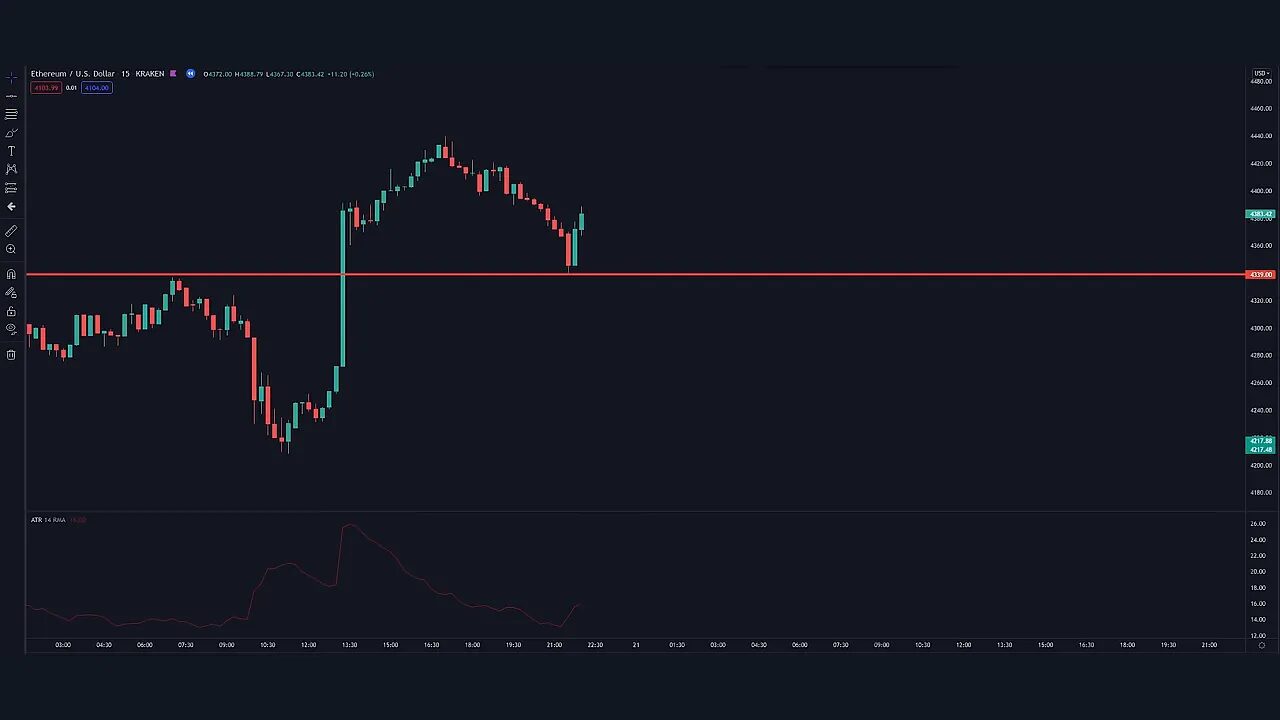
- Identify the technical level where you would normally place your stop, for example the recent swing low.
- Subtract the ATR value from that level to get your ATR-adjusted stop. This gives the price room equal to one average candle.
- Optionally adjust the multiplier (for example 1.5x ATR) if you expect extra noise or are trading a particularly volatile pair.

Example 1
Stop level: 4339
ATR value: 16.02
Calculation: 4339 − 16.02 = 4322.98
Set your stop at approximately 4322.98 instead of immediately below the swing low.
Example 2
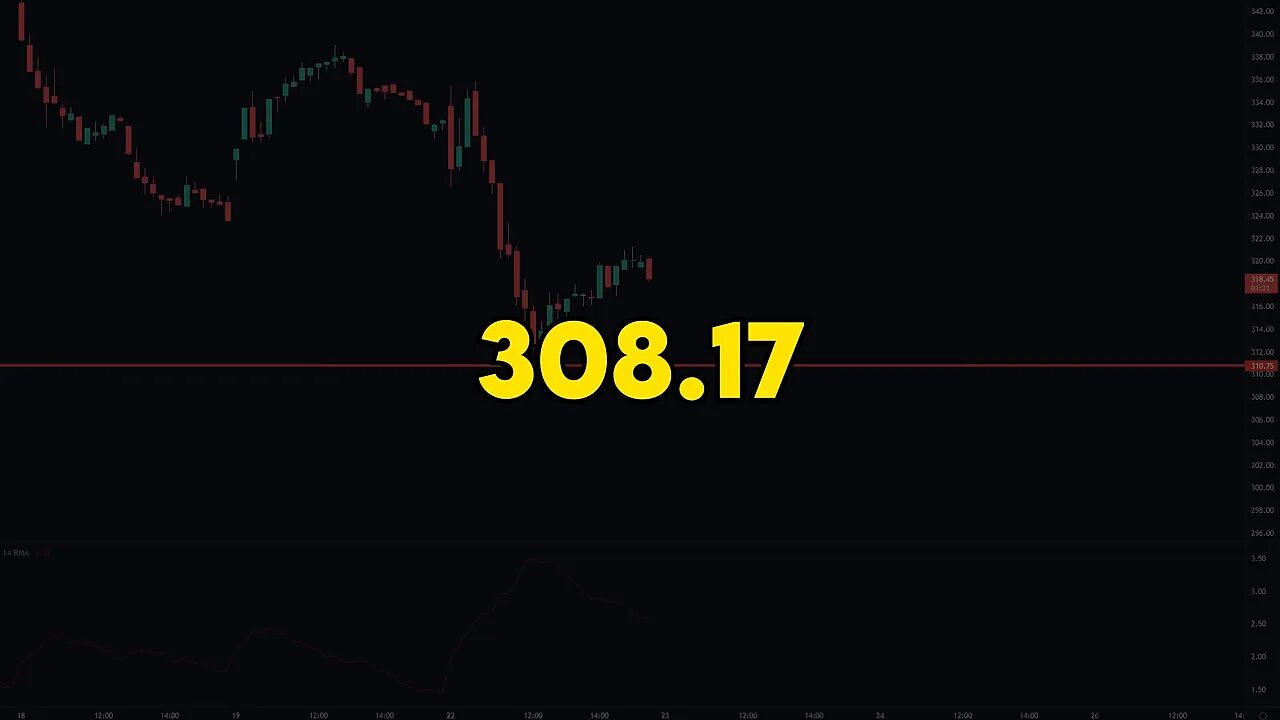
Stop level: 310.75
ATR value: 2.58
Calculation: 310.75 − 2.58 = 308.17
That becomes the ATR-adjusted stop for this setup.
Practical tips for using ATR stops
- Use the right timeframe—match the ATR period and chart timeframe to your trading horizon. Day traders use lower timeframes; swing traders use daily charts.
- Consider multipliers—1× ATR is strict but efficient; 1.5×–2× ATR can reduce whipsaw for noisier markets.
- Adjust the ATR length—a shorter ATR reacts faster to changing volatility, while a longer ATR smooths out spikes.
- Keep risk consistent—translate ATR width into position size so dollar risk per trade remains aligned with your plan.
- Combine with your edge—use ATR-adjusted stops with technical triggers, momentum signals, or third-party cryptocurrency signals to improve overall trade quality.
Common mistakes to avoid
- Moving stops based on emotion. ATR provides a rule-based method—stick to it unless your trade thesis changes.
- Using the same fixed buffer for all instruments and timeframes. Volatility differs widely between assets.
- Reading the ATR value with your cursor mispositioned. Ensure the indicator value reflects the latest candles.
- Over-sizing positions after widening stops. Wider stops require smaller position sizes to keep fixed risk per trade.
FAQ
How often should I update my ATR-based stop?
Update the stop when the technical level that determined the stop changes or when you move the trade (for example when you scale in or out). You do not need to recalculate ATR every minute; check it at logical points such as session close, after major news, or when price forms a new swing low or high.
Can I use ATR for take-profit targets as well?
Yes. ATR can help set realistic profit targets by measuring typical move size. Some traders use multiples of ATR for targets—1× ATR for conservative targets, 2×–3× ATR for larger objectives—while adjusting for chart structure and risk-reward.
What ATR settings should I use for crypto?
The default 14-period ATR is a reliable starting point. For very fast-moving altcoins, a shorter ATR (for example 7 or 10) will react faster to volatility spikes. Always backtest settings against the specific coin and timeframe you trade.
Will using ATR stops reduce my number of winning trades?
ATR stops aim to reduce losing trades caused by normal volatility, so you should see fewer stops triggered by noise. That typically increases the win rate for valid setups, though the exact impact depends on your strategy and position sizing.
Final thoughts
Stop placement is not guesswork. ATR gives a disciplined, volatility-aware way to place stops that fit the instrument and timeframe. Using ATR-adjusted stops keeps you in valid trades while limiting the number of false stop-outs. Pair this approach with solid entry signals—whether from your own analysis or reliable cryptocurrency signals—and you give your strategy the best chance to realize its potential.
Stop losses protect capital. ATR makes stop losses smarter.