
Table of Contents
- Outline
- From fringe to front row: crypto’s political arrival
- Understanding the weapons: PACs vs super PACs
- Fairshake: the crypto war chest
- Big donors, shifting allegiances
- Scale matters: crypto vs fossil fuels and the post-Citizens United world
- Where the money is going for 2026
- The policy battlefield: Clarity Act vs the banks
- Is the bank argument valid?
- Timing matters: primaries, White House talks, and a rolling calendar
- Money, markets, and the midterms: what traders should know
- Why the midterms might be bullish — and why they might not
- Scenarios for the midterms and the Clarity Act
- Why bipartisan backing matters for long-term crypto survival
- Practical steps for holders, builders, and traders
- What to watch next: timeline and catalysts
- Long-term risks: why today’s wins can be tomorrow’s vulnerabilities
- Closing thoughts
- FAQ
- Final takeaway
Outline
- How crypto went from marginal to dominant in US political spending
- What super PACs like Fairshake actually did and who funded them
- Where the money is being targeted for 2026 (Senate, House, primaries)
- The policy battleground: the Clarity Act, stablecoin yield, and banking pushback
- How all this translates to market movements and what traders should consider
- Scenarios for the midterms and long-term regulatory risk
- Practical takeaways and FAQ
From fringe to front row: crypto’s political arrival
Just a few years ago, the crypto industry was largely a footnote in Washington. Then, across a blistering political cycle, it became one of the largest sources of corporate political spending in the United States. That shift wasn’t gradual. It happened fast and with a lot of capital behind it.
At the center of that transformation was a simple playbook: use political action committees and super PACs to replace anti-crypto lawmakers with pro-crypto ones. The result was a wholesale reshaping of the political landscape. By one count, an estimated 270 pro-crypto lawmakers occupied seats in Congress after the 2024 wave, and a president who initially mocked digital assets was suddenly calling for them to be “mined, minted, and made in America.”
Understanding the weapons: PACs vs super PACs
Money talks in politics. How that money moves matters. The difference between PACs and super PACs is subtle but crucial.
- PACs can donate directly to candidates but face contribution limits—typically up to $5,000 per election per candidate and up to $15,000 per year to a political party.
- Super PACs cannot donate directly to campaigns or coordinate with them, but they can spend unlimited sums on advertising, messaging, and influence operations.
In 2024, the crypto industry leaned hard into super PAC spending. That allowed swift, high-impact messaging—digital ads, targeted outreach, and coordinated placement of political narratives in key swing states.
Fairshake: the crypto war chest
Fairshake was the name on everyone’s lips. Formed in early 2023 and officially nonpartisan, it quickly became the crypto industry’s political weapon of choice. Within little more than a year it amassed an eye-watering war chest—numbers in the hundreds of millions.

By the time 2024 rolled around, Fairshake had raised roughly $227 million, with major checks from the likes of Ripple, Coinbase, and Andreessen Horowitz—each contributing in the ballpark of $50 million. To put that in perspective, crypto accounted for nearly half of all corporate political spending in 2024. Other industries didn’t come close.
That sudden infusion of capital explains why Washington’s tone toward crypto changed so quickly. With billions backing political messaging and targeted races, the industry could effectively make or break candidates who openly opposed regulatory clarity and industry growth.
Big donors, shifting allegiances
The donor map is not monolithic. While early crypto spending tried to remain bipartisan, a clear shift toward Republican-aligned groups emerged as the 2026 midterms loomed.

The Winklevoss twins donated $21 million in BTC in one notable example. Rather than route that money to the same super PAC that dominated 2024, they opted for a different vehicle—the Digital Freedom Fund—signaling that some donors began prioritizing party alignment over pure crypto bipartisanship.
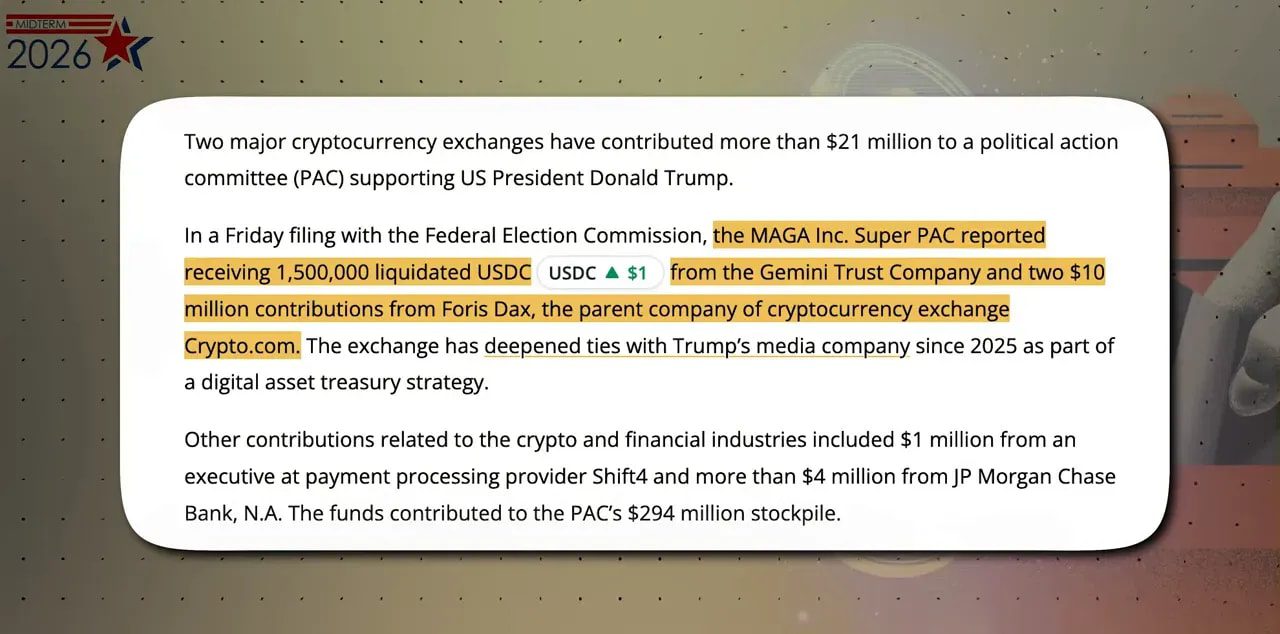
Other examples: MAGA Inc reported receiving $20 million from the parent company of Crypto.com and $1.5 million in USDC from Gemini Trust early in 2026—funds likely intended to support like-minded candidates through the rest of the presidential term and into the midterms.
Scale matters: crypto vs fossil fuels and the post-Citizens United world
Why could a newly-formed super PAC scale so fast? Because the rules changed over a decade ago. The 2010 Supreme Court decision effectively removed strict limits on corporate political spending—Citizens United and related rulings gave corporate money more room to influence campaigns.
Compare timelines: fossil fuel companies accumulated around $176 million in donations over more than a decade. Crypto tallied about $129 million in just three election cycles, 92 percent of which was spent in 2024 alone. This kind of rapid concentration of political capital is unprecedented for a single nascent industry.
Where the money is going for 2026
Putting money behind candidates is strategic. For 2026, the focus is obvious: Senate battlegrounds and targeted House districts where a relatively small ad spend can flip a seat.
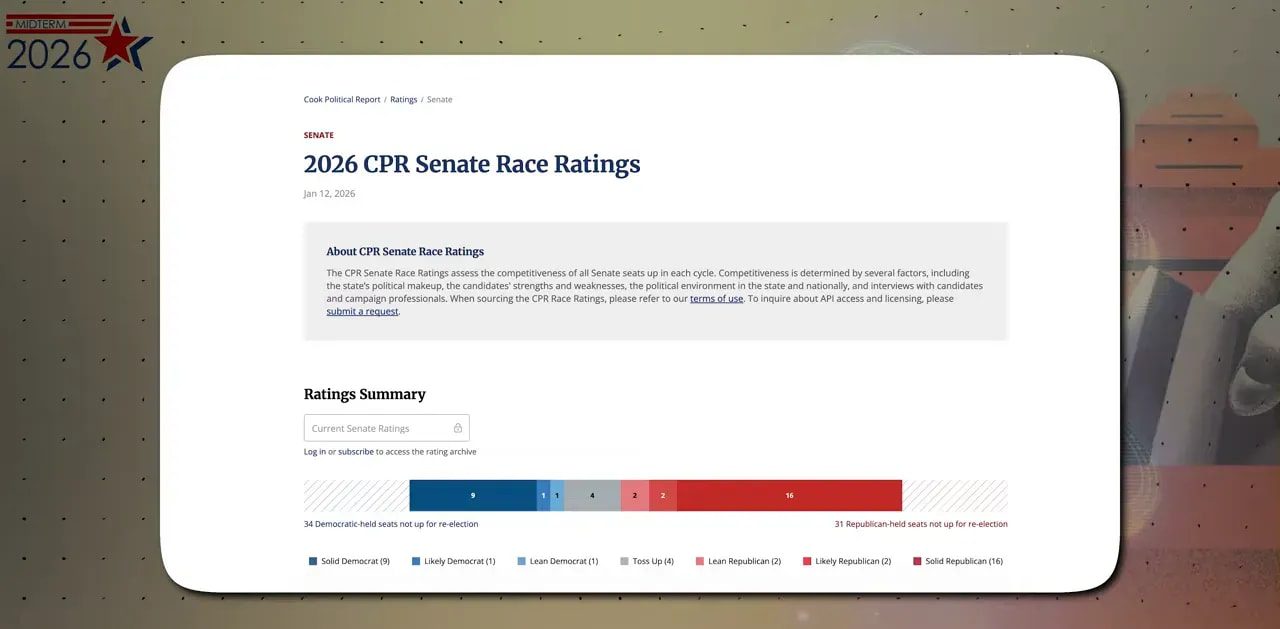
Notable targets include:
- Senate races — Example: John Deon in Massachusetts (a well-known crypto advocate), who is planning another bid. Fairshake’s 2024 calculus skipped Massachusetts as it remained safely Democratic; swing states were prioritized for better returns.
- Alabama — Barry Moore received a $5 million boost from a Republican-aligned pack affiliated with the broader crypto ecosystem.
- Ohio and Michigan — Colorado-style flips and rematches are on the table; Berni Marino in Ohio flipped a seat in 2024, while Michigan saw heavy Fairshake spending to influence outcomes.
- House targets — Incumbents who obstruct crypto-friendly legislation (for example those opposing the Clarity Act and similar bills) are actively being targeted for replacement with proponents.
That approach—spend heavily where the margin of victory is narrow—allows PACs to maximize influence per dollar spent. Expect competitive states and swing counties to see a flood of crypto-funded messaging in the months leading up to the primaries.
The policy battlefield: Clarity Act vs the banks
Money buys influence, but laws still need votes. The legislative prize everyone is talking about is the Digital Asset Market Structure Clarity Act—the Clarity Act.
At its core the Clarity Act is a market structure bill built on the earlier FIT 21 framework. Its central purpose is simple: decide which federal agencies regulate which aspects of digital assets and provide clear rules for marketplaces, exchanges, wallets, and DeFi platforms.
Key design choice: split oversight between the SEC and the CFTC. Roughly speaking, the SEC would handle securities and investment offerings while the CFTC would oversee commodities and trading. That kind of delineation is exactly what the industry has been demanding because uncertainty has been a growth suppressant for years.
But the Clarity Act has hit a formidable obstacle—the banking sector’s concerns about a provision that would allow stablecoins to offer a yield. Bank executives argue that if stablecoin yields become a popular alternative to traditional deposit products, it could pull significant liquidity out of the banking system, potentially threatening financial stability.
Bank of America’s CEO famously warned about trillions potentially leaving banks if stablecoins paid yields. That rhetoric prompted lawmakers to introduce amendments intended to blunt the risk—but some of those amendments undermined the bill’s intended purpose, prompting public pushback from major crypto platforms. Coinbase’s CEO publicly paused support for the bill until the draft was fixed to preserve industry utility.
Is the bank argument valid?
There’s nuance. Banks worry about deposits migrating to yield-bearing stablecoins. The counterargument from crypto policy advocates is straightforward: banks can offer similar products, or acquire regulated charters to compete fairly. The market doesn’t need a regulatory arbitrage that gives crypto an unfair advantage; it needs clear rules that let both banks and crypto firms compete on a level playing field.
White House advisers pointed out that many banks are already applying for special-purpose depository charters so they can offer crypto and stablecoin products—meaning the threat is overstated if banks are permitted to innovate on stablecoins too.
Timing matters: primaries, White House talks, and a rolling calendar
The legislative calendar will shape the stakes. If the Clarity Act is introduced before primaries, lawmakers who vote for it can be painted as pro-crypto during their reelection bids—potentially increasing crypto-aligned fundraising for them. If it’s held until after midterms, the bill’s prospects will depend on the new composition of the Senate and House.
High-level White House talks between crypto executives, lawmakers, and bankers in mid-February signaled that momentum exists to find a path forward. No official date has been set for a Senate vote, but these discussions suggest that the bill could still move this year—if political conditions allow.
Money, markets, and the midterms: what traders should know
Political capital translates into market expectations, and market expectations move prices. There are a few dynamics to watch:
- Pre-election optimism — As pro-crypto candidates stack up and positive regulatory language looks likely to pass, investors may price in a favorable environment. That can lead to rallies, especially in infrastructure tokens, exchange tokens, and regulated stablecoins.
- Event risk — Tariff threats, geopolitical shocks, and political instability can spark rapid liquidations. Past examples showed how fast markets can unwind when major policy signals shift abruptly.
- Regulatory clarity trades — Assets that directly benefit from clarity—on-ramps, exchange tokens, stablecoin issuers, and DeFi infrastructure—could outperform in a world where the Clarity Act becomes law.
For active traders and allocators this is where having a disciplined, data-driven edge matters. That’s also where tools like best crypto trading signals can be helpful. A reliable signals service can highlight short-term setups amid political noise, identify cross-chain opportunities as liquidity shifts, and alert traders to breakouts or breakdowns when regulatory headlines hit the tape. Used judiciously, signals can be a risk-management tool to navigate higher volatility around political events.
Why the midterms might be bullish — and why they might not
There’s a straightforward bullish case: more pro-crypto lawmakers, a favorable bill passing, and industry-friendly leadership could unlock faster adoption, clearer rules for institutional entrants, and a sustained inflow of capital. Those are textbook bullish catalysts.
But there are credible counterarguments.
- Market context — Crypto prices have been weak heading into the midterms in contrast to the 2024 run-up. When prices are down, retail enthusiasm often cools and single-issue political giving becomes less effective at driving votes.
- Backlash risk — Heavy partisan alignment with one party creates risk. If one party becomes the face of crypto and voters react negatively to that party’s overall agenda, crypto-friendly candidates could be punished by association.
- Policy tradeoffs — Even pro-crypto lawmakers might accept compromises to get a bill across the finish line. That could mean fewer market-friendly provisions than the industry wants, reducing the immediate upside.
- Short-term volatility from political events — Threats like sudden tariffs or sanctions can trigger immediate liquidations, as seen previously, outweighing any long-term regulatory benefit in the short run.
Scenarios for the midterms and the Clarity Act
Thinking in scenarios helps prepare for uncertainty. Here are three that matter to markets and projects.
Scenario 1 — Pro-crypto midterms: faster clarity
- Outcome: Pro-crypto candidates win more seats, the Senate lines up favorably, and the Clarity Act passes with industry-friendly language.
- Market impact: Strong rally across DeFi, infrastructure, exchange tokens, and yield-bearing stablecoins. Institutional flows accelerate.
- Trading implication: Momentum strategies targeting regulated infrastructure tokens and DeFi blue-chips could perform well. Signals that identify trending moves will be valuable for timing entries.
Scenario 2 — Mixed midterms: incremental progress
- Outcome: Mixed results lead to incremental changes. The Clarity Act passes with compromises or stalls until the next cycle.
- Market impact: Choppy performance. Short bursts of volatility around bill updates and hearings; long-term direction remains uncertain.
- Trading implication: Range trading and risk management become key. Use signals to spot reliable breakouts and protective stops during headline-driven swings.
Scenario 3 — Anti-crypto backlash: pushback and uncertainty
- Outcome: Voter backlash or political realignments reduce pro-crypto influence. The Clarity Act is delayed or watered down significantly.
- Market impact: Painful drawdowns for unregulated tokens and companies reliant on liberal rules. Risk-off flows into established assets like major fiat rails and regulated financial products.
- Trading implication: Defensive posture, focus on risk management, and use of signals to identify capitulation points or oversold rebounds for tactical buys.
Why bipartisan backing matters for long-term crypto survival
Short-term wins are good. But lasting security comes from durable, bipartisan regulatory frameworks. If crypto becomes locked to a single party, each electoral cycle becomes an existential threat. The industry’s best insurance is to cultivate pro-crypto voices across the aisle, not just on one side of the ledger.
That means projects, exchanges, and advocates should:
- Engage lawmakers across parties with consistent messaging about consumer protection, market integrity, and innovation
- Support regulations that protect users while allowing technological innovation to flourish
- Invest in education and outreach at the state level as well as federal
Practical steps for holders, builders, and traders
Whether you build protocols, hold tokens, or trade actively, the political calendar matters. Here’s a quick checklist:
- Track fundraising and FEC filings in key races to anticipate how political support may shift in swing states.
- Monitor Clarity Act drafts and amendments; small wording changes can have outsized effects on product viability.
- Diversify across blockchains and token types—some ecosystems will benefit from clarity faster than others.
- Consider regulated counterparties and custody options for large positions as institutional participation grows.
- Use disciplined risk management and consider signals-based frameworks to time entries and exits during politically driven volatility.
When headlines hit, emotions spike. A methodical approach—outlining scenario-dependent rules for position sizing, stop-loss placement, and targeted profit-taking—keeps decisions rational. And for those looking to complement their own research, best crypto trading signals can provide timely alerts tied to market structure and liquidity shifts, helping to separate noise from tradable movement.
What to watch next: timeline and catalysts
Key items to keep an eye on:
- Primary start dates—some primaries begin as early as March. Early primary performance signals how voters are responding to crypto messaging.
- FEC filings—large donations and new super PAC formations are published and can reveal shifts in strategy.
- Clarity Act drafts and committee hearings—pay attention to amendments on stablecoin yield and bank-driven language.
- White House convenings—high-level meetings between bankers, lawmakers, and industry executives often precede compromise language.
- Macro events—tariff threats, geopolitical crises, and monetary policy moves can swamp political narratives and drive abrupt market moves.
Long-term risks: why today’s wins can be tomorrow’s vulnerabilities
Political wins are rarely permanent. Parties alternate control, new leaders emerge, and priorities change. If the industry relies heavily on one party for favorable treatment, it risks reversal when the political winds flip.
Durable regulation must be bipartisan and focused on consumer protection, market integrity, and sensible definitions of what constitutes a security vs a commodity. The industry’s future depends not just on how much money it spends today, but on building broad-based political capital that survives electoral cycles.
Closing thoughts
The crypto industry’s political engagement heading into the 2026 midterms is a turning point. Capital concentrated through super PACs has already reshaped priorities in Washington. That influence translates into real policy outcomes—some favorable, some contested—particularly around the Clarity Act and stablecoin policy.
For traders and builders, the immediate months ahead will be noisy. That noise brings opportunity and risk. A disciplined approach—diversifying, using clear risk controls, and complementing decision-making with timely market signals—will separate patient winners from those caught off guard by headline-driven volatility.
Ultimately, the industry’s best outcome is durable, bipartisan rules that allow innovation to flourish while protecting consumers and financial stability. That outcome requires political sophistication, not just big checks.
FAQ
What exactly is Fairshake and how much did it raise?
Fairshake is a nonpartisan super PAC that became the largest single vehicle for crypto political spending in the 2024 cycle. It amassed a war chest in the hundreds of millions—reported near $227 million at one point—with major backers like Coinbase, Ripple, and Andreessen Horowitz providing sizable contributions.
What is the Clarity Act and why does it matter?
The Digital Asset Market Structure Clarity Act aims to define regulatory responsibility for digital assets, broadly splitting oversight between the SEC and the CFTC. It builds on earlier legislation (FIT 21) and matters because regulatory clarity would let exchanges, wallets, DeFi platforms, and token projects operate under defined rules, unlocking institutional participation and clearer market structures.
Why are banks worried about stablecoin yield?
Banks argue that if stablecoins offer attractive yields, depositors might shift funds away from traditional bank deposits into yield-bearing stablecoins, potentially draining reserves and threatening financial stability. Industry advocates counter that banks can offer similar products or obtain charters to compete, reducing the systemic risk argument.
How much has crypto raised for the 2026 midterms?
Reports show roughly $228 million raised for the 2026 cycle with approximately $221 million held by pro-crypto super PACs. There are also indications of additional secured funding that may not yet be reflected in Federal Election Commission filings.
Will clearer regulation definitely boost crypto prices?
Not guaranteed. Clearer regulation is a strong positive for long-term institutional adoption and reduced legal risk, which should be supportive over time. However, markets react to a mix of factors—macro conditions, political shocks, and short-term liquidity flows—so immediate price moves depend on how clarity is achieved and what compromises are included.
How should traders prepare for politically driven volatility?
Adopt a scenario-based playbook: define position sizing rules, set stop-loss levels, and use signals or alerts to catch meaningful breakouts or breakdowns. Diversify assets and consider hedging. For those seeking additional guidance, best crypto trading signals can offer timely market cues during fast-moving headline events.
Final takeaway
The 2026 midterms will be a test of how deeply the crypto industry has embedded itself into the American political fabric. Money can accelerate policy, but durable success requires bipartisan consensus and thoughtful regulation that balances innovation with safety. For traders, builders, and advocates, that means staying engaged, prepared, and disciplined as politics and markets collide.
Thanks for reading.